Shopping Locally for Swing: The Triangle, NC

This post was written by Lindy Shopper.
The Triangle Swing Dance Society has requested a post about where to shop locally for vintage or vintage-inspired swing dance clothing in the Triangle area of North Carolina (Raleigh, Durham, Chapel Hill). In the spirit of shopping locally, there are a few places I would recommend to find garments, but keep in mind that this is never a sure thing – vintage shops have one of a kind items and you may have to visit a shop several times before finding anything; similarly for retailers, things that may be in stock one season will not be carried for another season. I’ll list some of the more consistent producers and some general ideas about where to look for these things.
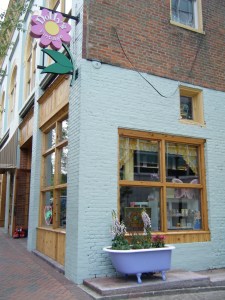
Dolly’s Vintage

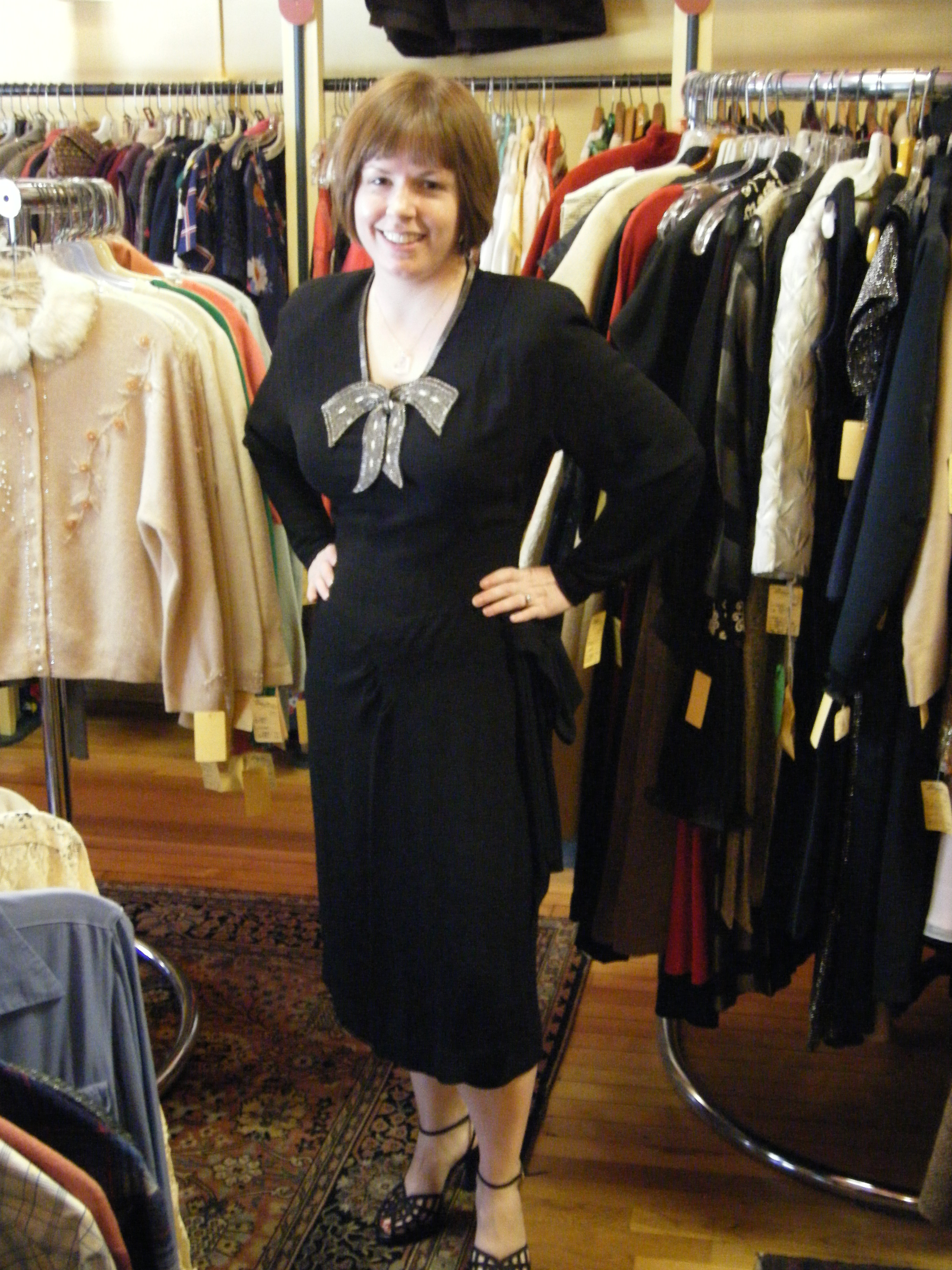
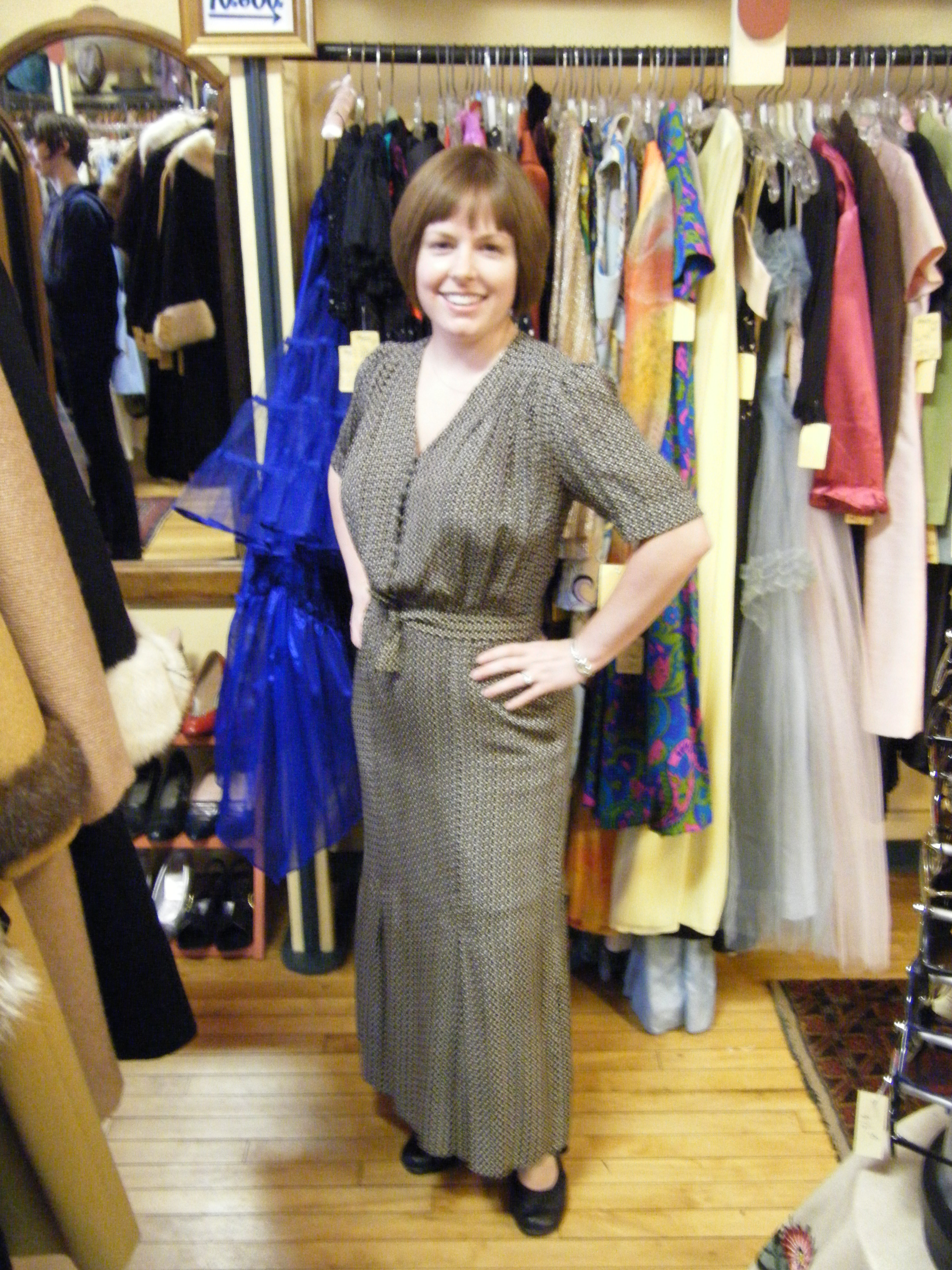
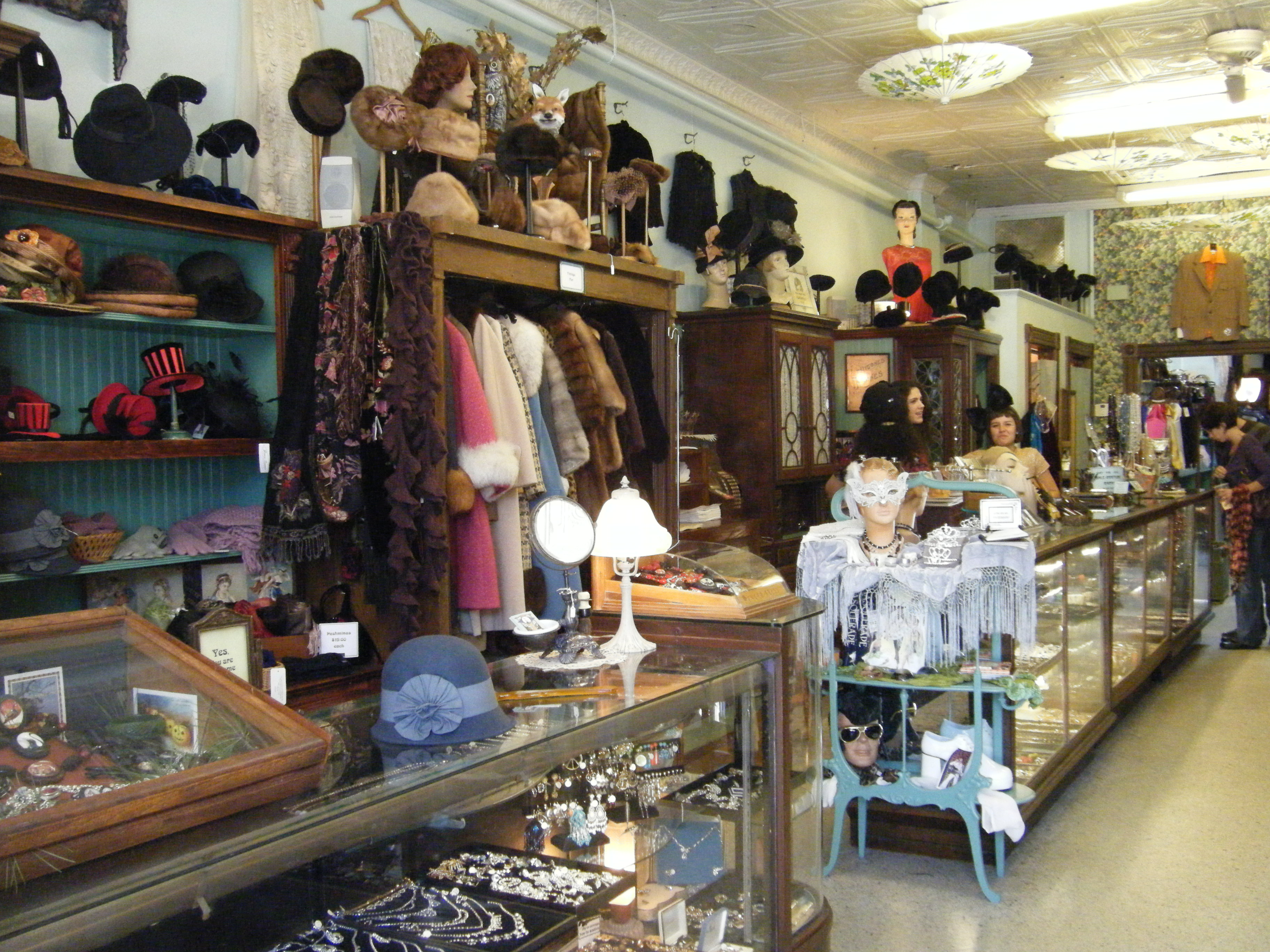
Dolly’s Vintage is in the forefront of my vintage shopping right now because my office is two blocks away from this delightful shop and I often (read: 2 or 3 times a week) stop by the shop to chat with Jennifer Donner, the amazing and talented owner of Dolly’s, and to soak up some of the cheerful atmosphere of the store. Dolly’s is also the most reasonably priced vintage store I have ever encountered. Where other vintage stores would charge $40-$100 for garments, or even more, Dolly’s keeps everything just below that range, with most items between $20 and $30. Jennifer stocks decades from the 1920’s through 1970’s (with a few choice items from more recent decades), but keep in mind that 1920’s, 30’s, and 40’s garments will be much rarer and she may not have anything in stock, but you should still ask so that she knows how many people are looking for these garments. She will be more likely to purchase these items from people clearing out estates if she knows there is a demand. I can usually go into Dolly’s and find a few 1940’s items, and definitely a lot of 1950’s day dresses that are perfect for swing dances. For men, Dolly’s has a great selection of sport coats, pants, shirts, and an entire rack of 1950’s skinny ties. If you see something you like, you should either buy it immediately or ask her to hold it if you need to think about it or find something to match it – the clothes fly off the racks in that store and she stocks new items every day just to keep up with the demand. I know some of the Triangle dancers are already a fan of Dolly’s, as I’ve seen Elizabeth Tietgen pick up a 1920’s cloche, Holly Owens bought an adorable polka dot dress that she wore to a dance at the Century Center recently, and Jason Sager purchased a wig here for RDU Rent Party’s role reversal night.

For more information, here is an older blog post I did on Dolly’s Vintage: https://lindyshopper.com/2011/05/03/field-trip-dollys-vintage-durham-nc/
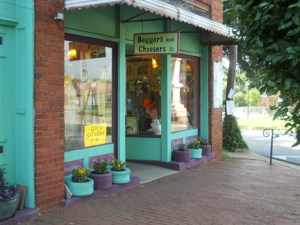
Beggars and Choosers

While not technically inside the borders of the Triangle, Beggars and Choosers should not be overlooked. It is a bit of a drive to Pittsboro and they are only open on some Saturdays, but this is the only place I know of in the Triangle that stocks clothing from the late 1800’s through the 1970’s and consistently has a few items from the jazz age and swing era. I see a lot of conflicting information about when this store is open, so it’s best to call ahead before you decide to make the trip. This is a gold mine for men’s and women’s vintage clothing, so I promise it will be worth the effort!

For more information and photographs, here is an older blog post I did on Beggars and Choosers: https://lindyshopper.com/2010/04/30/field-trip-beggars-and-choosers-pittsboro-nc/

Raleigh Vintage Collective

While they have no brick and mortar store, the Raleigh Vintage Collective has a lot of swing era clothing and accessories available for purchase through the web. They are a group of ladies who periodically have trunk shows around Raleigh and list their wares on Etsy (Raleigh Vintage and Time for Vintage). Most notably for dancers, they will have a trunk show at this year’s Eastern Balboa Championships, back by popular demand after last year’s trunk show, which featured only items from the 1920’s through the 1950’s – no digging through polyester to find what you want and no question about the garment’s decade of origin.

For more information about the Raleigh Vintage collective, see my post about their activities at EBC last year: https://lindyshopper.com/2010/11/08/ebc-vendors-the-vintage-collective/

There are a few other vintage stores in the Triangle, but my experience with them in finding garments for swing dancing has been unsuccessful, as they stock 1960’s or later garments. Men may find them more useful, as menswear has changed fairly little over the past century. For example, The Clothing Warehouse in Chapel Hill had a rack of men’s vests that looked promising.

Other random notes: Someone who designs for Urban Outfitters must have a penchant for vintage hats because I always seem to find great vintage-inspired hats at this store. I always make sure to stop in at the Southpoint Mall, Durham location when I am there to browse through the accessories. Also at Southpoint, Anthropologie is a store that has built its brand around vintage-inspired clothing and accessories. The prices may set you back, but they always have a good sale rack and, if you find something on the sale rack or in the store that is not in your size, they will locate your size in another store and have it shipped to you.

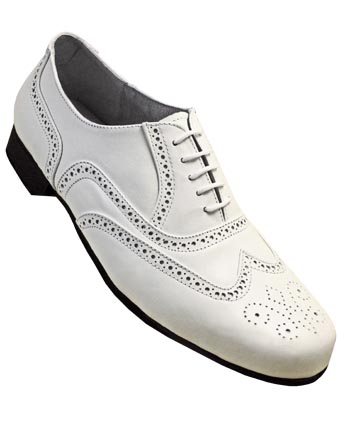
Gents, the best and cheapest place for you to look for things are your local thrift stores. When my grandfather passed away, most of his suits went to a thrift store – jackets and suits from the 1950’s forward, most of them only worn on Sundays so they were in great condition. I see a rack of suits and sport coats and every thrift store I go to and this can be a great place to pick up something cheap that you don’t mind sweating in. You may also want to check shoe repair places for vintage dress shoes, as people leave shoes or bring them there to sell them. Men’s shoes, for the most part, are easily repairable and able to be shined up to look as good as new. Main Street Shoe Repair in Durham always has several pairs of cap toes and wingtips that look dance-ready, at a fraction of the price of a new pair of shoes.

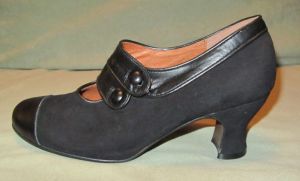
Finally, Remix Vintage Shoes, a company based out of California that makes gorgeous reproduction shoes, sells their shoes in a couple of stores in Durham – Magpie, a boutique in the West Village tobacco warehouses, and Cozy, on Ninth Street. Neither store carries the entire Remix line, but if you find a pair locally that you like it will save you about $20 in shipping from Remix in California.
Dear Golden Vintage on Etsy

This post was written by Lindy Shopper.

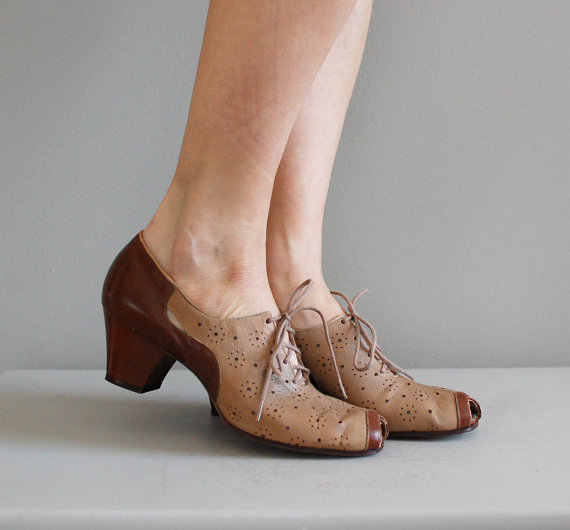
1930's perforated peep-toe oxfords - only $58!

There are vintage stores that seem like they have everything but the kitchen sink; then, there are vintage stores that are “curated,” full of carefully selected items that may evoke an era or perhaps only carry the choicest items. I could tell that Dear Golden Vintage on Etsy was one of these stores, even before I read the store description – the collection of items in this Etsy store is truly choice, and selection of things more lovely than the last.

Dear Golden Vintage sets a beautiful scene with clothing and accessories and you should definitely peruse all the online offerings, but here are my favorites:

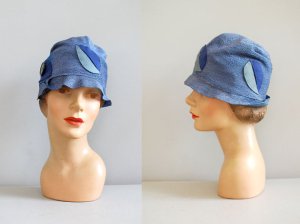
Blue 1920's cloche
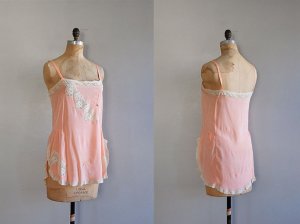
1920's silk chemise
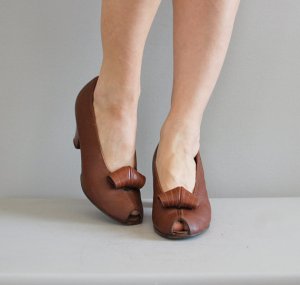
1940's chocolate curl heels - WANT
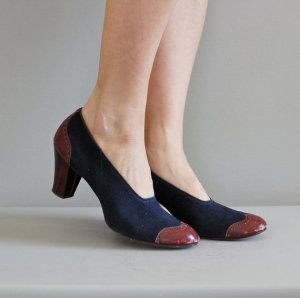
Blue suede and brown leather two-tone shoes
Cotton eyelet 1930's dress
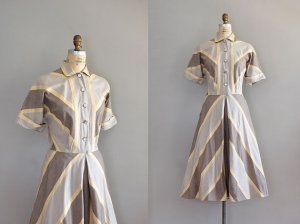
I'm a sucker for a chevron dress
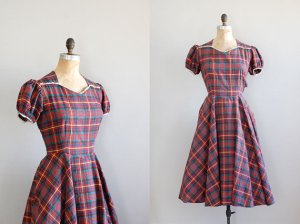
Adorable plaid 1940's dress
Blue peplum dress with cutouts - HOTTTTT
1950's party dress with giant pockets

Field Trip: Richmond Revisited

This post was written by Lindy Shopper.

It was another wonderful year at Richmond, Virginia’s Jammin’ on the James, both the dancing and the shopping. Some of my favorite vintage shoppers – Lily Matini, Elizabeth Aldrich, Bill Speidel, and, a new addition to my vintage cavalry, Josephine Stewart – made cameos at the event this year and it made Saturday an exciting and bustling day at the vintage shops in Richmond. I reported on my trips to Richmond’s two best vintage shops, Halcyon and Bygones, after last year’s Jammin’ on the James, but there’s always new inventory to scout.

Step into Halcyon!

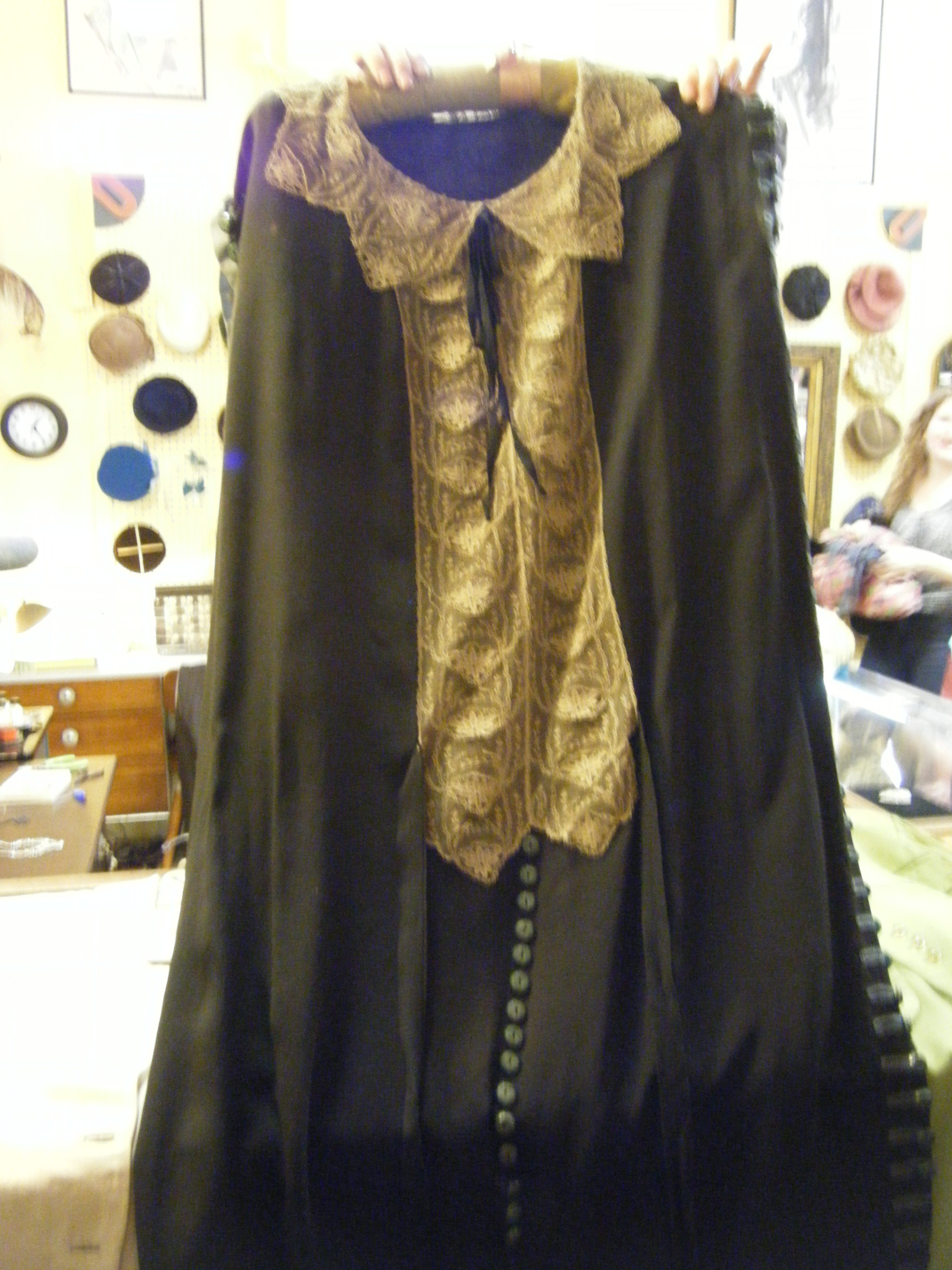
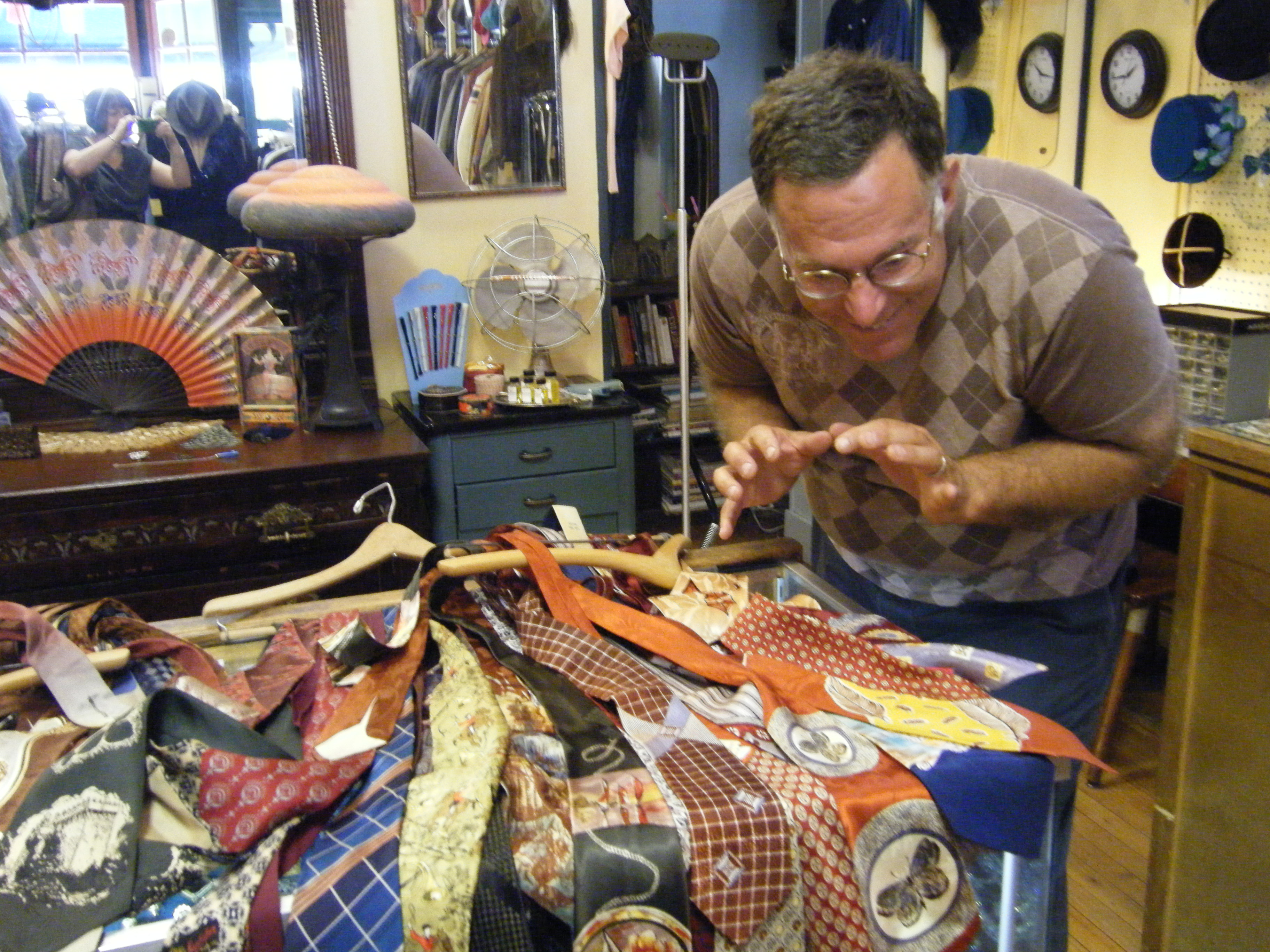
Halcyon is my favorite Richmond store because it is so inviting – beautifully decorated, not too large/too small/too crowded, with a carefully chosen selection of garments that leaves you with the feeling that the entire store is filled with the “good stuff,” no filler. This year was no exception and I left with one beautiful 1930’s dress, but there were several other things I probably could have taken home if the budget had allowed. After we expressed interest in ties, Angelica from Halcyon pulled out the hidden rack of beautiful 1930’s ties, including one with circles and butterflies that Bill and I both claimed, but, ultimately, Bill won out because my husband wouldn’t answer his phone to tell me if he would wear the tie. Bill also scored a vintage Alexander Calder inspired tie by Carnival Jones, Elizabeth left with a lovely black faux fur jacket, and I left with a 1930’s silk dress. There were some really lovely pieces from a Richmond estate, including a 1920’s dress that must have had over 100 green bakelite buttons down the front and both sides.

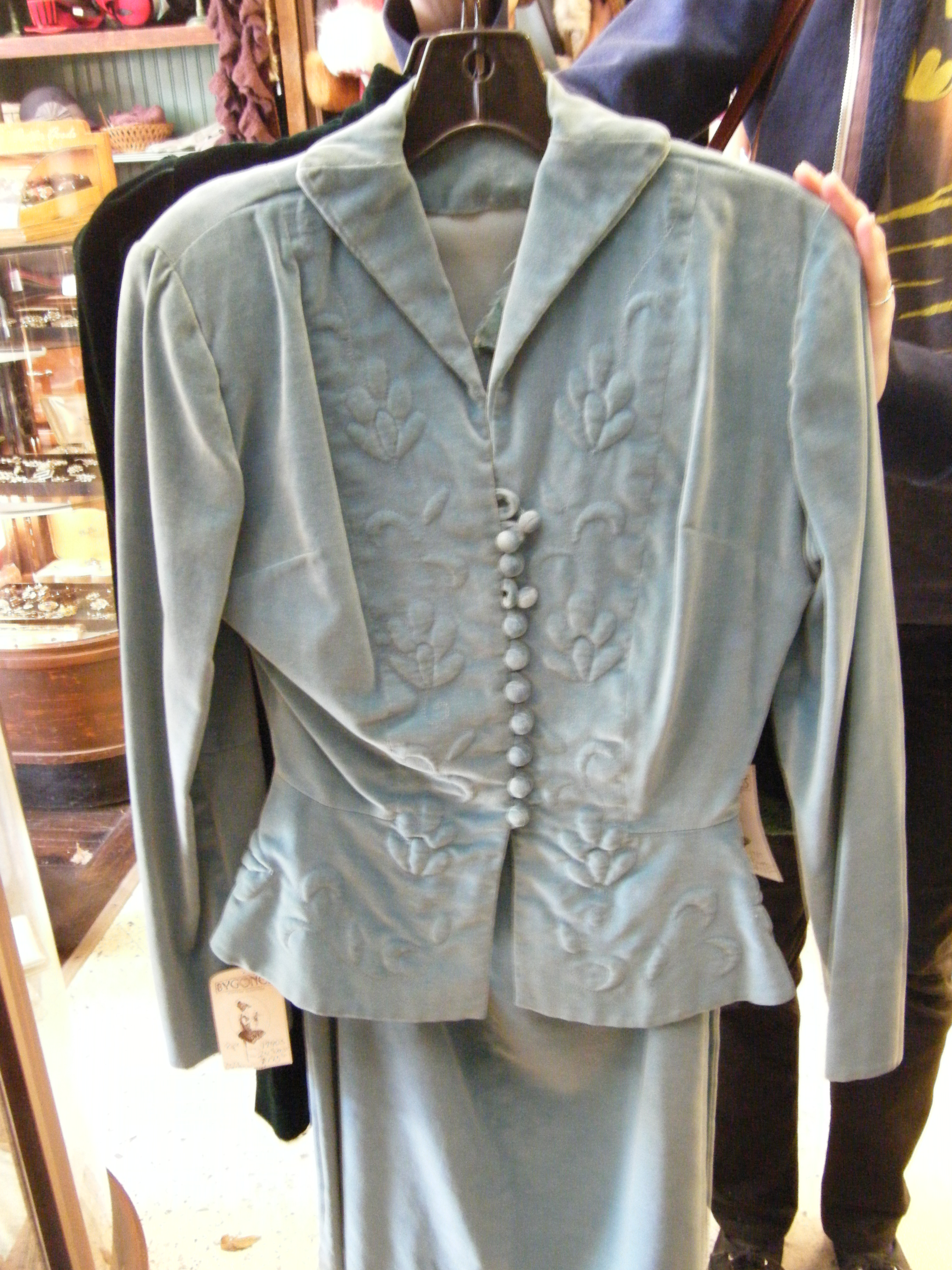
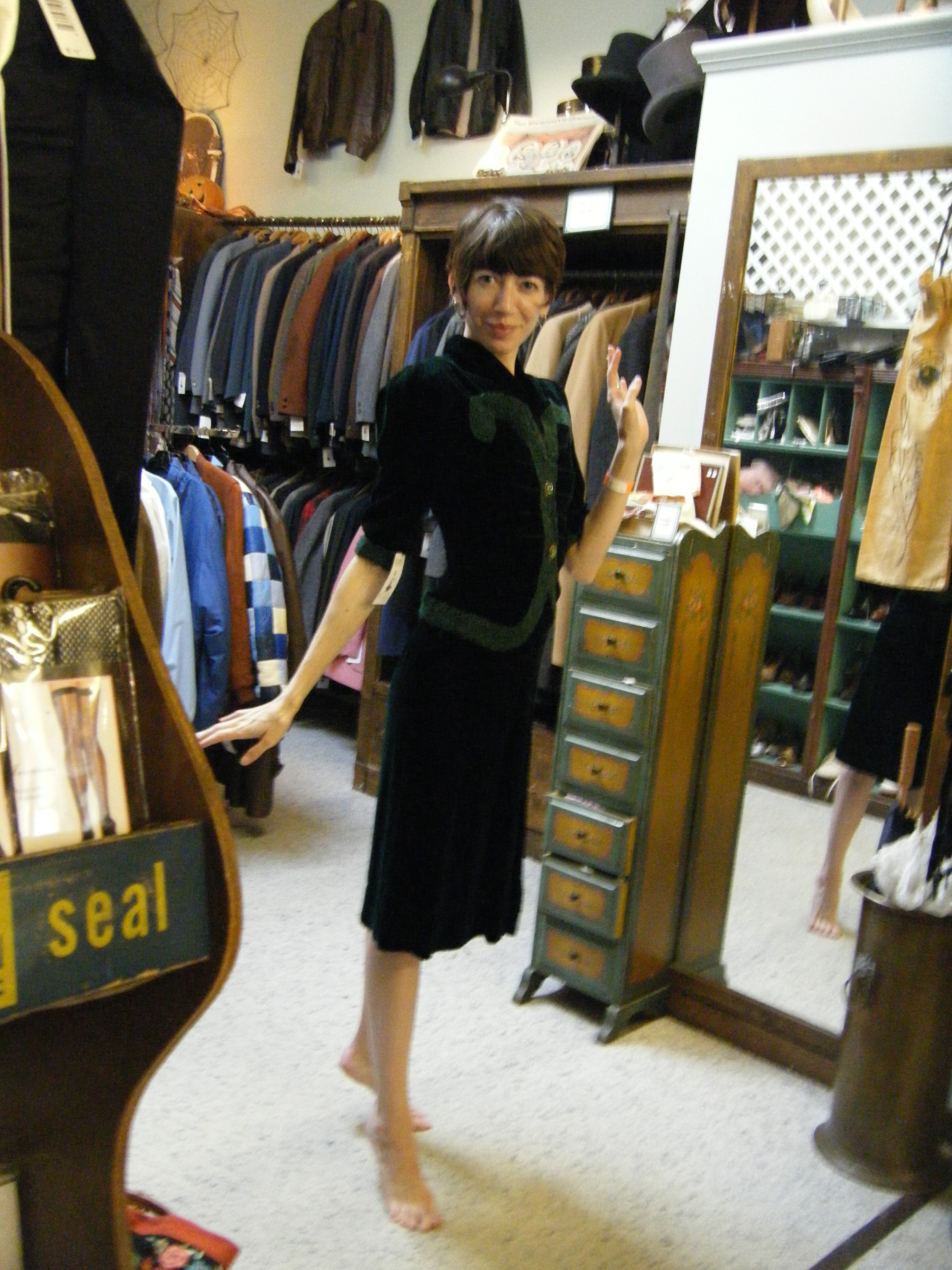
Next stop was Bygones, which is famous for its window display and top of rack displays. This season’s display did not disappoint, with an Egyptian revival-themed window-dressing and an inside display of furs and faux animals that just begged for some taxidermy or, as Bill said, the barrel of a shotgun peeking out from between the furs. Josephine had great luck here, asking for tiny sized clothing and they definitely delivered. Favorite pieces included two 1940’s suits, one in light aqua velvet with quilting detail on the jacket and another in green silk velvet with amazing trim detail on the jacket.

Check out the goods from the photographs below!

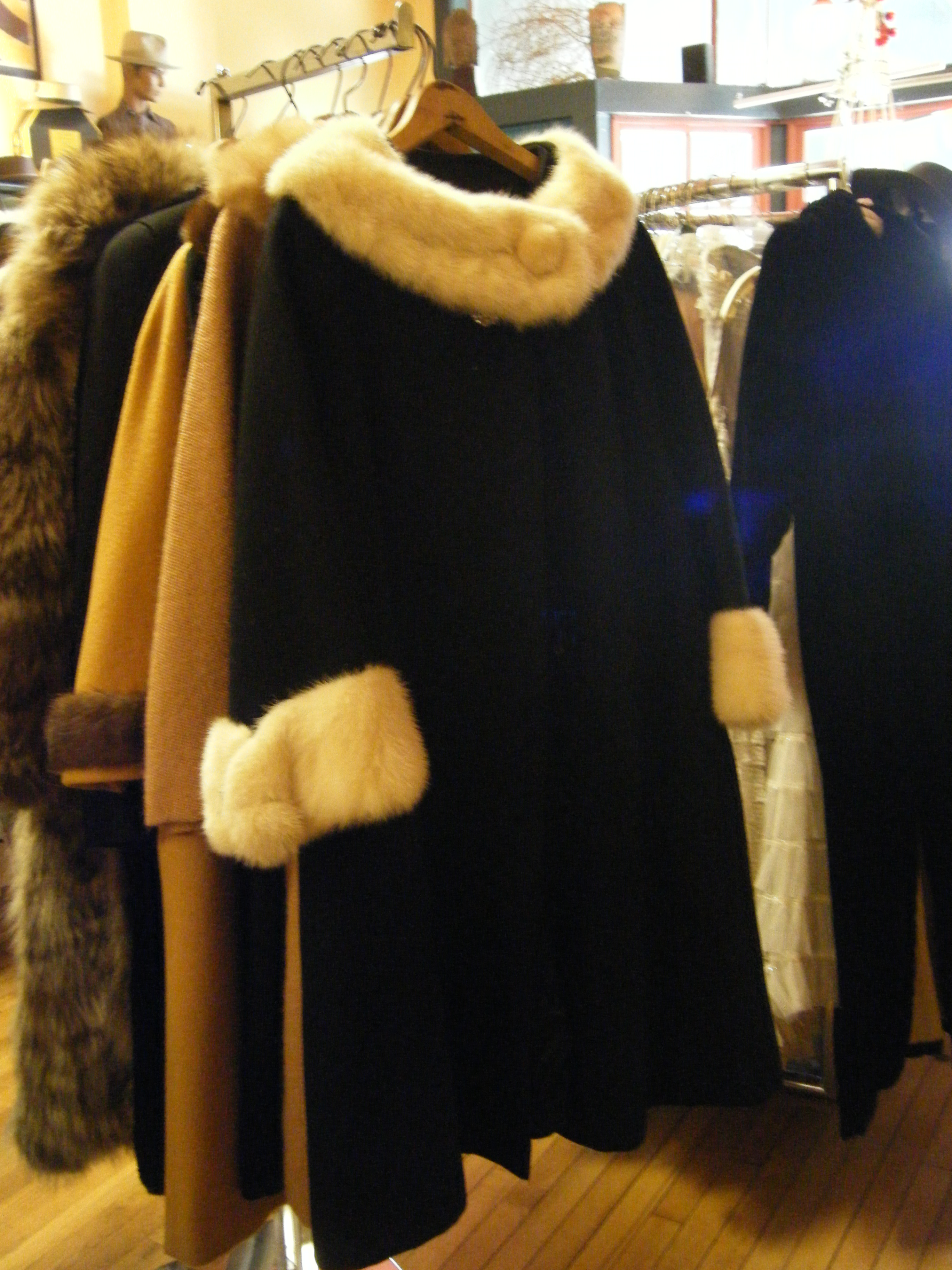
A lovely coat from Halcyon
The dress of 100 buttons at Halcyon
Halcyon's bakelite offerings
Bill, the tie snatcher
A 1940's dress with shoulder pads fit for a linebacker...still a gorgeous dress!
The winner!
Step into Bygones...
The fur display at Bygones, complete with Mr. Fox
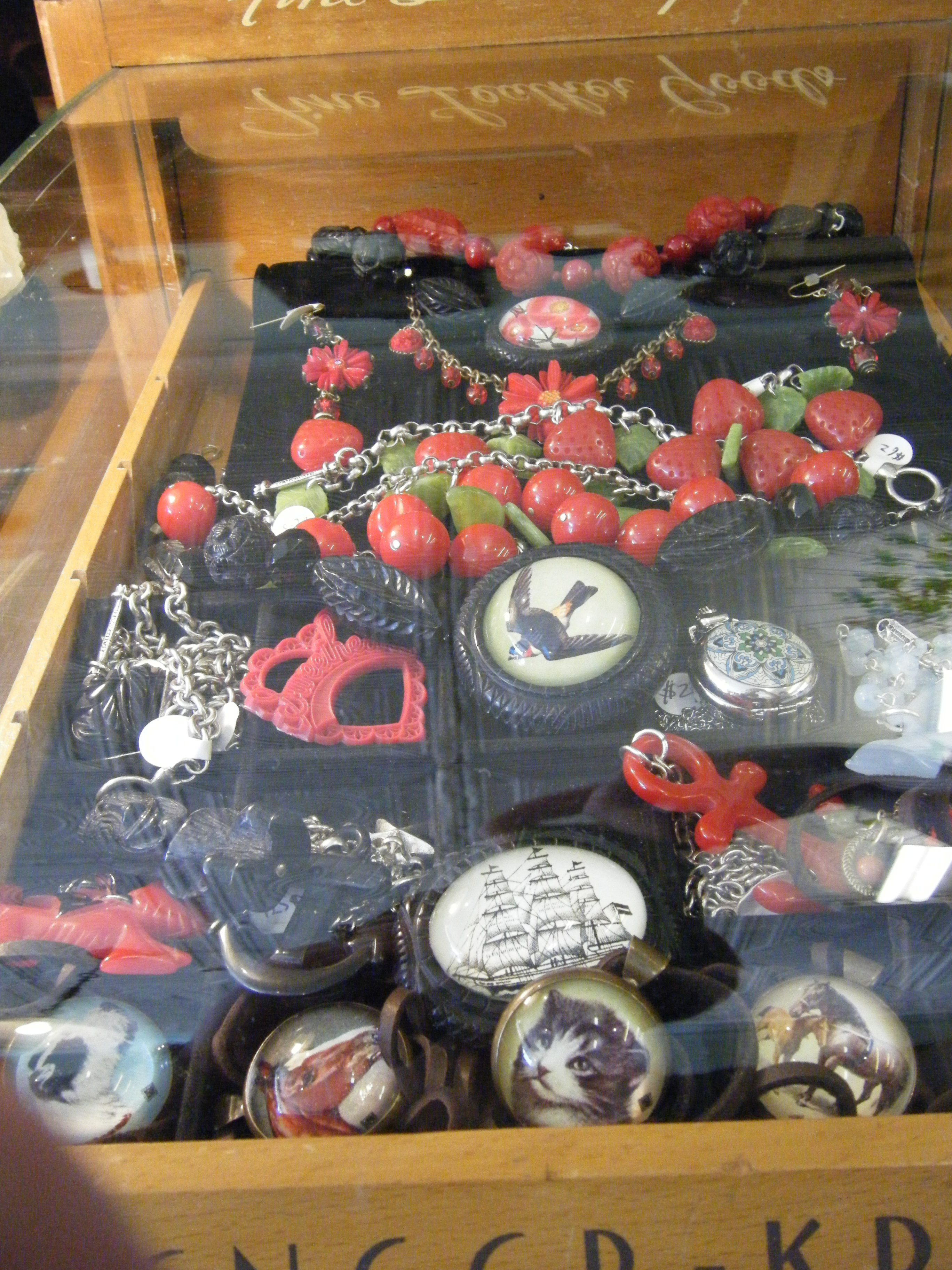
Bakelite at Bygones, including a set of strawberries, with necklace and earrings
The Bygones display cases
The pale aqua suit with quilted detail at Bygones
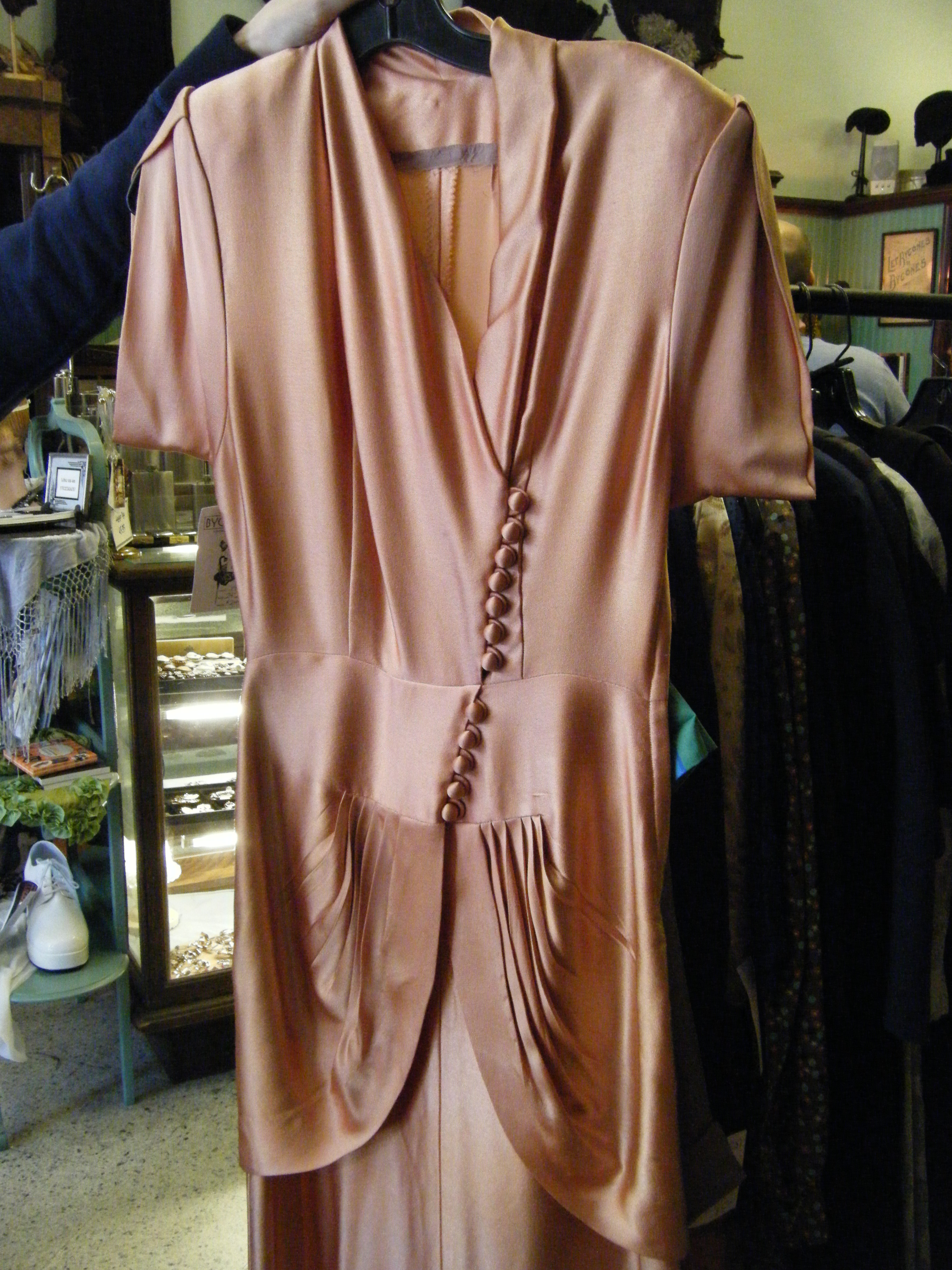
A lovely 1940's dress at Bygones - the photo doesn't do the color justice
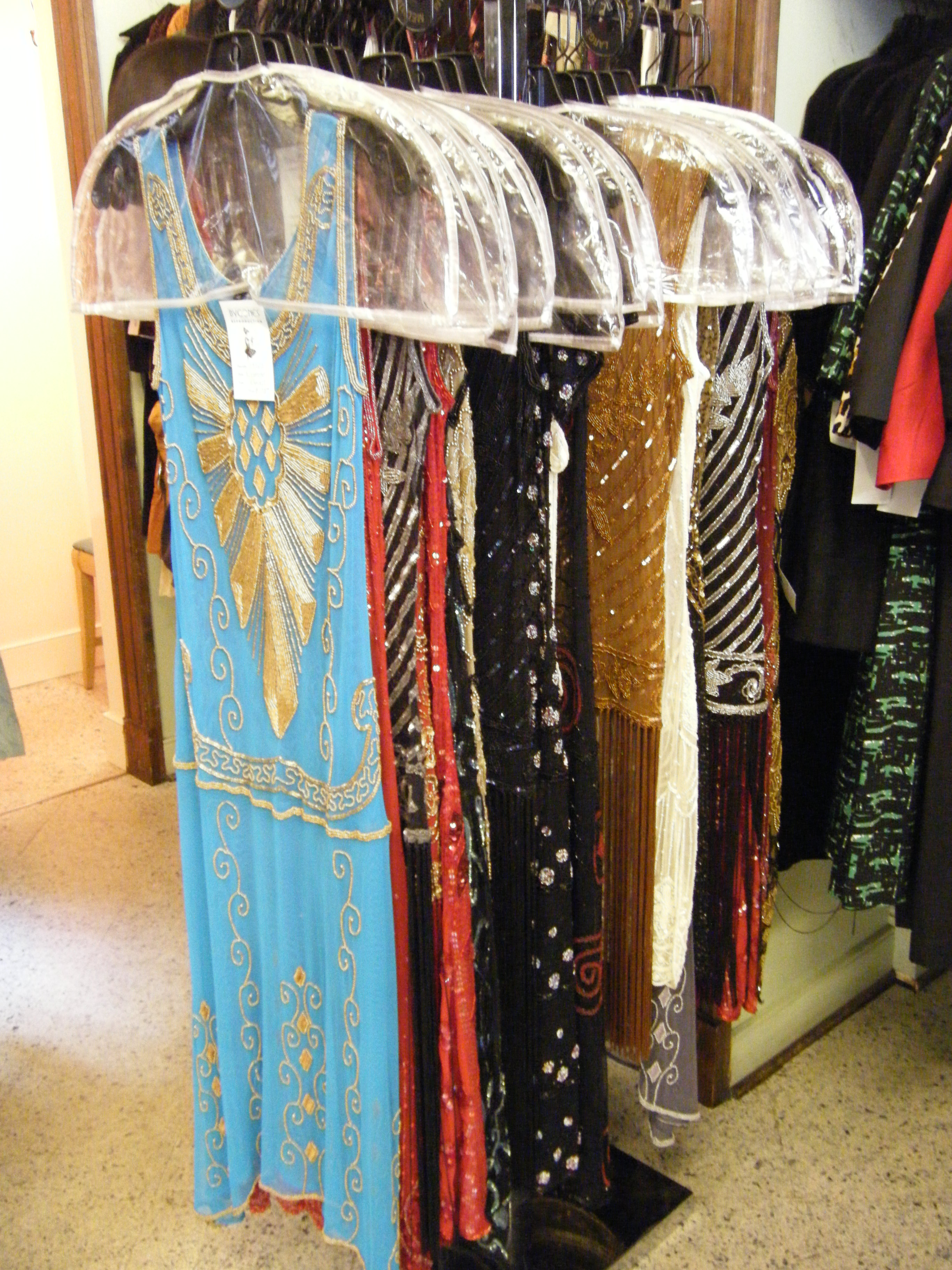
Bygones carries reproductions, like the rack of Leluxe dresses shown here
The menswear section at Bygones
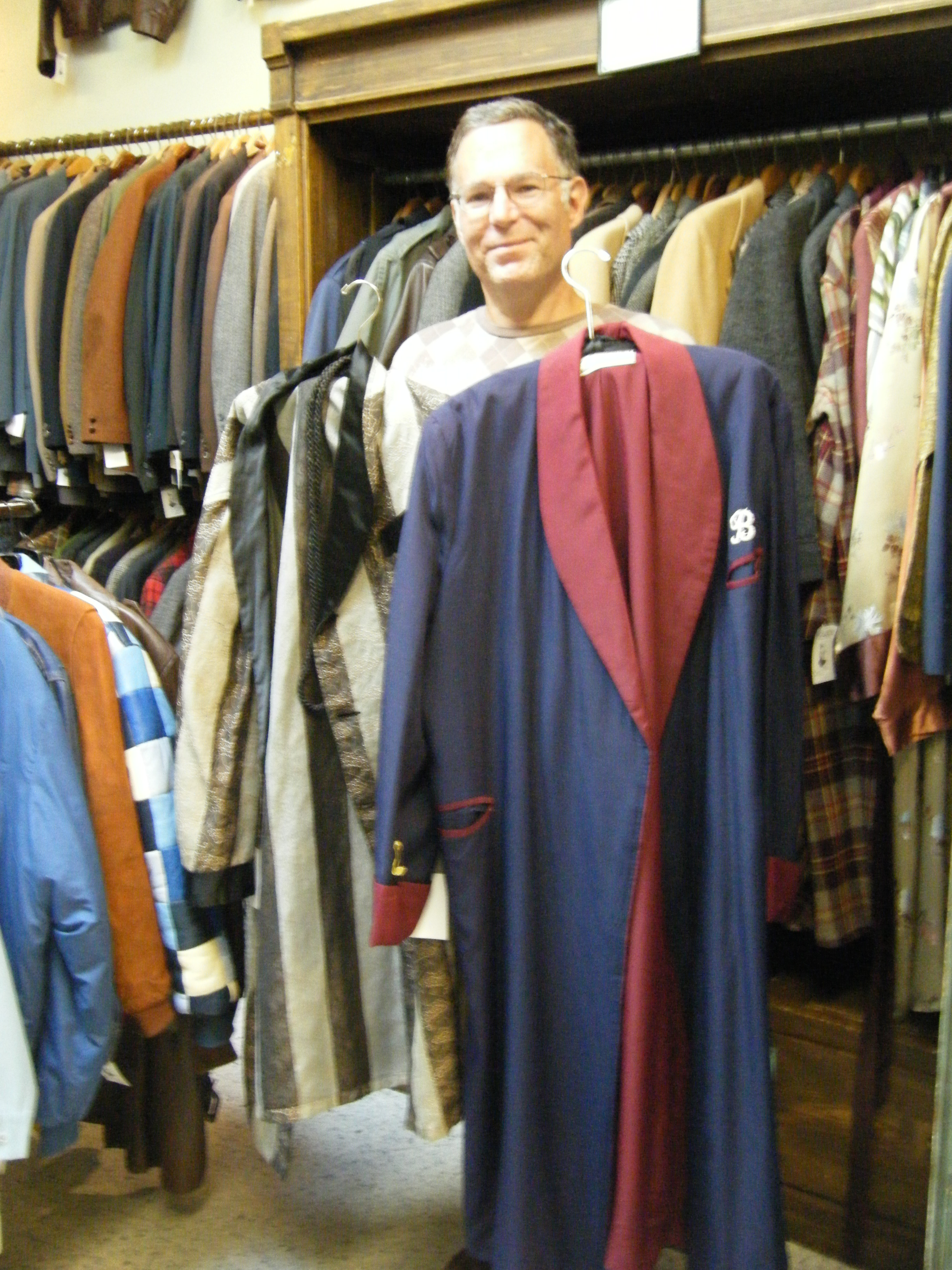
Which smoking jacket?
Josephine in a glorious green velvet suit at Bygones

Taking Care of Your Vintage Clothing

This post was written by Lindy Shopper.

I’m excited to announce that the Yehoodi staff has invited me to contribute featured content to the Yehoodi website. This is my first article for Yehoodi, which I am also publishing here on Lindy Shopper for your use and enjoyment.

Following the Why I Wear Vintage post, Evan Philips requested an entry on how to take care of your vintage clothing and I am happy to oblige. Taking care of any wardrobe requires some maintenance if you want to keep it looking nice. Vintage clothing sometimes requires a little more effort to keep it looking fresh, but if you are careful in your choices for maintaining your vintage garments, you can enjoy them longer and with less worry.

For this article, I consulted with the all-knowing Movie Diva, Laura Boyes, who has experience working with the costume collection at the North Carolina Museum of History. I’ll share my observations from experience, but Laura will be providing the pro tips!

CLEANING

So you bought an article of vintage clothing, wore it to a dance, sweated in it for three hours, and now it’s a little ripe. You’d like to know how to clean it, but there’s no convenient garment tag telling you if it’s dry clean only, hand wash, or wash cold/tumble dry low. Think about what you have in your closet that is in the same fabric – what instructions for care are on that garment? Now, consider that this garment is vintage and, as a precautionary measure, what method of cleaning would be a bit more delicate than that, just in case?

Identifying the fabric is very important. Unless a garment is made of cotton, I will be sending it to the dry cleaners, and even the cotton garments sometimes get sent there if I’m particularly squeamish about hand washing the garment or putting it into my washing machine on the hand wash setting. If I am washing a garment myself, I always hang it up or lay it flat to dry, rather than putting it in the dryer. Laura recommends washing your vintage clothing in a gentle detergent, such as Orvus WA Paste, “a synthetic anionic detergent with a neutral pH which will remove most common dirt and stains.” You may be able to find this at farm supply stores, as it is used to shampoo show horses.

Finding a dry cleaner you trust is worth its weight in gold. You want to find someone with years of experience – don’t cheap out on this just because the $1.99 cleaner is near your house. Do some research, make calls to find out how long they have been in business, if they have worked with vintage and antique clothing, and be willing to sign your life away for them to clean it because most of them won’t want the liability of having to deal with you if the garment deteriorates. Usually if a place has been in business for a long time, they will have a good reputation and will also have older clientele who may have some of these older fabrics and older items that need some extra care when cleaned. I feel truly lucky to have found an amazing dry cleaner in Chapel Hill, NC, Plaza Dry Cleaners. Not only are they the oldest dry cleaners in town, one of their cleaners has taken classes in clothing preservation at the National Archives in Washington, D.C. I’ve been using their services for 6 years now and they have yet to ruin one of my vintage items; in most cases, the garments come out looking even better, with fewer stains and a fresher look to the fabric.

When you take a garment into the dry cleaners, you will need to make a few declarations about the garment so that they know that you are educated about the garment, so they have the information they need to make an informed decision about cleaning the garment, and so they are on notice that this is a special care item. If you know the decade, tell them how old the garment is, note in advance the flaws you are aware of (spots, holes, etc.), indicate whether or not you want them to try to get the spot out, and tell them what you believe to be the correct fabric. If you don’t know what kind of fabric you have, someone there will be able to identify it.

They may not want to clean the item for fear that the process will do something to the fabric or that something on the garment will be harmed in the process. I will say that this situation is pretty rare and limited to uncommon garments, like a 1920’s velvet dress with a jeweled piece or a 1930’s rain coat. In this situation I usually ask if there is some other way I could clean the garment myself or ask if hand-washing would damage the garment. If I really want the item cleaned and do not care if the garment could be harmed in the process, they will usually have me sign a waiver stating that I have been informed of the potential consequences and waive their liability.

Unless you are wearing vintage every day, the cost for your vintage dry cleaning shouldn’t be prohibitive. I might have two items per month that I take out for cleaning.

In those extremely rare cases where the garment can’t be cleaned, don’t wear those garments dancing or in places where you will sweat a lot. Hang them up after you wear them and let them air out for a few days before storing them again.

MENDING

Almost everything can be fixed. Many times, if you look closely at a vintage garment, you can find places where it has already been fixed or altered by the previous owner. Earlier generations mended holes in garments, rather than discarding them, because resources and clothing were more limited. I find that vintage garments tend to take a mending much easier than newer garments because of the way the garments were constructed.

Order of operations number one is to find a tailor who has either worked with vintage clothing in the past, works with fine fabrics, and/or has been sewing for longer than you’ve been alive. I once made the mistake of handing over a silk 1940’s suit in a strawberry print for my mom to reinforce the seams on the sleeves and, having never worked with silks, made the mistake of putting the suit under the needle of her Singer sewing machine on the regular setting. She might as well have put it under the knife, because the silk shredded into a million pieces. I should have told her to hand sew the sleeves, but this is a lesson in assumptions – don’t assume that every tailor will know how to fix your garment. Ask lots of questions and err on the side of caution.

I found my vintage tailor through a locally owned fabric store that sells fine fabrics and other fabrics for clothing. The had a list of people they recommend for people who want custom made items, with a description of each person’s areas of expertise. After talking with the ladies in the store about what I was looking for, they were able to make recommendations as to which tailor(s) would be best for the job.

You may have noticed that article of clothing purchased new that you wear frequently for a period of several years may begin to fall into disrepair, or even fall into disrepair after one season if not well made – remember this when you are cursing that newly discovered hole in your 1940’s pants or dress. The tendency for modern clothing is to get rid of it – throw it away or donate it to a thrift shop, because there will always be something to buy new. The approach to wearing vintage clothing is entirely different and is rooted in that era’s sensibilities. There may be more vintage clothing, but the supply is not replenishing, so repairing a vintage garment becomes an act of preservation.

To preserve your vintage clothing, you sometimes have to think outside of the box, or ask your tailor to be creative. If a button falls off, there’s no little plastic baggie with an extra button for you to sew on and finding a matching button is impossible. So, you find new button and use this opportunity to make the garment even better – something as simple as buttons can change the entire look of a garment, and you can update the garment with new buttons or find vintage buttons on Etsy, eBay, or a few other online resources. I had a 1940’s dress with terrible buttons on it and just switching out the buttons took the dress from matronly to swing-worthy with just a few stitches.

What if there’s a giant hole? Your tailor may be able to harvest some fabric from a hem or inside part of the garment to create a seamless patch, or come up with another way to cover the hole.

What if the seam split? Get your tailor to sew it up and perhaps reinforce it.

You get the idea. 🙂
STORING

Enemy target: eradicated

Moth balls smell like old people. Vintage clothing was once worn by old people and stored by old people. Why is vintage clothing still around? I’m not going to credit moth balls with saving all vintage clothing from moths, but I am going to credit it with maintaining a good portion of my wardrobe and the portion of my wardrobe inherited from others who used moth balls to keep their clothing free from holes. I initially shunned moth balls because of my mother’s over-use of the moth ball when I was growing up – she would toss a whole box into a closet and stuff them in drawers, until every time you tried to wear something that hadn’t been just laundered, you’d come out of the house smelling like a great-aunt. When I went to college I stayed far away from moth balls until I pulled my favorite red wool dress out of the closet to wear at Christmas and discovered two large moth holes in the shoulder; a deeper dig into my wardrobe and I discovered even more casualties. In tears on the floor of my bedroom, I vowed that the moths would never claim another victim from my closet.
Moderation is key. I don’t need moth balls to protect everything, so I have a moth ball section in my closet. I use a hanging moth ball basket I got at the grocery store, which initially came with moth cakes, but I can also fill with moth balls. The moth cakes/balls dissipate over time, so you do have to refill them from time to time. The hanging basket allows me to group my most vulnerable clothing (wools and other natural fibers) in one section of my closet and hang the basket in the middle of that group. It has limited the extreme moth ball smell to a smaller group of garments, which I then air out a few days before I plan to wear them.

Let’s talk about hangers – next to moths, wire hangers are your clothing’s worst enemy. Wire hangers are too sparse to hold clothing without almost penetrating it and, over time, the wires begin to rust and that rust is corrosive to clothing. I’ve seen countless casualties created by wire hangers, where the rust stains have eaten holes in the garment and you can see exactly how that garment was hung on the wire hanger. Please invest in plastic, wooden, or fabric covered hangers for your clothing. Plastic and wooden hangers are good for everyday clothing. If you have a more delicate item, such as mesh, chiffon, or other sheer fabric, pick up a few padded, fabric covered hangers.

If an items is particularly fragile or the weight of the garment is too much for the straps or shoulder of the garment, consider storing the garment folded in a drawer, with ample space and nothing stored on top of it (i.e. don’t cram it into an already full drawer). According to Laura, it’s also a good idea to have some acid free tissue paper on hand to line drawers, separate layers, stuff hats, or pad hangers, as needed.

If you have clothing that is from the 1920’s or older, Laura states that these garments should be stored flat. “If you buy one of these boxes (and keep it under your bed, or on a closet shelf) and layer in between with acid free tissue, it will preserve your dresses from the stress of hanging. You would probably want to store items this way that you wear only occasionally.”

The rest is common sense: Don’t leave things where your pets have access to them; men, hang up your ties, don’t leave them on the floor; don’t store things where they might get soiled; etc.

If you have any further questions about this topic, please feel free to ask! We want to keep these articles of vintage clothing alive and wearable as long as possible.

Remix Sale and New Styles and Colors

Eva shoe

This post was written by Lindy Shopper.

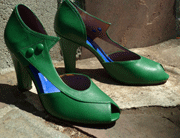
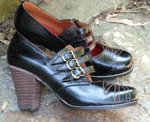
When it rains, it pours, and it’s pouring gorgeous shoes this week. Remix has launched two new styles: the Eva, a Picasso-esque work of art for your feet in green and black; and Amelia, a late 1920’s/early 1930’s Mary Jane heel with three straps in black. The Amelia is cute and sturdy, but the Eva is to die for…they should be paired with that villainess dress I found and wreak havoc on a small city with their sheer awesomeness.

Ava shoe

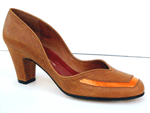
The Ava shoe is on sale, a versatile pump that could work for dance floor and for work, originally $190.00 and now on sale for $98.00. This shoe comes in camel with orange inset, brown with dark brown inset, gray with black inset, and white with kiwi inset.

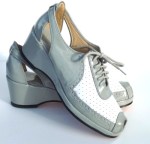
Finally, there’s a limited run of the spectator wedge in a gray patent and white combo, priced at $112.00. Gray is such a great neutral, these look fantastic!

Gray and white spectator wedge
Amelia shoe

Vintage Showgirl Costumes

This post was written by Lindy Shopper.

I can’t help but be fascinated when these vintage dance performance items show up on eBay. I posted some 1920’s tap shoes earlier, but these auctions really take the cake! eBay seller monicasvintagefashions has four vintage dance costumes worthy of a Busby Berkeley style dance number, which is pretty rare, considering I had trouble even finding reference photographs while researching costumes for The Carolina Fascinators. These are just fantastic, especially the ones from the 1920’s…paging Sharon Davis and Sister Kate

Beaded 1920's Art Deco costume, with a nod to Egyptian revival
A beautiful sequined 1920's costume with butterfly wings
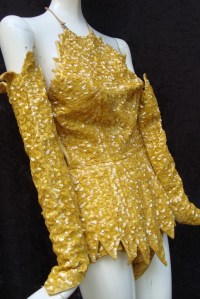
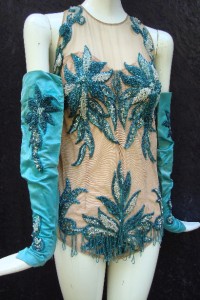
A three piece suit in gold sequins with Art Deco-style cutouts around the neck, hem, and top of the gloves
A lovely blue 1950's costume with beading on the bodice and gloves

Jazz Age Lawn Party Vendors 2011

This post was written by Lindy Shopper.

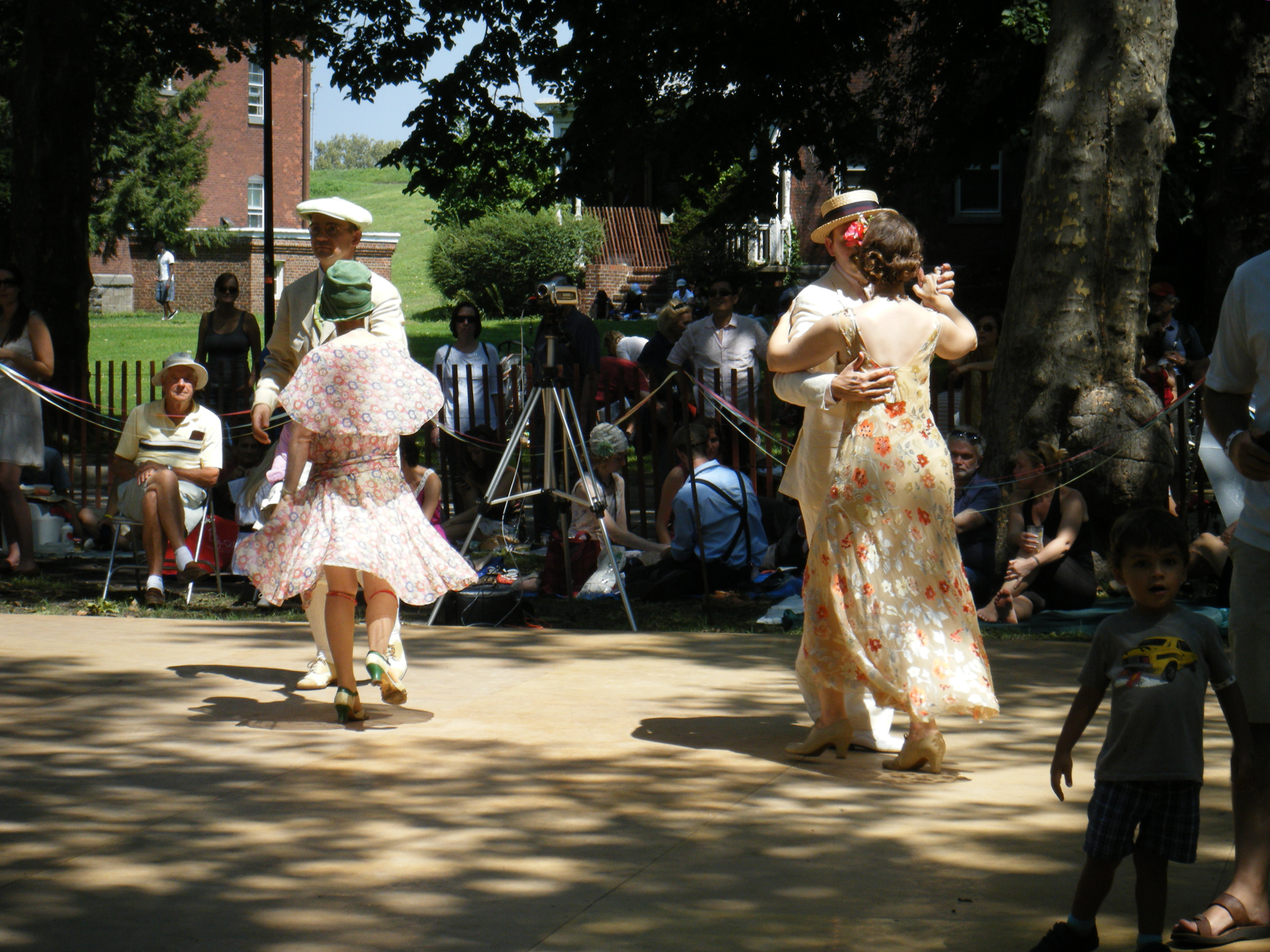
The Jazz Age Lawn Party never ceases to amaze me, with its charm, beauty, number of well-dressed people, and even its power over mother nature. It is such a rare opportunity to dance entirely to 1920’s music and the quality of music was superb, thanks to Michael Arenella’s Dreamland Orchestra, the Gelber and Manning Band, and the twin Victrola turntables operated by DJ MAC. It was a beautiful weekend under the trees on Governor’s Island – the storms that threatened New York were held at bay until Sunday afternoon, when Michael Arenella commented from the bandstand that the rain couldn’t stop the festivities and called a tune with “rain” in the title to mock the threatening weather; it was then that the sky opened up, with only a few warning drops before the downpour sent everyone scurrying for cover.

This event has grown every year and this year it seemed to double in size from last year’s impressive turnout. I also noticed that the event organizers take note of how they can improve the event from year to year; for example, in an attempt to combat bystanders loitering on the dance floor and eventually taking it over, they roped off the dance floor area (which was someone effective, but there will always be chattel who don’t understand that a dance floor is for DANCING, not for standing or ogling). There were also more vendors this year, so let’s get to the list!

There simply couldn’t be a JALP without the classic and delicious cocktails made with St. Germain Liqueur, a cocktail confection made from elderflowers picked in the Alps. There was a rush on the cocktails, primarily due to an online coupon deal that offered all you can drink St. Germain for the day, and by the end of day one they were sold out of liqueur. Never fear, they replenished the supply for day two and the delicious festivities continued.

Kreamland Ice Cream was on hand with scoops of ice cream in classic flavors, the perfect treat on a hot August day. In the photograph at right you can see an example of the signs the JALP crew added to distinguish the different administrative and vendor tables, which were especially helpful with the throngs of people in attendance.

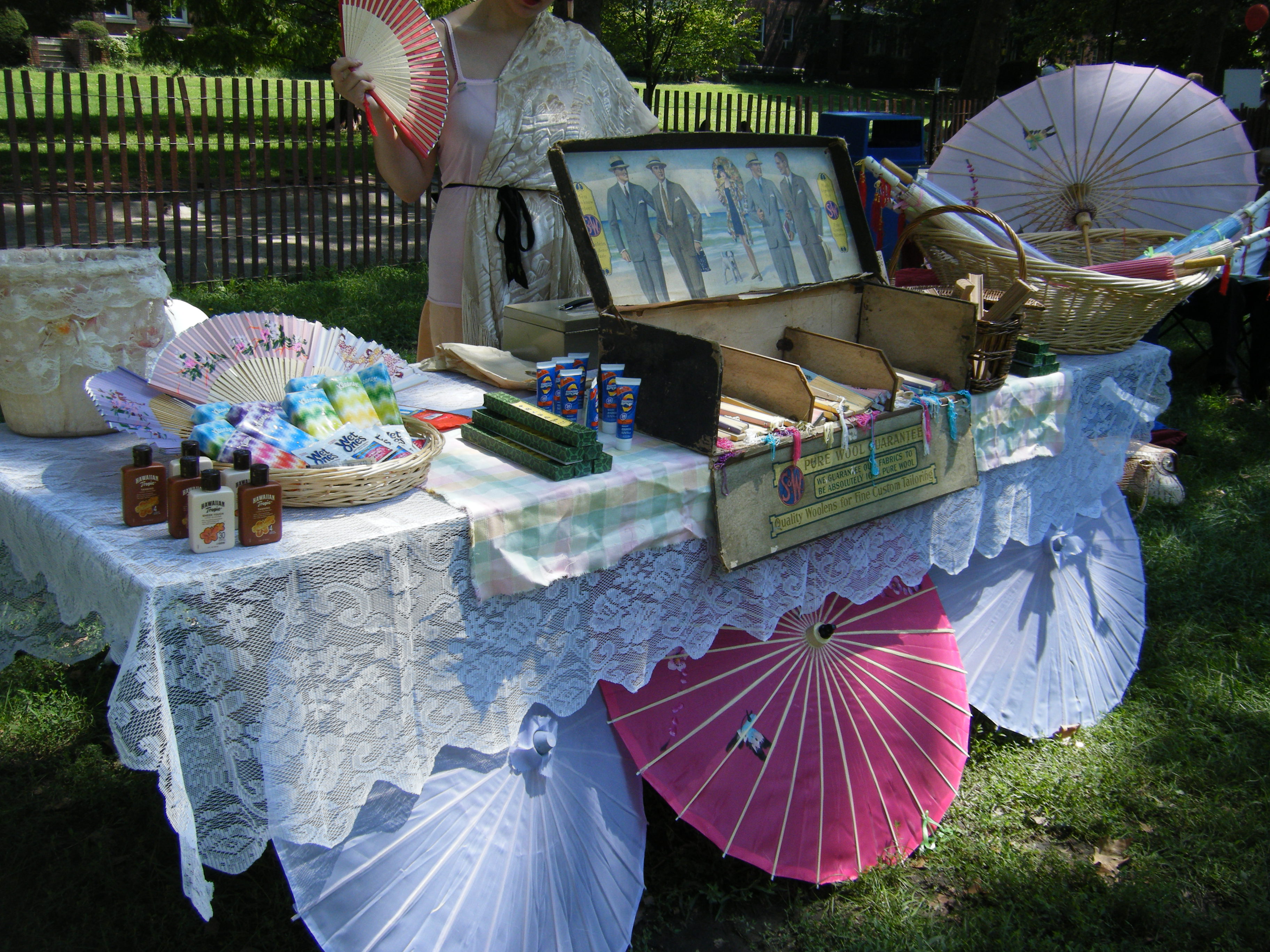
The table of necessaries.

Another improvement I noticed was a table set up with helpful items to get you through the day. Forgot your parasol? Need sunscreen or a tissue? Wishing you had a fan to escape the heat? Making these items available for purchase was a great idea! And isn’t the display lovely?

It was interesting to see a modern vendor, such as Yelp, have a table at JALP, but then Yelp is a very useful resource. Yelp sponsored a vintage photo booth at the event, with photographs taken by Tsirkus Fotografika, “an ongoing non-profit, public arts project based in Philadelphia, PA, designed to bring the creative process directly to communities and document populations at their most lively. Employing a mobile portrait studio and trailing-edge technologies such as analog film, old-fashioned “hot” lighting, and large format equipment, Tsirkus follows in the footsteps of itinerant photographers who would travel from town to town making portraits on-the-spot.” I now wish I had waited in line to get my photograph taken – perhaps next year. :/

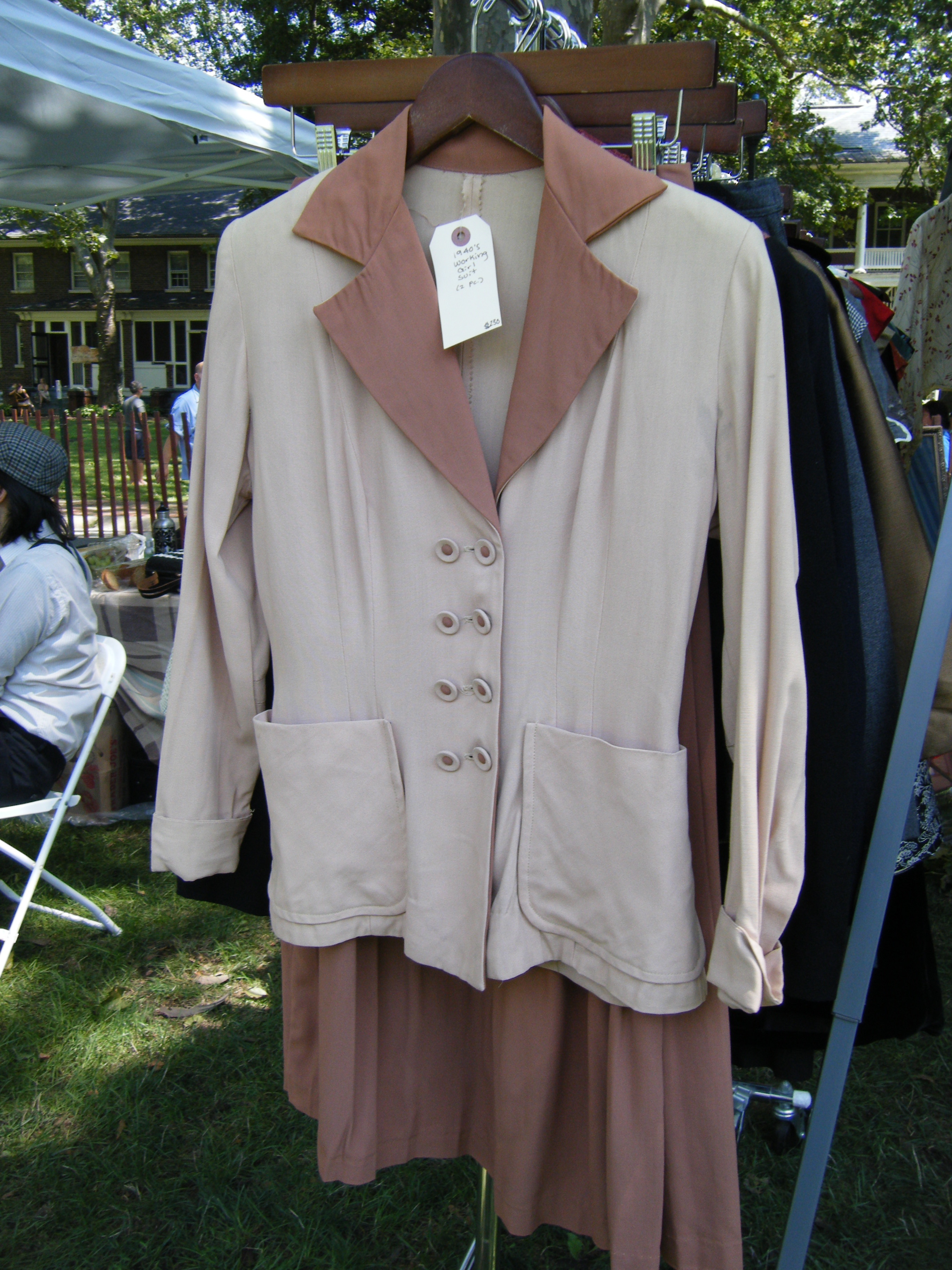
Next in the line of vendors was Odd Twin, a Brooklyn-based vintage store with wares available from the jazz age and beyond. I will display more photographs below of the vendors’ wares, but I will note that I was particularly smitten with a two tone brown 1940’s suit that was displayed on the end of their hanging rack. Drool…

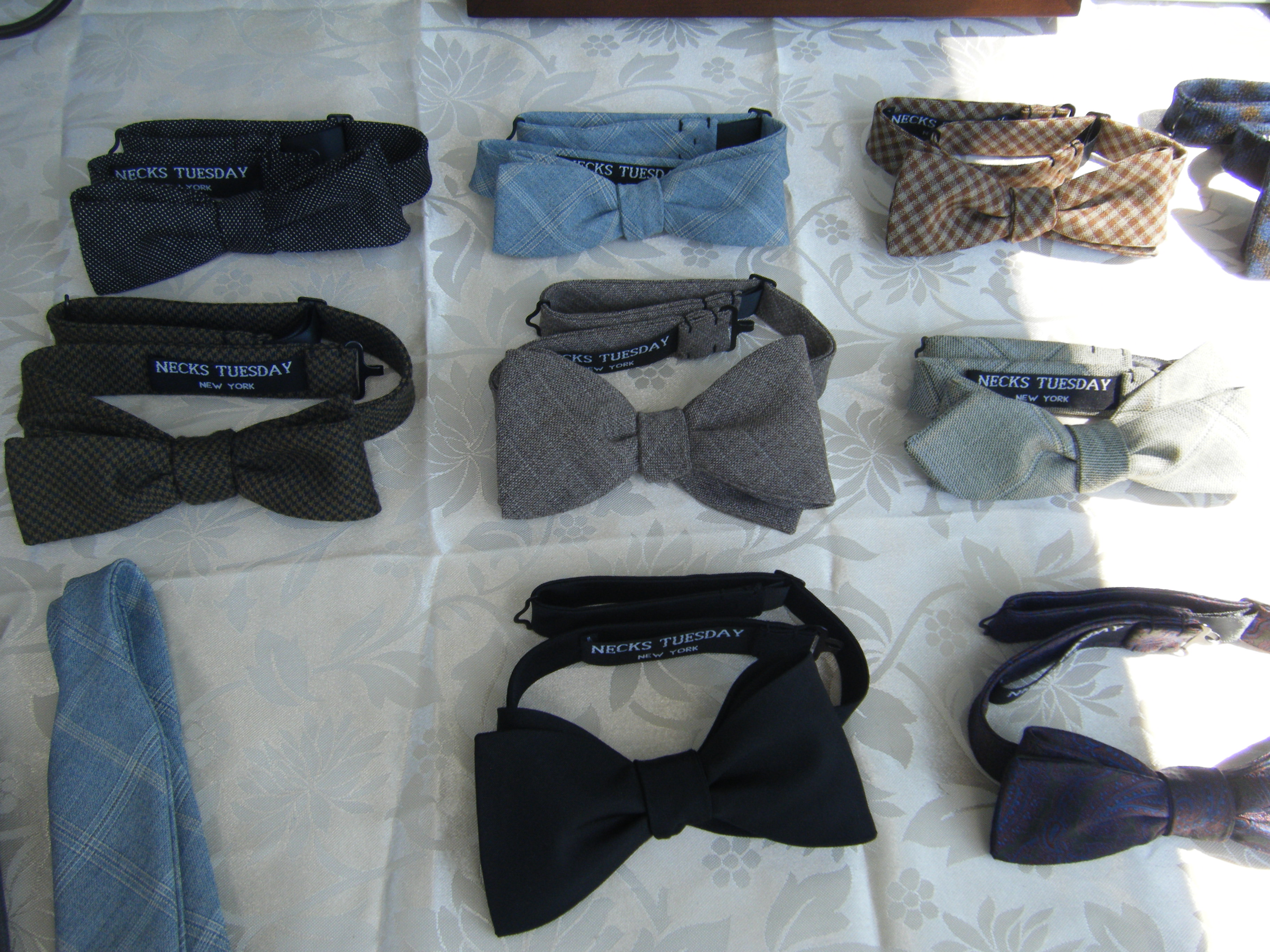
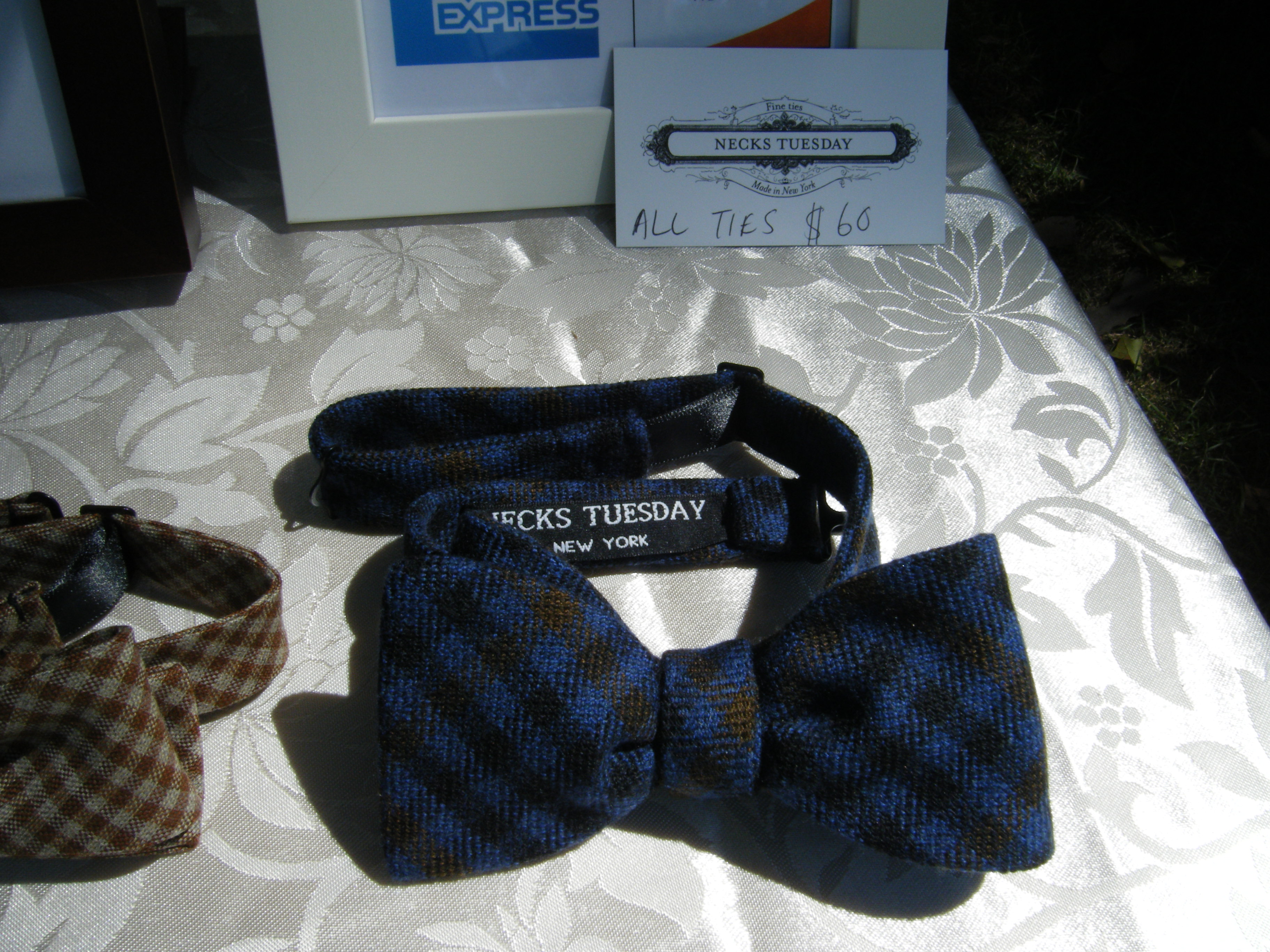
Sharing a vendor table were Necks Tuesday and hyc Creative letterpress. Necks Tuesday might be the most creative name for a bow tie company I’ve ever encountered. This Brooklyn-based company asserts that bow ties are a “facet of traditional menswear,” but are now “often an element of a forward, contemporary look.” What’s old is new again, eh? I can get behind this philosophy. Their ties are available in a number of wonderful muted tones and patterns that are sure to go with much of a man’s wardrobe and make a stylish statement without being too loud.

hyc Creative letterpress displayed an endearing collection of thoughtful printed cards, stationery, bookmarks and prints. From their website: “hyc Creative is the creation of Dawn Hylon Lucas-Carlson. A small private press founded in 2006. We print Letterpress greeting cards, bookmarks, coasters, prints, and invitations using a mix of found vintage blocks and fonts, hand carved linoleum blocks and newly created designs. Everything is hand-printed on a Kelsey 6 x 10 Excelsior Press.”

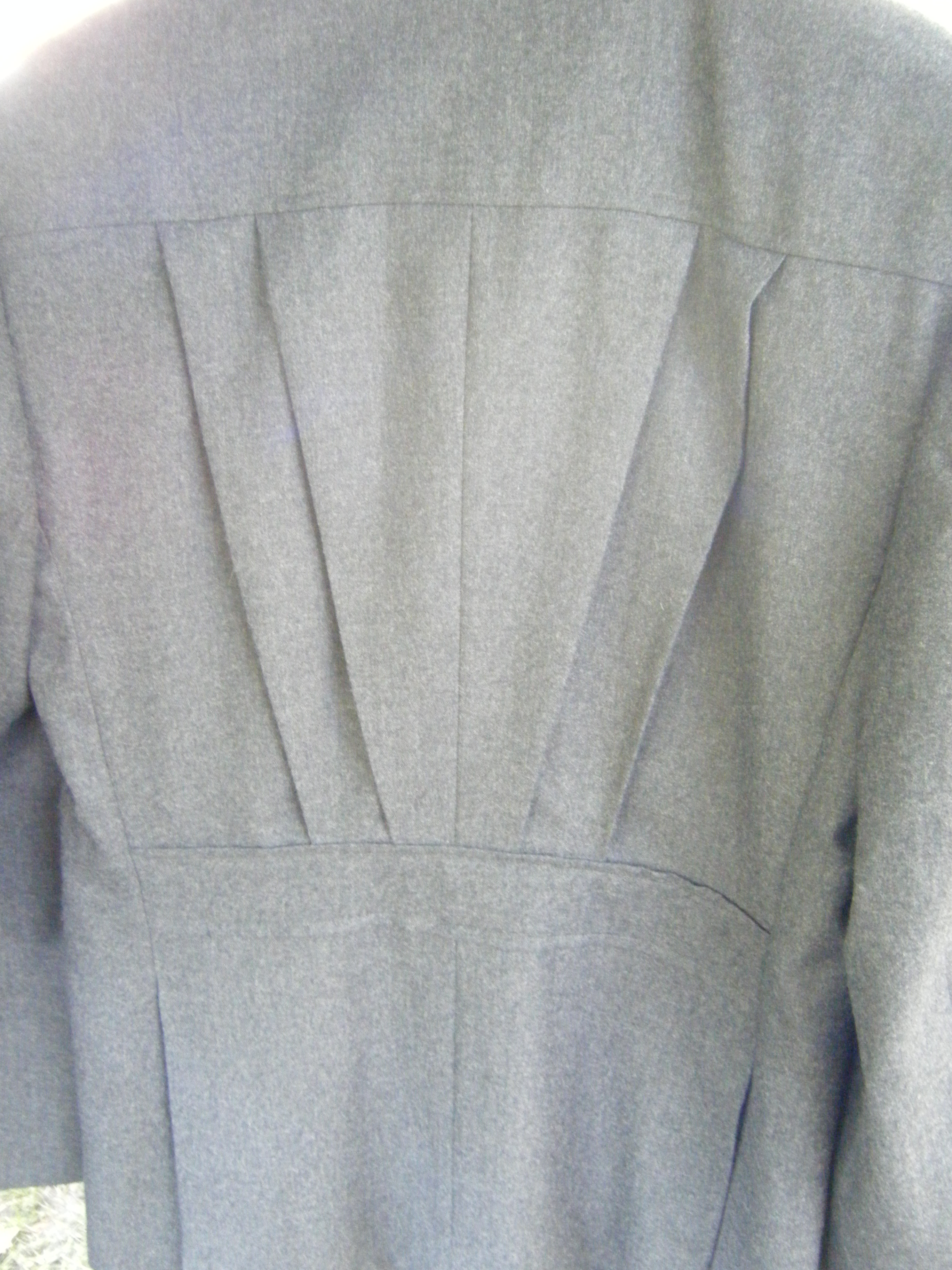
Do you see these pleats?!

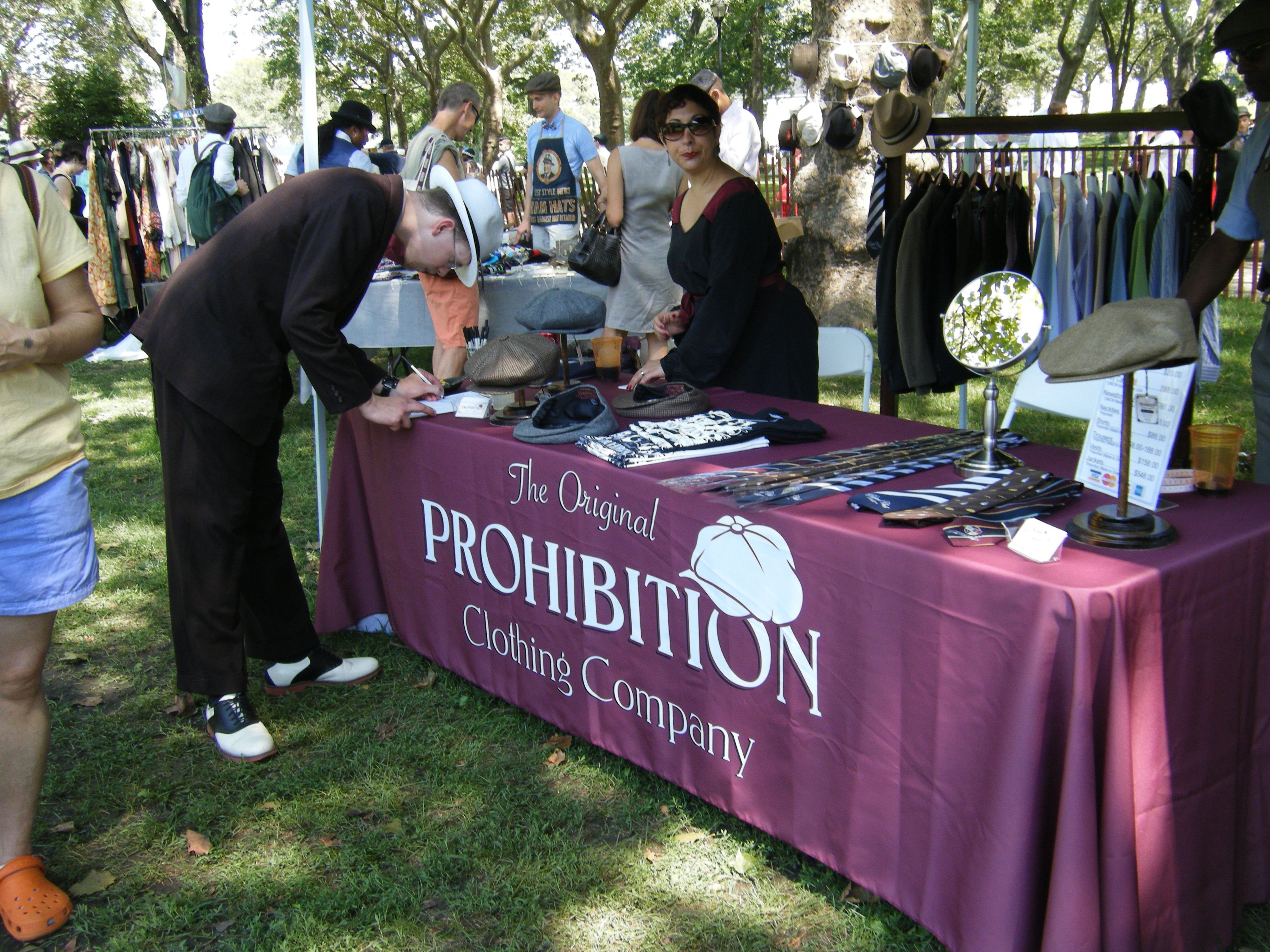
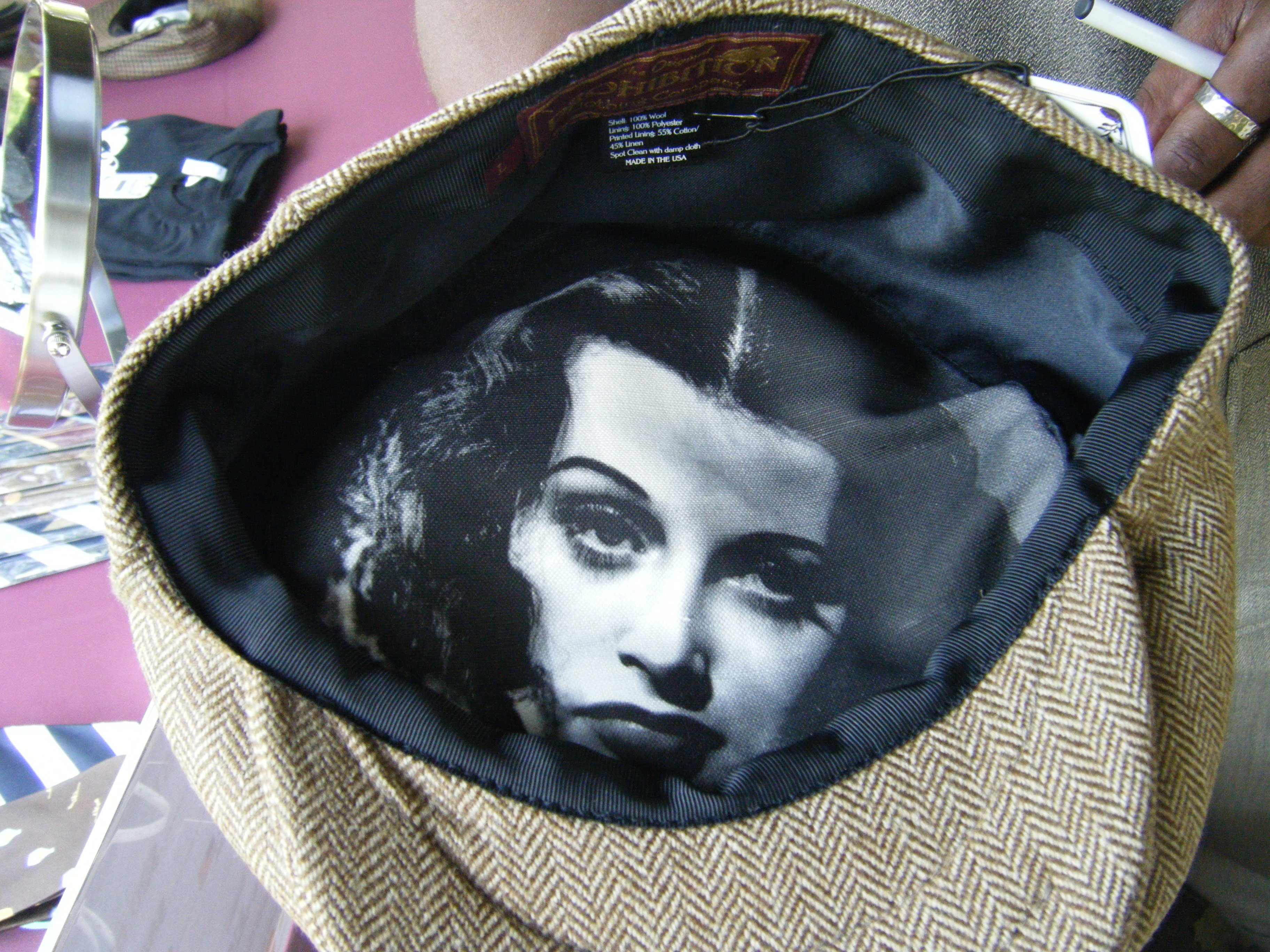
Next in the lineup is The Original Prohibition Clothing Company, a company specializing in custom menswear. What I like about TOPCC is the wear-ability of the garments and the attention to detail. These clothes could be in a fine menswear store just about anywhere, you could wear the clothes anywhere, but they would be that piece that stands out as superb amongst the modern suits, with just enough nod to vintage to appear authentic. Details like fan pleating out of a belt back Norfolk jacket or a black and white Bette Davis printed on the inside of a newsboy cap make these items truly stand out against the competition. Their website is still under development, but I look forward to this company making their products available to the masses. Until then, you can browse some of their accessories available in TOPCC eBay store.

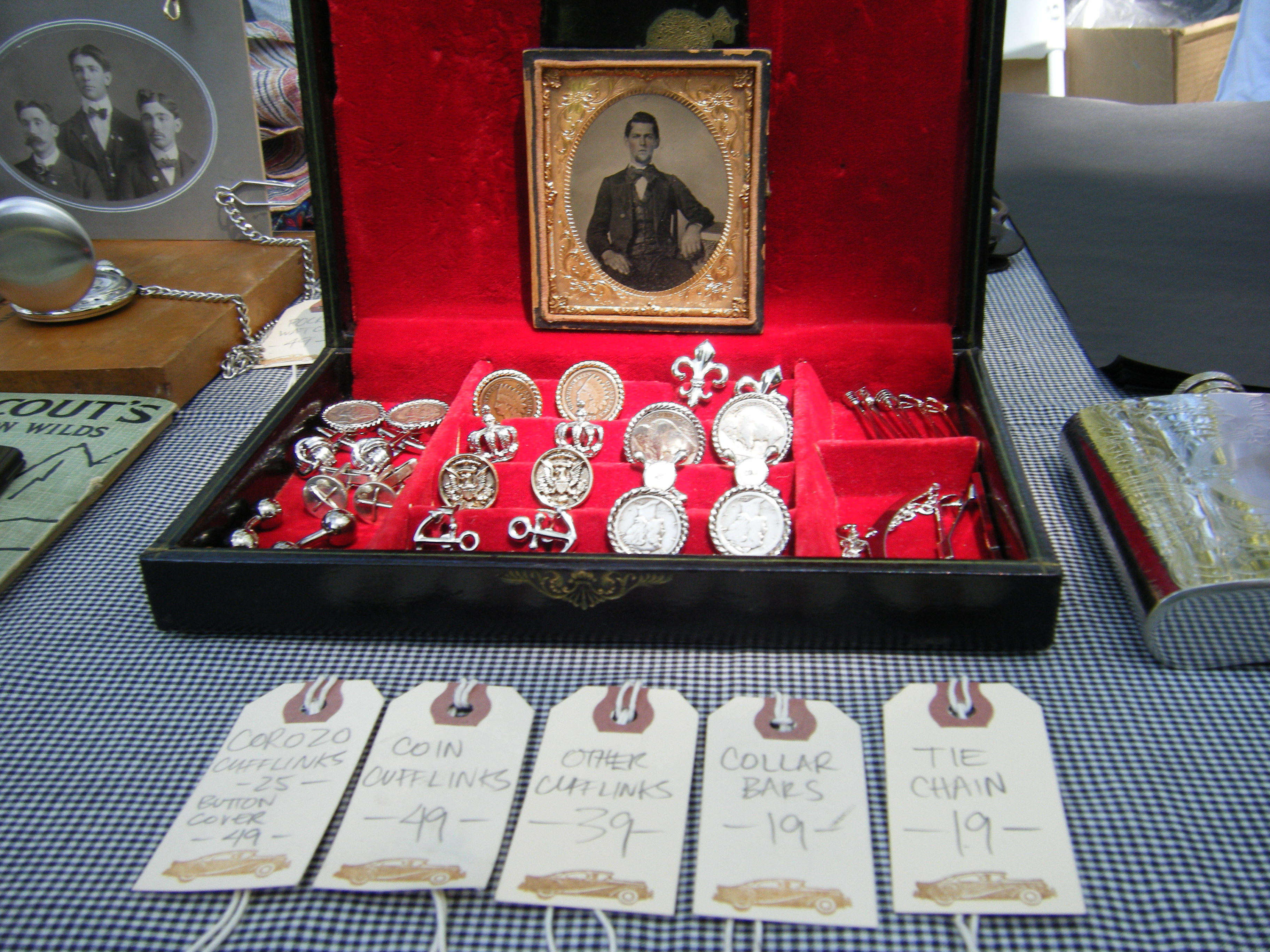
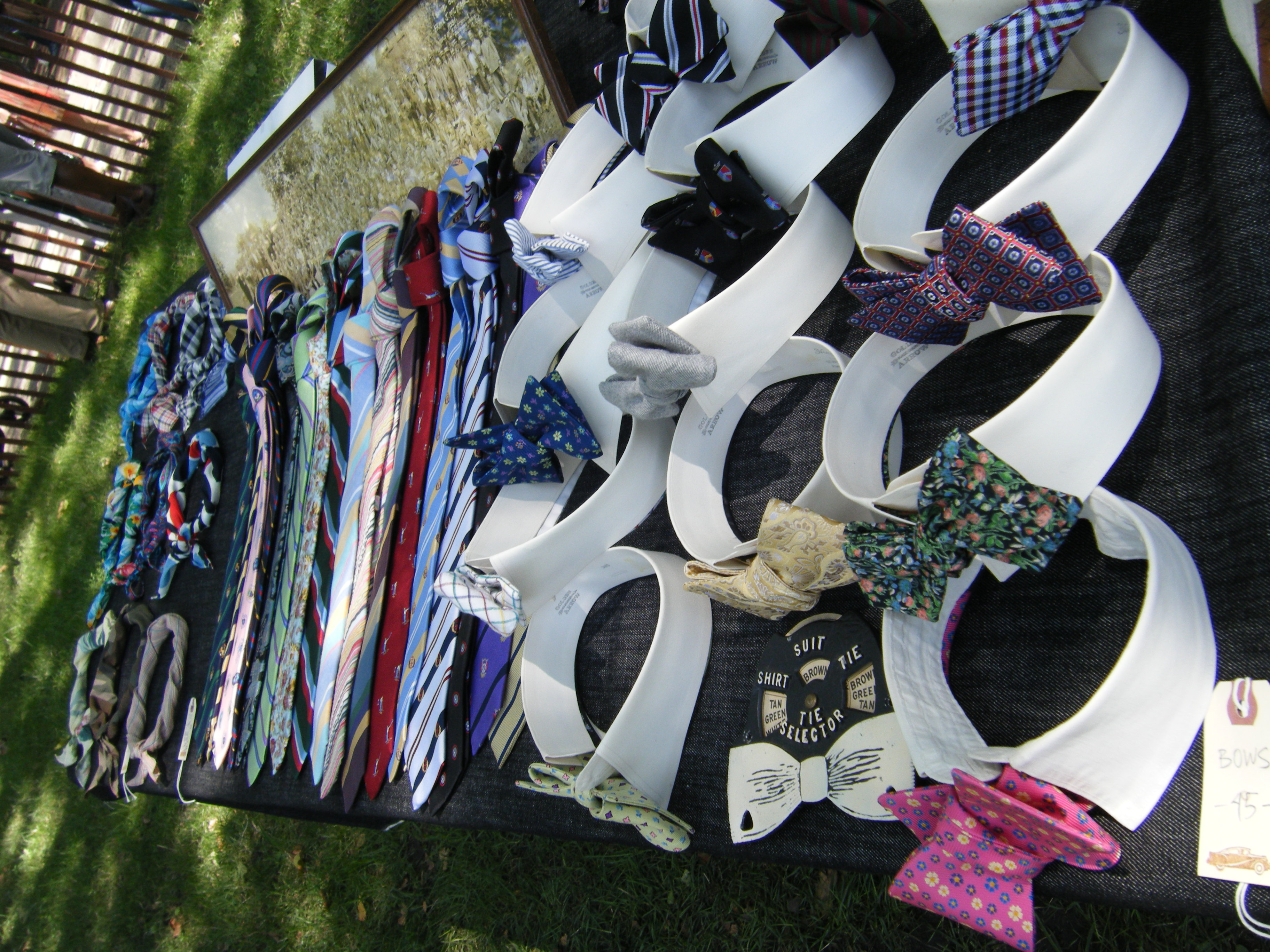
The Fine and Dandy Shop.com had a wonderful showing of men’s accessories – ties, pocket squares, handkerchiefs, cufflinks and other man jewelry, flasks, pocket watches, and even a vintage Boy Scout’s guide. Fine and Dandy has a fairly comprehensive website and I’d recommend that you gents check out their fantastic selection, including their ties, which are made in New York. See photographs below.

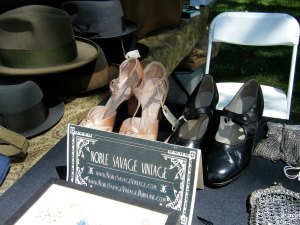
Lovely 1920's shoes peeking out from behind the sign!

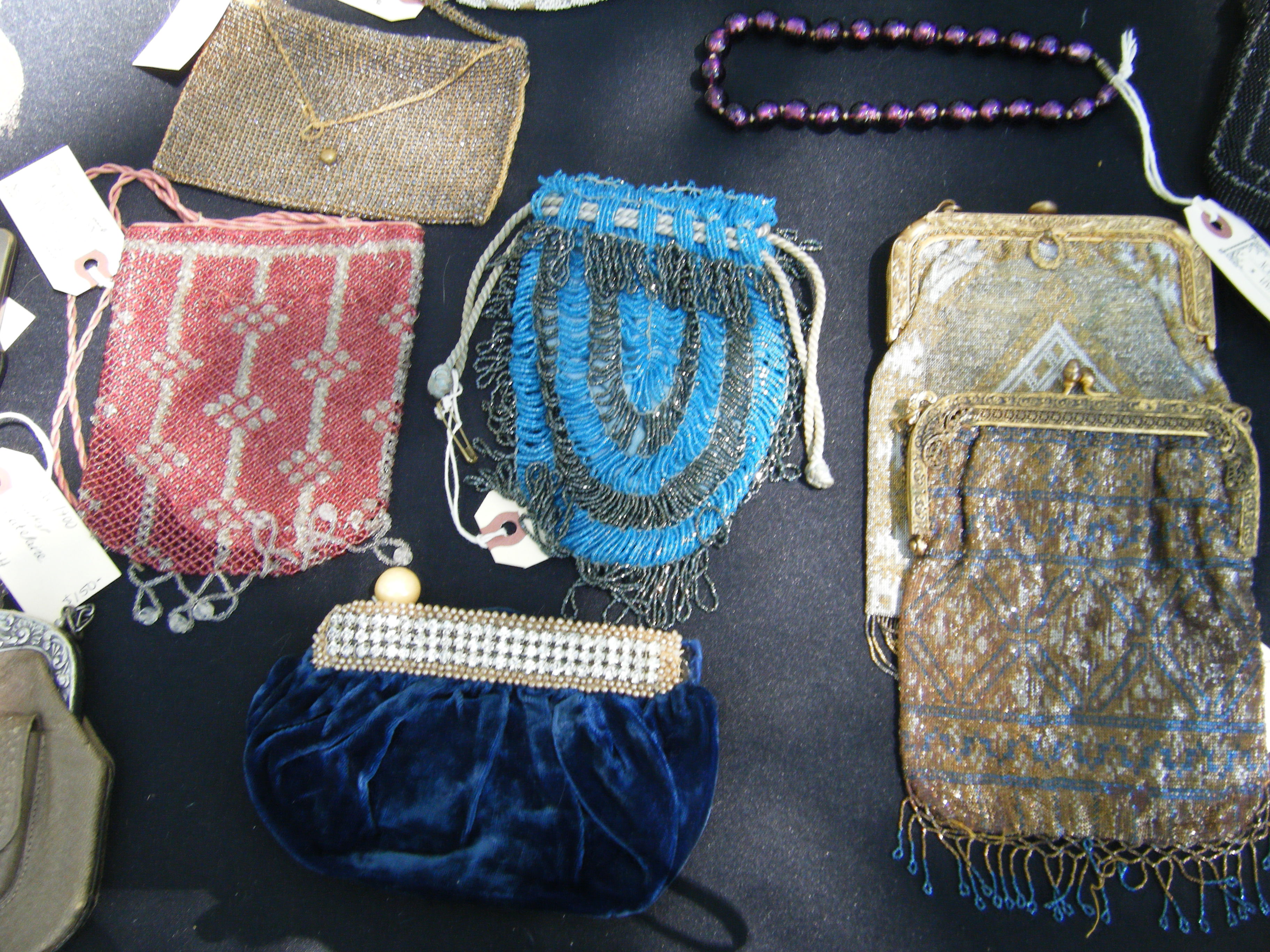
After all this menswear, I arrived at my favorite vendor of the weekend, Noble Savage Vintage, who displayed exclusively pre-1940’s clothing and accessories for women. This table and rack were a dream come true, with beautiful beading, gauzy dresses, satin 1920’s shoes, and vintage lace galore. My friend Elizabeth picked up a wonderful 1930’s dress in a gauzy chiffon floral that was perfect for Day 2 of the lawn party.

I’ll end this tour-de-vendors with The Village Scandal, one of last year’s wonderful vendors who had amazing cloches and the must-have fascinator of the event. This year, their entire inventory must have been must-have because, by the time I made it out to their table, it had been ransacked. Their positioning near the entrance may have helped add to the chaos of what happened to their table, but I am pleased to see that they did so much business.

There were other vendors, but they did not have signs and I was unable to speak with the vendor representative (so many people!). I hope to return to this event next year and make it a priority to get to the event earlier to scope out the vendors’ wares. Until then, I leave you with these photos:

Amazing two tone suit from Odd Twin
Odds and ends from the Odd Twin table
Bow ties from Necks Tuesday
Close up of a plaid bow tie from Necks Tuesday
Hanging goodies from hyc Creative
hyc Creative's spread
Meet and greet with the Original Prohibition Clothing Company
A rack of jackets, vests, and shirts worthy of Jay Gatsby from TOPCC
Starlets peek out of your newsboy cap, courtesy of TOPCC
Man jewelry from the Fine and Dandy Shop
An array of collars and ties from the Fine and Dandy Shop
Beautiful beaded 1920's bags from Noble Savage Vintage
A wonderful cape in a jazz age print, courtesy of Noble Savage Vintage
What was left of The Village Scandal when I got to their table
I'll leave you with two turntables and two microphones - see you next year!

Jazz Age Lawn Party 2011

This post was written by Lindy Shopper.

I am overjoyed to be returning to the Jazz Age Lawn Party this year! Held twice during the summer on Governor’s Island, off the tip of Manhattan, this event is a beautiful celebration of the Jazz Age, the Roaring Twenties, and the music, dancing, and clothing of that era. The people-watching at this event is unparalleled, as are the opportunities for photographers to capture images of the past in the present.

I went to the JALP last year in August for the first time and was delighted to discover some great vendors of vintage, reproduction, and vintage-inspired items. I am hopeful that some of the vendors from last year will return and that there may be a few new vendors to blog about when I get back. Until then, au revior!

My friend Rachel and I at last year's JALP - Rachel writes a wonderful blog on French food and culture, her Martha Stewart tendencies, and her life as a cupcake slinger at http://idratherbeinfrance.com/.

Aris Allen White Wingtip Oxford

This post was written by Lindy Shopper.

Aris Allen is on a roll this week, this time with the debut of a new men’s shoe (a rare occurrence, indeed) – a lovely white wingtip oxford with classic broguing detail along the seams and on the toe. Aris Allen has been the go-to for affordable men’s swing dance shoes and I’m happy to see this welcome addition to their men’s footwear line. Now, you just have to decide if you are a white wingtip man or a white cap toe man…

Remix Updates and Limited Run of Balboas

Of course, after I save up and decide to buy them, they go out of stock...but now I get a second chance!

This post was written by Lindy Shopper.

I’m jumping out of my chair with excitement because the Balboas are back! At least for a limited run, that is – the Balboas in the ivory/parchment combo are available, along with the brown combo and black. If you’ve been on the fence about one of these pairs of shoes, get off the fence right now, sell an organ, take out a loan, and get them while they are in stock because LS has on good information that these shoes will no longer run in their current design.

In other glorious Remix news, the men’s captoe oxford is also available in a new color, a soft brown leather. The popular Anita shoe will be made in metallics – muted gold and silver – which I love because metallics go with so many things and make your footwork shine! Also available in a new color is the Strider, a 1930’s/40’s oxford, which breaks away from muted tones and now comes in a cheerful purple.

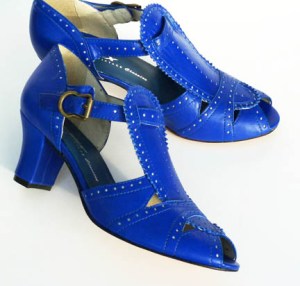
I don’t know if I had time to mention this style when they launched, but Remix’s Emily shoe is a lovely brogued t-strap shoe that is simply a knockout. Available in ivory and a bright blue they are calling “Ultramar Blue.” Using my Google skills (rather, looking for a photograph to post), I also found this shoe available in brown at Shoostore.com.

Ultramar blue Emily shoe

New Old Stock White Leather Oxfords

This post was written by Lindy Shopper.

EBay seller 4 Birds Vintage may have hit the motherload: “This is just the one of a 50-pair shoe collection ~ mostly new old stock from a family shoe store ~ that will be available within the next week. Most shoes are from the years 1890 – 1940 and include original boxes and store price tags. Brands include Star, Poll Parrot, Florsheim, and more.” I’ll definitely be checking back to see what this seller adds to his/her eBay page!

This pair of white leather oxfords is the first of this collection listed and they are in fantastic condition. You’ll have to get a ruler out to determine the size, but the seller says, “These shoes measure 10″ in length on the inside, 3 1/2″ wide on the bottom, with a 1″ heel.” Buy It Now is at $125, a bit more than your Aris Allens, but definitely less than a pair of Remix oxfords.

New Vintage Lady on Etsy

1930's Cape Sleeve Dress

This post was written by Lindy Shopper.

I’ve written in the past about finding vintage clothing in a size larger than tiny, or any size, really, but even for those who find vintage more commonly in their size, it can be a burden of a task to find vintage dresses that fit that also suit your style. While vintage clothing does exist beyond the tiny realm, it is much harder to find, especially when eBay sellers list L/XL as anything from a size 10 upwards – that’s quite a range of sizes to pilfer through! I’ve been touting the benefits of reproductions (ready to wear, made for you, or make yourself), but haven’t found a lot of resources for women who wear over a size 12 or 14.

New Vintage Lady on Etsy has seen this need and done something about it. New Vintage Lady is “proud to stock one of the largest rotations of original plus size vintage patterns and reproductions. I specialize in plus size vintage patterns (but carry items of all sizes!), reproduction patterns 40″ bust and over, clothing, notions, and vintage inspired creations often of my own design.”

I am so in love with New Vintage Lady’s aesthetic – I am actually more enthralled with her own pattern designs than the original patterns she has listed, primarily because she illustrates her own patterns with whimsy, color, imagination, and style. Her patterns are adorable, with thoughtful details like buttons, tucks, contrast panels, belts with buckles, and scalloped edges. She even has hat patterns, and an entire pattern devoted to different types of sleeves that you can add to any dress – imagine that, designers-who-produce-clothing-for-any-mall-retailer – SLEEVES! If anyone has worked with vintage patterns before, you know that the arm holes/sleeves tend to run on the small side, so this add-on pattern is a genius idea.

New Vintage Lady has other great items in her shop, like vintage patterns of all sizes, sewing books, and some vintage and reproduction dresses. Here are some of my favorite items from her shop:

Knot Bodice Day Dress pattern
Knot Bodice Day Dress complete and styled
Kimono Sleeved Flapper Dress pattern
Kimono Sleeved Flapper Dress styled and flat
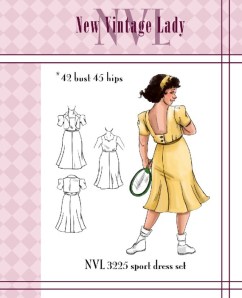
1940's Sport Dress with deep back, optional sleeves and bolero
The 1940's Sport Dress in eyelet, available for purchase

Straw Boaters

This post was written by Lindy Shopper.

Continuing with the nautical theme, I thought I’d post some straw boaters, so the gents can order them in time for Independence Day festivities. According to Wikipedia:

“Boaters were popular as summer headgear in the late 19th century and early 20th century, and were supposedly worn by FBI agents as a sort of unofficial uniform in the pre-war years…Being made of straw, the boater was and is generally regarded as a warm-weather hat. In the days when men all wore hats when out of doors, “Straw Hat Day”, the day when men switched from wearing their winter hats to their summer hats, was seen as a sign of the beginning of summer. The exact date of Straw Hat Day might vary slightly from place to place. For example, in Philadelphia, it was May 15; at the University of Pennsylvania, it was the second Saturday in May.”

I have heard that boater hats were generally considered disposable, a hat that someone purchased new every year – now, a vintage boater and new boaters will set you back a pretty penny ($100+), but some deals can be had if you dig for a bit. Here are some boater hats for sale in the more reasonable range:

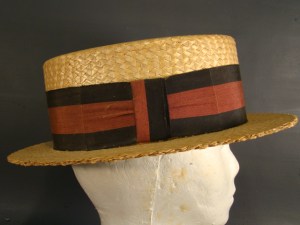
A vintage straw boater from my neck of the woods, 21 inches circumference
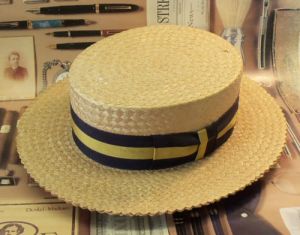
Vintage Stanhope Brothers hat, size 7.25
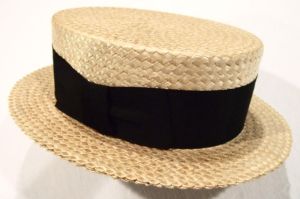
Vintage boater, circumference 22 and three eighths inches
1920's Stetson straw boater, size 7 and three eighths
Brand new boaters in sizes small through XL