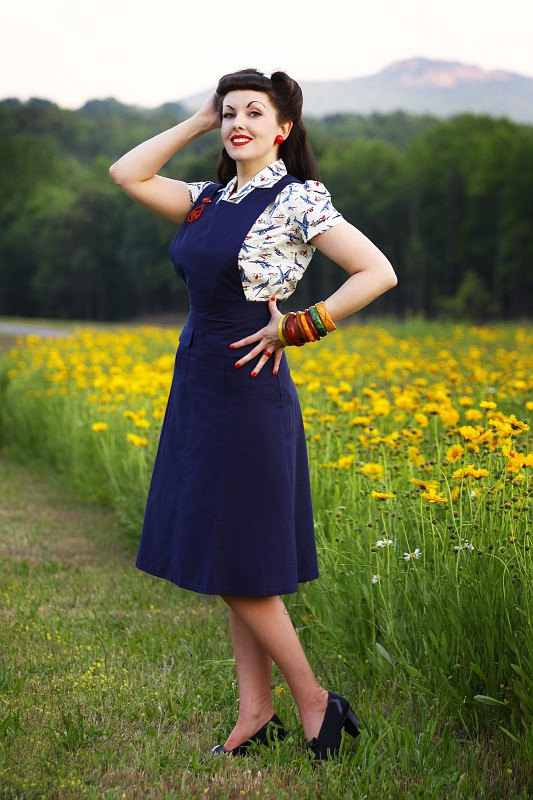
I’ve highlighted the adorable reproductions made by Etsy seller Jitterbuggin in the past, but I think she’s really hit her stride with these new (since my last post) matching 1940’s jumper and blouse sets in blue and green. I’m linking to the jumpers, as the blouse must be purchased separately, and all are available in multiple sizes.
Everything about the sets is just fantastic, the pocket details on the jumpers, the line of the skirts, the fabric choices for both the jumpers and the blouses (especially the airplanes!), and the contrast collar and sleeve bands on the green blouse. On top of that, Jitterbuggin shows you how to wear it by styling her models to the hilt, with period hair, hosiery, shoes, red lips, hair flowers, and bakelite accessories. Very Groovie Movie!
I’m excited to announce that the Yehoodi staff has invited me to contribute featured content to the Yehoodi website. This is my first article for Yehoodi, which I am also publishing here on Lindy Shopper for your use and enjoyment.
Following the Why I Wear Vintage post, Evan Philips requested an entry on how to take care of your vintage clothing and I am happy to oblige. Taking care of any wardrobe requires some maintenance if you want to keep it looking nice. Vintage clothing sometimes requires a little more effort to keep it looking fresh, but if you are careful in your choices for maintaining your vintage garments, you can enjoy them longer and with less worry.
For this article, I consulted with the all-knowing Movie Diva, Laura Boyes, who has experience working with the costume collection at the North Carolina Museum of History. I’ll share my observations from experience, but Laura will be providing the pro tips!
CLEANING
So you bought an article of vintage clothing, wore it to a dance, sweated in it for three hours, and now it’s a little ripe. You’d like to know how to clean it, but there’s no convenient garment tag telling you if it’s dry clean only, hand wash, or wash cold/tumble dry low. Think about what you have in your closet that is in the same fabric – what instructions for care are on that garment? Now, consider that this garment is vintage and, as a precautionary measure, what method of cleaning would be a bit more delicate than that, just in case?
Identifying the fabric is very important. Unless a garment is made of cotton, I will be sending it to the dry cleaners, and even the cotton garments sometimes get sent there if I’m particularly squeamish about hand washing the garment or putting it into my washing machine on the hand wash setting. If I am washing a garment myself, I always hang it up or lay it flat to dry, rather than putting it in the dryer. Laura recommends washing your vintage clothing in a gentle detergent, such as Orvus WA Paste, “a synthetic anionic detergent with a neutral pH which will remove most common dirt and stains.” You may be able to find this at farm supply stores, as it is used to shampoo show horses.
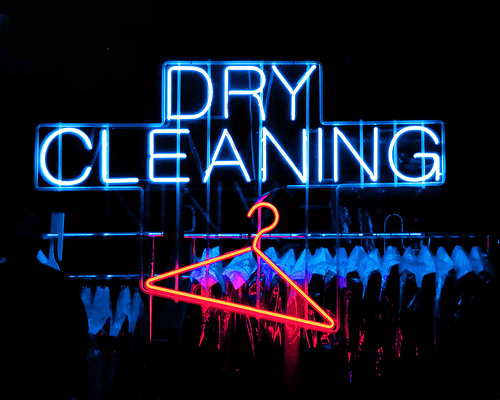
Finding a dry cleaner you trust is worth its weight in gold. You want to find someone with years of experience – don’t cheap out on this just because the $1.99 cleaner is near your house. Do some research, make calls to find out how long they have been in business, if they have worked with vintage and antique clothing, and be willing to sign your life away for them to clean it because most of them won’t want the liability of having to deal with you if the garment deteriorates. Usually if a place has been in business for a long time, they will have a good reputation and will also have older clientele who may have some of these older fabrics and older items that need some extra care when cleaned. I feel truly lucky to have found an amazing dry cleaner in Chapel Hill, NC, Plaza Dry Cleaners. Not only are they the oldest dry cleaners in town, one of their cleaners has taken classes in clothing preservation at the National Archives in Washington, D.C. I’ve been using their services for 6 years now and they have yet to ruin one of my vintage items; in most cases, the garments come out looking even better, with fewer stains and a fresher look to the fabric.
When you take a garment into the dry cleaners, you will need to make a few declarations about the garment so that they know that you are educated about the garment, so they have the information they need to make an informed decision about cleaning the garment, and so they are on notice that this is a special care item. If you know the decade, tell them how old the garment is, note in advance the flaws you are aware of (spots, holes, etc.), indicate whether or not you want them to try to get the spot out, and tell them what you believe to be the correct fabric. If you don’t know what kind of fabric you have, someone there will be able to identify it.
They may not want to clean the item for fear that the process will do something to the fabric or that something on the garment will be harmed in the process. I will say that this situation is pretty rare and limited to uncommon garments, like a 1920’s velvet dress with a jeweled piece or a 1930’s rain coat. In this situation I usually ask if there is some other way I could clean the garment myself or ask if hand-washing would damage the garment. If I really want the item cleaned and do not care if the garment could be harmed in the process, they will usually have me sign a waiver stating that I have been informed of the potential consequences and waive their liability.
Unless you are wearing vintage every day, the cost for your vintage dry cleaning shouldn’t be prohibitive. I might have two items per month that I take out for cleaning.
In those extremely rare cases where the garment can’t be cleaned, don’t wear those garments dancing or in places where you will sweat a lot. Hang them up after you wear them and let them air out for a few days before storing them again.
MENDING
Almost everything can be fixed. Many times, if you look closely at a vintage garment, you can find places where it has already been fixed or altered by the previous owner. Earlier generations mended holes in garments, rather than discarding them, because resources and clothing were more limited. I find that vintage garments tend to take a mending much easier than newer garments because of the way the garments were constructed.
Order of operations number one is to find a tailor who has either worked with vintage clothing in the past, works with fine fabrics, and/or has been sewing for longer than you’ve been alive. I once made the mistake of handing over a silk 1940’s suit in a strawberry print for my mom to reinforce the seams on the sleeves and, having never worked with silks, made the mistake of putting the suit under the needle of her Singer sewing machine on the regular setting. She might as well have put it under the knife, because the silk shredded into a million pieces. I should have told her to hand sew the sleeves, but this is a lesson in assumptions – don’t assume that every tailor will know how to fix your garment. Ask lots of questions and err on the side of caution.
I found my vintage tailor through a locally owned fabric store that sells fine fabrics and other fabrics for clothing. The had a list of people they recommend for people who want custom made items, with a description of each person’s areas of expertise. After talking with the ladies in the store about what I was looking for, they were able to make recommendations as to which tailor(s) would be best for the job.
You may have noticed that article of clothing purchased new that you wear frequently for a period of several years may begin to fall into disrepair, or even fall into disrepair after one season if not well made – remember this when you are cursing that newly discovered hole in your 1940’s pants or dress. The tendency for modern clothing is to get rid of it – throw it away or donate it to a thrift shop, because there will always be something to buy new. The approach to wearing vintage clothing is entirely different and is rooted in that era’s sensibilities. There may be more vintage clothing, but the supply is not replenishing, so repairing a vintage garment becomes an act of preservation.
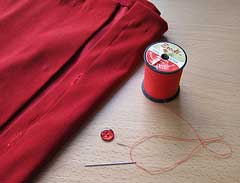
To preserve your vintage clothing, you sometimes have to think outside of the box, or ask your tailor to be creative. If a button falls off, there’s no little plastic baggie with an extra button for you to sew on and finding a matching button is impossible. So, you find new button and use this opportunity to make the garment even better – something as simple as buttons can change the entire look of a garment, and you can update the garment with new buttons or find vintage buttons on Etsy, eBay, or a few other online resources. I had a 1940’s dress with terrible buttons on it and just switching out the buttons took the dress from matronly to swing-worthy with just a few stitches.
What if there’s a giant hole? Your tailor may be able to harvest some fabric from a hem or inside part of the garment to create a seamless patch, or come up with another way to cover the hole.
What if the seam split? Get your tailor to sew it up and perhaps reinforce it.
You get the idea. 🙂
STORING
Enemy target: eradicated
Moth balls smell like old people. Vintage clothing was once worn by old people and stored by old people. Why is vintage clothing still around? I’m not going to credit moth balls with saving all vintage clothing from moths, but I am going to credit it with maintaining a good portion of my wardrobe and the portion of my wardrobe inherited from others who used moth balls to keep their clothing free from holes. I initially shunned moth balls because of my mother’s over-use of the moth ball when I was growing up – she would toss a whole box into a closet and stuff them in drawers, until every time you tried to wear something that hadn’t been just laundered, you’d come out of the house smelling like a great-aunt. When I went to college I stayed far away from moth balls until I pulled my favorite red wool dress out of the closet to wear at Christmas and discovered two large moth holes in the shoulder; a deeper dig into my wardrobe and I discovered even more casualties. In tears on the floor of my bedroom, I vowed that the moths would never claim another victim from my closet.
Moderation is key. I don’t need moth balls to protect everything, so I have a moth ball section in my closet. I use a hanging moth ball basket I got at the grocery store, which initially came with moth cakes, but I can also fill with moth balls. The moth cakes/balls dissipate over time, so you do have to refill them from time to time. The hanging basket allows me to group my most vulnerable clothing (wools and other natural fibers) in one section of my closet and hang the basket in the middle of that group. It has limited the extreme moth ball smell to a smaller group of garments, which I then air out a few days before I plan to wear them.
Let’s talk about hangers – next to moths, wire hangers are your clothing’s worst enemy. Wire hangers are too sparse to hold clothing without almost penetrating it and, over time, the wires begin to rust and that rust is corrosive to clothing. I’ve seen countless casualties created by wire hangers, where the rust stains have eaten holes in the garment and you can see exactly how that garment was hung on the wire hanger. Please invest in plastic, wooden, or fabric covered hangers for your clothing. Plastic and wooden hangers are good for everyday clothing. If you have a more delicate item, such as mesh, chiffon, or other sheer fabric, pick up a few padded, fabric covered hangers.
If an items is particularly fragile or the weight of the garment is too much for the straps or shoulder of the garment, consider storing the garment folded in a drawer, with ample space and nothing stored on top of it (i.e. don’t cram it into an already full drawer). According to Laura, it’s also a good idea to have some acid free tissue paper on hand to line drawers, separate layers, stuff hats, or pad hangers, as needed.
If you have clothing that is from the 1920’s or older, Laura states that these garments should be stored flat. “If you buy one of these boxes (and keep it under your bed, or on a closet shelf) and layer in between with acid free tissue, it will preserve your dresses from the stress of hanging. You would probably want to store items this way that you wear only occasionally.”
The rest is common sense: Don’t leave things where your pets have access to them; men, hang up your ties, don’t leave them on the floor; don’t store things where they might get soiled; etc.
If you have any further questions about this topic, please feel free to ask! We want to keep these articles of vintage clothing alive and wearable as long as possible.
While the Gentleman’s Emporium boasts primarily reproductions of Victorian and Edwardian garb for men and women, there are some things that remain timeless and, thus, useful to swing dancers aspiring for a vintage look from just beyond Edwardian times or for those who aspire to the high style of Mr. Bobby White. Gentleman’s Emporium makes it easy for buyers – if you aren’t sure what pieces go together, you can view the items by “Outfit” for a head to toe ensemble, grouped in clever characters like “Toby Greenwell – Newsboy,” “Professor Babcock – Man of Science,” “Dickerson Potts – Sportsman,” and numerous other rogues and gentlemen. The ladies also have characters and ensembles, but are, for the most part, not period-appropriate and not dance-able.
In the alternative to the ensemble approach, the Gentleman’s Emporium lists their stock individually in categories, so if you are looking for a vest, you need only click on the proper category. This is probably going to be the most effective way to buy pieces to re-create 1920’s and 1930’s looks via this website. I’m treading lightly here, as menswear is not my forte, so if I’ve listed something that is just not in the realm of comprehension during the jazz age, I apologize.
Here’s what I think might be useful from the Gentleman’s Emporium:
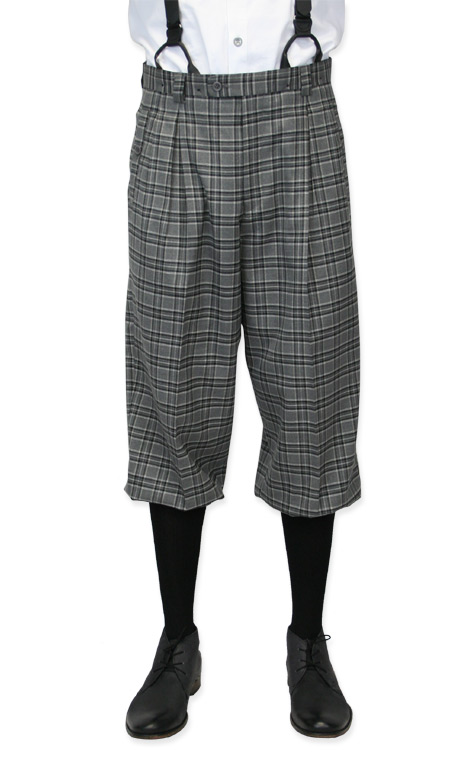
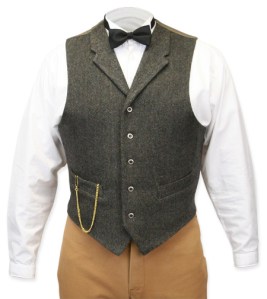
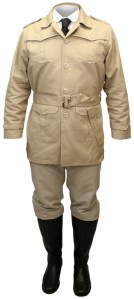
Knickers, shown here in charcoal, but also available in a tan/rust plaid and a black/burgundy plaidCromwell wool tweed vestIn light of my continued search for Norfolk jackets, I thought this safari bush jacket was just wonderful
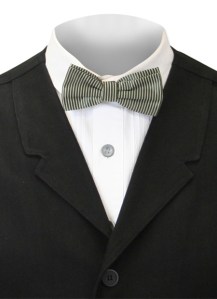
Brown sporting cap in linen, which means this hat breathesBow ties in several colors, $10
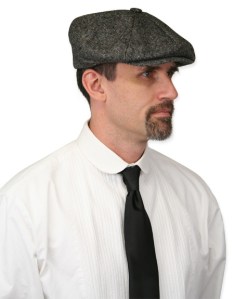
Gray tweed newsboy capCanvas braces - they also offer elastic, but I thought the canvas was interesting
It’s been a while since I checked on Heyday!, my favorite UK retailer of heavenly high waisted trousers, but I see that they have been busy. They have expanded their line of women’s and men’s clothing and have some pretty impressive and hard-to-find pieces at not unreasonable prices. Men can pick up some more casual style jackets, like the gab jacket or the Hollywood jacket, or some elegant 1940’s trousers. Women who are looking for separates will find several styles of adorable reproduction blouses, 1940’s style suits, dresses that are great for dances and work, as well as those famous trousers that make everyone’s bum look like a million bucks.
Here are my favorites from the website:
How sharp are these! Get your Gene Kelly on in the Anzac trousers, available in 9 colorsYou just can't go wrong with these swing trousers - available in 14 colorsFleur wrap dress, available in 6 printsHollywood jacket, an alternative to the traditional blazerOlivia blouse - stinkin' adorable, in 11 colorsWant this suit!
I was not prepared for the cold weather we had over the past weekend. North Carolina’s typical Indian summer that lasts well into October appears to have abandoned me this year and I’m disappointed to be sitting here in a sweater typing this blog entry. Shouldn’t I be in a sundress for at least another two weeks?
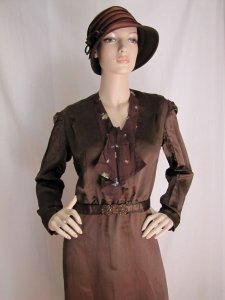
Then I see this lovely vision of fall, a gorgeous brown silk 1930’s dress with an accent print along the neckline, a beaded belt buckle, wonderful detail at the shoulder, and *gasp* long sleeves. Perhaps if this dress were my size, fall would be a less chilly, more fabulous? Bust 44, waist 38, hips 52.
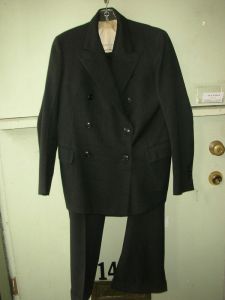
I came across two black 1930’s suits in the same jacket size, 40R, on eBay this week that look to be in great condition! The first has a double breasted jacket with the following description:
“This is a vintage 1930’s, three piece, double breasted suit in good, vintage dry cleaned condition. There are no holes or stains. This suit measures 21″ across the chest from armpit to armpit. The upper shoulder area at the back is 16 1/2″ across from arm seam to arm seam. The sleeves are 25″ long from the shoulder seam to the end of the cuff. The pants are 36 x 30. They have interior buttons for suspenders and a button front closure. They are flat fronted with cuffs.”
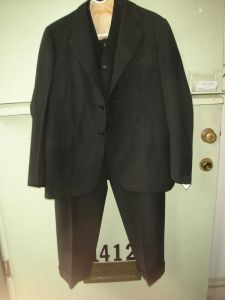
The second suit is a regular three piece suit, dated 1933, with the description:
“It is 22″ across the chest from armpit to armpit. The upper shoulder area at the back is 17 1/2″ across the back from arm seam to arm seam. The sleeves are 25″ long from the shoulder seam to the cuff. The pants are 35 x 30. They are flat fronted with cuffs. There is a watch pocket.”
Starting price is $199.00 for each suit – you’d run the same at Men’s Wearhouse for a three piece suit, but something tells me this vintage suit would be more of a standout. 🙂
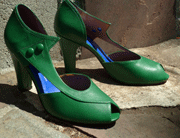
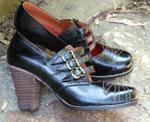
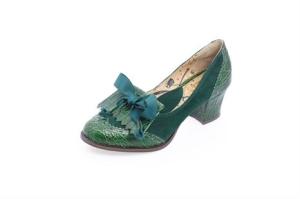
When it rains, it pours, and it’s pouring gorgeous shoes this week. Remix has launched two new styles: the Eva, a Picasso-esque work of art for your feet in green and black; and Amelia, a late 1920’s/early 1930’s Mary Jane heel with three straps in black. The Amelia is cute and sturdy, but the Eva is to die for…they should be paired with that villainess dress I found and wreak havoc on a small city with their sheer awesomeness.
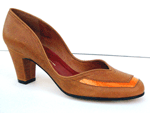
Ava shoe
The Ava shoe is on sale, a versatile pump that could work for dance floor and for work, originally $190.00 and now on sale for $98.00. This shoe comes in camel with orange inset, brown with dark brown inset, gray with black inset, and white with kiwi inset.
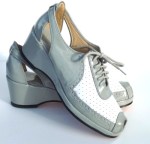
Finally, there’s a limited run of the spectator wedge in a gray patent and white combo, priced at $112.00. Gray is such a great neutral, these look fantastic!
One of my shopping challenges this year was issued by NashPhilly dancer/instructor/DJ/blogger, Breanna Perry, to find her a vintage red dress with a peplum. This is a fairly tall order, given that most of the vintage dresses I come across with a peplum are black, not a color. I found one older dress (was it ’80’s does ’40’s?) dress that fit the bill on eBay, but the auction was lost in the end.
There have been a few modern dresses with peplums popping up on ModCloth, but today’s dress really fits the bill. The Red-y For Anything Dress looks like a fabulous contender, with a lovely rounded neckline, nipped waistband, cheerful peplum, and a clean-lined pencil skirt. This dress is super hot! My only complaint is that, in the item description, ModCloth refers to the peplum as a “dainty ruffle” – in my opinion, there’s nothing dainty about something that changes the entire silhouette of the dress; let’s call it what it is.
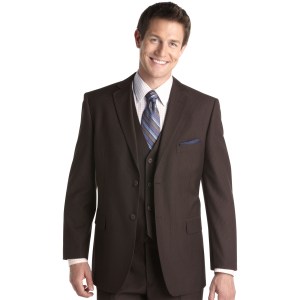
The Men's Wearhouse three piece suit in brown pinstripe
It is not often that my husband contributes ideas to this blog, but I must give him credit for this find. We’ve been looking for a vintage or new three piece suit for him for a while now and, with his birthday coming up, I guess he kicked his part of the search in gear and found this three piece suit at Men’s Wearhouse to add to his wishlist. It looks pretty nondescript in terms of era, but could easily be enhanced with details, like a vintage tie, pocket square, or tie clip, to give it that swing era feel. It could also double as just a regular suit by removing the vest and adding modern accessories for work, job interviews, or whatever else you may need a suit for. At $199.00, the price is right for this versatile three piece suit, which comes in black, a fine black/white pattern, brown pinstripes, a fine brown pattern, and charcoal gray.
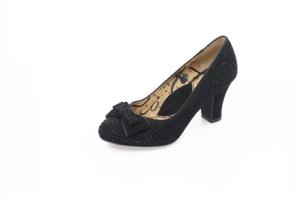
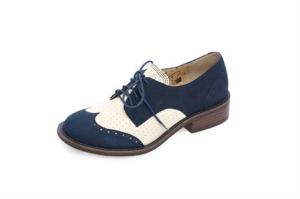
OH. MY. HAWT. It’s been a long time since I came across a shoe that I couldn’t get out of my head, that I was so distracted about that I couldn’t focus on anything else until I figured out how to make it mine. Miss L Fire‘s fall 2011 collection has this shoe, and several other shoes with a distinctly jazz age styling that are simply amazing. Miss L Fire always has some really quirky and amazing shoes, and this goes for the fall collection as well, but there are a few pairs that just defy awesome and somehow become…art. And do you see all these mid-height heels?! OK, I’ve talked this up enough, check out the shoes!
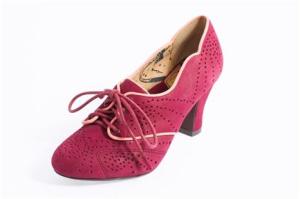
Goddess shoe - I don't usually post what I plan to hoard for myself, but these were just too good not to share. IWILLOWNTHESEClara shoe - a wonderfully detailed t-strap with a wide, low heel - also in green, red and black, and brownEdith shoe - an adorable oxford heel with a wonderful perforated design in the leather - also available in brown and royal blueGabrielle shoe, studded with Swarovski crystals - perfect for your holiday outings and dances - also available in red, blue, and brownMamie shoe - so cute! Also available in brown, black, and blue and tan comboMabel (she's the bomb?) shoe - a great option for a stylish flat shoe - also available in black and white combo and brown and white combo
After seeing the giant white blossom Forties Forward had for sale at ILHC, I couldn’t get it out of my mind. I certainly don’t have enough hair to wear it, but man, it was gorgeous! Following a flower mishap in the Balboa J&J finals, I went searching for a smaller white blossom that would be more secure than the orchid I wore and came across an even larger blossom from Etsy seller Now, Voyager – a gorgeous white orchid of epic proportions! I thought it interesting that the flower was listed as a fascinator and, indeed, it is as large as a hat.
Check out the rest of this quirky Etsy store – fascinators of entire birds, pinwheels, and even a pizza slice…
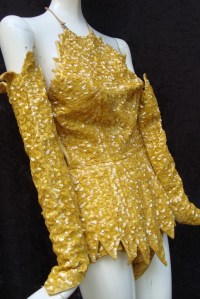
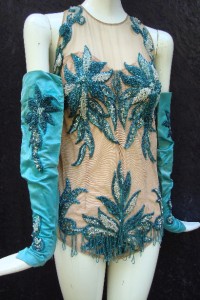
I can’t help but be fascinated when these vintage dance performance items show up on eBay. I posted some 1920’s tap shoes earlier, but these auctions really take the cake! eBay seller monicasvintagefashions has four vintage dance costumes worthy of a Busby Berkeley style dance number, which is pretty rare, considering I had trouble even finding reference photographs while researching costumes for The Carolina Fascinators. These are just fantastic, especially the ones from the 1920’s…paging Sharon Davis and Sister Kate…
Beaded 1920's Art Deco costume, with a nod to Egyptian revivalA beautiful sequined 1920's costume with butterfly wingsA three piece suit in gold sequins with Art Deco-style cutouts around the neck, hem, and top of the glovesA lovely blue 1950's costume with beading on the bodice and gloves
I’m certain there are many arguments against wearing vintage clothing and I’ve probably heard most of them:
“I can’t afford it.”
“It’s too fragile.”
“Vintage clothing doesn’t fit my shape.”
“Wearing other people’s old clothing is gross!”
In spite of the naysayers, I’d like to share my love and philosophy about vintage clothing and perhaps refute some misconceptions or perceptions about vintage clothing in the process. I’ve come up with a list of reasons why I think vintage clothing is worth adding to my wardrobe and why I enjoy vintage clothing so much.
Quality
If you are looking for sheer quantity of clothing, then vintage clothing probably isn’t right for you, unless you make a lot more money than I do in a year. What I am looking for is quality clothing, something that fits well, is made with nice materials, and will withstand the test of time. I’ve watched a lot of What Not To Wear in my life and Clinton and Stacy always talk about spending a little bit more on clothes to get items that will look more luxurious and quality to improve your overall appearance, clothing that you can wear for years, not just this season.
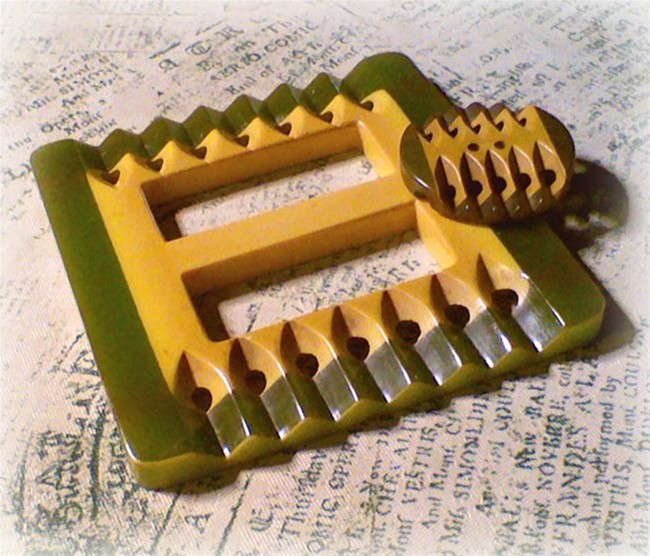
Not all vintage clothing is deteriorating and some of it is in quite durable condition, especially if you find a dead stock item or a person who had items that were well-cared for and rarely worn. The fabrics used in the first half of the 20th century seem more luxurious, the prints and colors more desirable, and the cuts of clothing more flattering. It’s the details that really get me, details that are overlooked by modern clothing designers (or at least the modern clothing I can afford) – bias cuts, goring in skirts, the impeccable cut of a man’s jacket, the use of buttons, beautiful belt buckles, pintucks and pleats, the use of contrast fabrics, the matching of prints, the use of ribbons and other embellishments, beaded details, a snap closure to hold that tab or collar down, structure in a collar or sleeve to make it retain its shape, and on and on. I love getting a new vintage garment and turning it inside out to see how it is made. There are elements in some of these clothes that you can only find in modern designer and couture clothing, which leads me to my next point…
More quality for less money
I’ve mentioned in a previous post that I don’t spend any more on a vintage dress than I would in a modern retail store. That said, I generally pay less for a vintage garment that has more tailoring and details than I would for a comparable new dress. The same holds true for all used clothing – with new clothes you are paying for the new-ness of the garment, the salaries of the people who made it, and the company who is marketing the clothing. If I can get the same or better details for less money and the only difference is that the garment is old or used, I’m going to go with the more cost-effective option.
Fit
I’ve talked in the past about how vintage clothing was made for people of all sizes, not just tiny people, but I also find that vintage clothing just fits me better than modern clothing and is often easier to tailor than modern clothing. Modern clothing is made for the most common size, whatever that happens to be, and doesn’t take into account that everyone has a different bust/waist/hip ratio. If you are a little bigger on the top, bottom, or middle, that ratio isn’t going to work for you, especially if something is supposed to look “fitted.” Checking size charts can be deflating, especially if your bust, waist, and hip measurements land you in 3 different sizes. With vintage clothing, I find that the ratio can be more forgiving – generally fuller skirts, belted waists that can be cinched, and more ample areas in the bust because of how the garment was supposed to be worn. With eBay and online vintage stores, I am able to search for garments that fit my exact measurements, making fit even less of an issue.
Apparently this is what the masses/Google think of sleeves - leg 'o mutton is all we're going to get, after tattoo sleeves and laptop sleeves. I couldn't even find a photo of a regular dress sleeve. Boooooooo...
Coverage
I don’t like strapless or spaghetti strap dresses because I want the comfort of supportive undergarments; however, I am hard pressed to find dresses with sleeves, even in the winter, in modern retail stores. They want you to buy a jacket to go over it, or you have to find a cardigan. What if I want sleeves and a cardigan because I’m cold? I just find the whole thing impractical. I generally find it easier to find a vintage dress with sleeves in my size than I do finding a dress with sleeves at the mall – I think that’s saying a lot.
Unique
If you buy an article of vintage clothing, the odds of someone else having this exact article of clothing is slim to none. Much of the clothing of the swing era was hand made, not mass-produced, but even the mass produced items are rare and far flung. I’ve only come across a couple of items in multiples, one being a dressing gown I found at both Design Archives in Greensboro, NC and on eBay and the other being a 1940’s dress I wore at Lindy Focus last year that several people insisted was exactly the same as a dress owned by Naomi Uyama. Aside from those rare exceptions, my vintage wardrobe remains one-of-a-kind and I think there’s value in finding your own style via these unique garments.
Personal style
Personal style can be maintained via vintage clothing without having to change your entire wardrobe to the stereotypical “vintage” look. I have friends who can pick out both modern and vintage garments and say “This looks like you!” Clearly, there would be major differences in the garments, but there are certain elements that make up personal style that can translate across the decades – cut, shape, color, and decorative notions are a few that come to mind. Sometimes people have trouble discerning whether or not a garment I wear is vintage, but I think the general consensus is that, whatever I am wearing, it is very “me.”
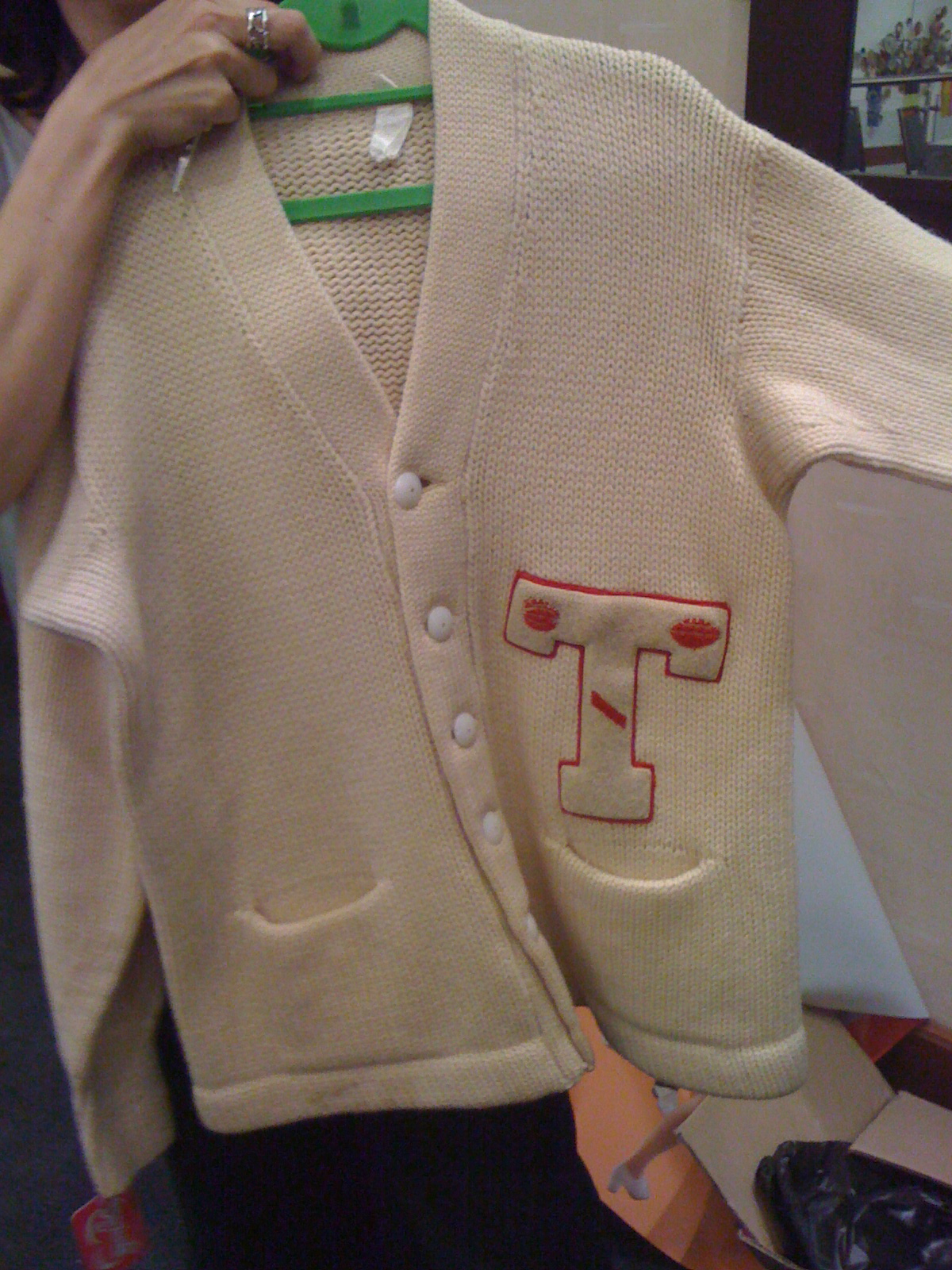
Letter sweater, 1940
It’s been done
Designers are inspired by the designs of the past. It’s that simple. You can look at just about any garment and relate its shape and design to some article of clothing created in a past decade. In my opinion, most of the time, the past did it better.
Ralph Lauren's version for fall 2011
Feeling good about yourself
I’ll admit it, I feel really special when I wear vintage clothing. Clothes from the past tended to be more dressy than today’s jeans and tee shirt uniform (which I do still wear), so when I wear something vintage it’s because I’m going somewhere special, so I want to look special. Maybe I want to be going somewhere special every day, so I try to wear vintage dresses as much as possible so I feel better about myself, even when I’m not going somewhere special. Vintage clothing can definitely elevate your look, your mood, and your surroundings, and I find that people smile more at me when I wear vintage.
Sustainability
I feel like there’s been a lot of talk about sustainability and being conscious about the environmental impact of our clothing purchases and, while I didn’t initially purchase vintage clothing for this purpose, it’s certainly an incentive to continue to do so. I like to think that I am rescuing this clothing from the garbage heap, keeping its wonderfulness alive while eliminating its clutter and deterioration in a landfill.
As for vintage clothing being gross, well…I guess I’ll just have to be gross. There’s nothing like a trip to the dry cleaners to make an old garment feel new and get out that musty attic smell. 😉
I’ll agree that this is a labor of love. I think some people get frustrated because they treat a vintage clothing store like they would treat a store at the mall. When you are shopping for vintage clothing you have to shift your approach, know that not everything comes in your size, and be patient. Just like any good wardrobe, building it takes time. I’ve been collecting vintage clothing for over a decade now and I’m just now getting to the point where I feel like I have a vintage outfit for almost every occasion. The result – a wardrobe that I love and adore – has been worth the wait.
I had the pleasure of dancing and competing at this year’s International Lindy Hop Championships, held just outside of Washington, D.C. in Alexandria, Virginia. The event was a unique mix of swing dancers, in varying styles of dance, from around the globe. I think the event is best summed up by saying that ILHC is where you can see all those people you see dancing on YouTube – but there’s nothing better than seeing it live, as a video can’t quite capture the energy these couples and teams generate or the dynamic in the room.
(I apologize in advance for the quality of the photographs, as I forgot my real camera and had to use my phone)
Dancestore in the house!
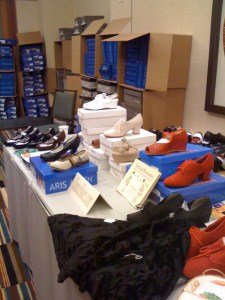
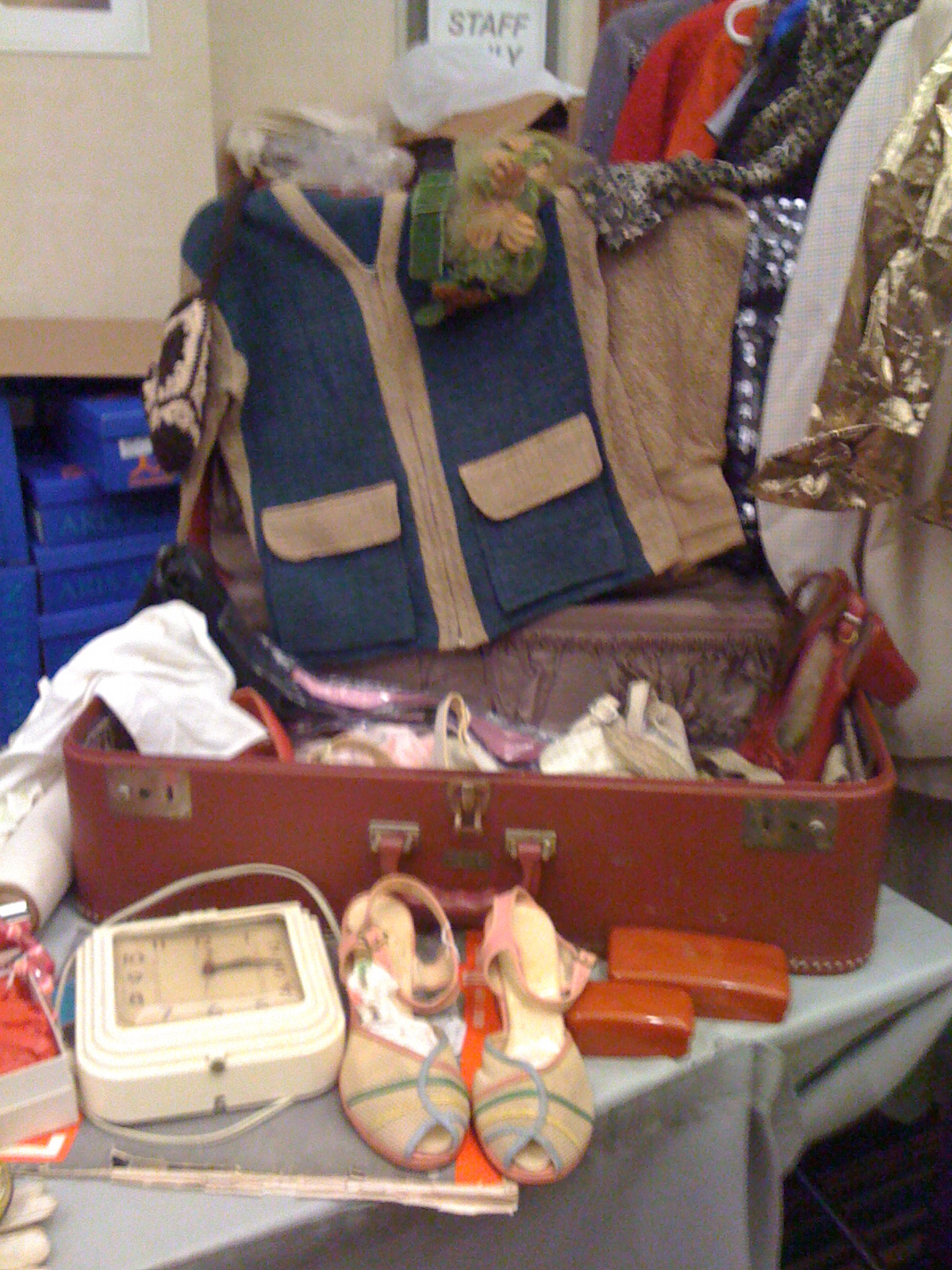
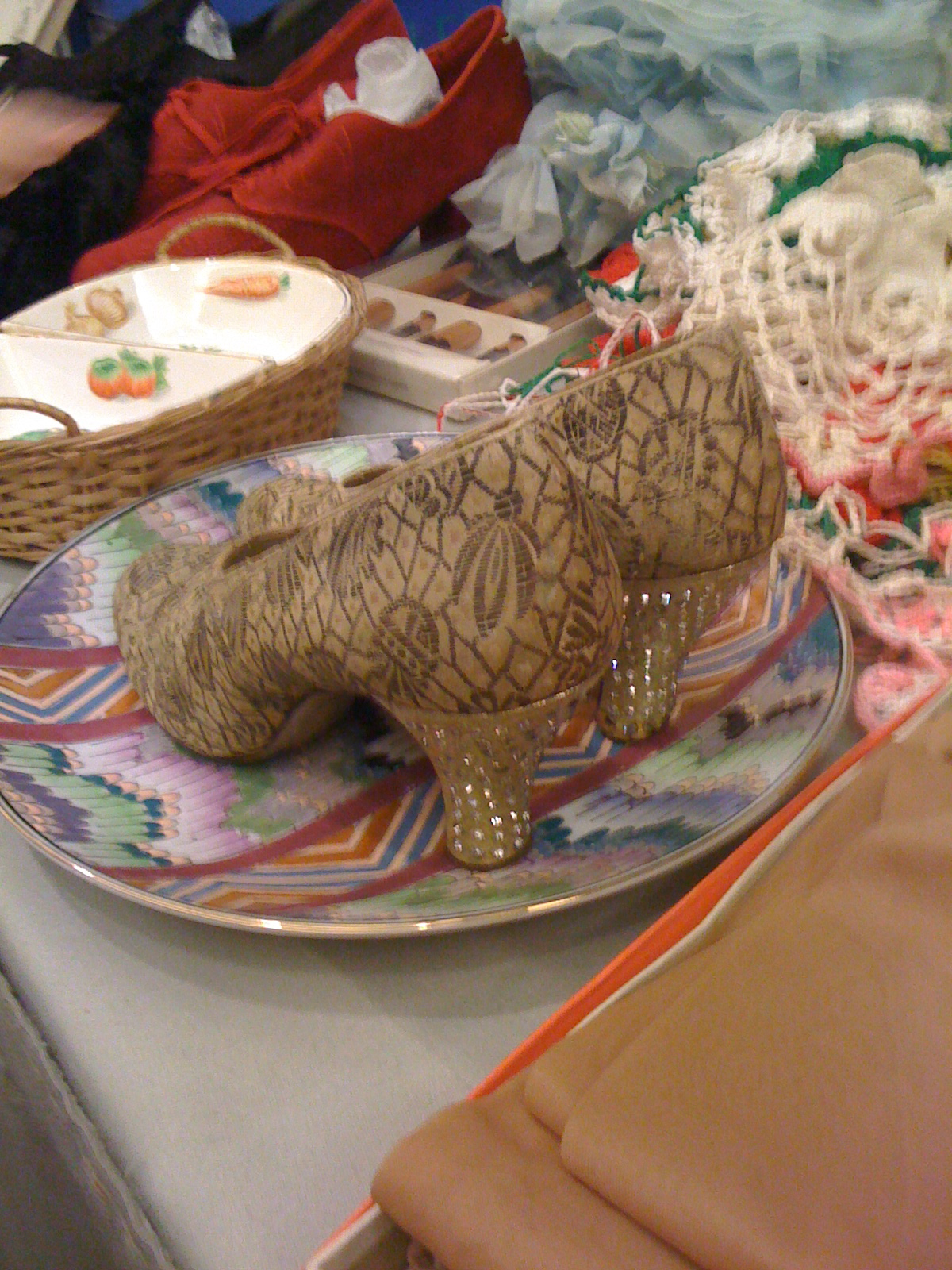
Like most large swing dance events nowadays, ILHC had its own set of vendors, most of which I would categorize as the “essentials” providers – shoes, bloomers, hair flowers, and vintage/vintage-inspired clothing. Baltimore-based Dancestore.com was there with a lineup of Lindy and Bal-friendly shoes, including their new pair of white wingtips, which look gorgeous in person. Nina Gilkenson‘s mom, Laurie Gilkenson, was on hand, selling shoes for Dancestore, as well as vintage odds, ends, clothing, and shoes from Nina’s vintage shoe collection. If you wore a size 6.5, it was definitely your lucky day! More photos below of this and the other vendors.
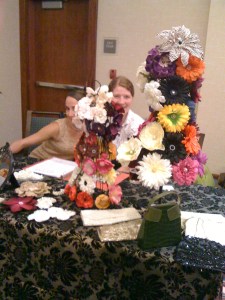
Forties Forward had an array of new hair flowers, since I last saw these gals, Erica DeBlasio and Michelle Postles, at Lindy Focus. My new favorite bloom was a giant white bloom, possibly a magnolia blossom, that was so large it could almost be a hat!
My Heinies, in grand fashion, occupied the largest vendor space, with racks of colorful bloomers in all styles, as well as a beautiful collection of dance shoes for men and women. I noticed a particularly lovely pair of men’s two tone brown wingtips that garnered a lot of attention from the leaders in attendance, as well as some new to-die-for red heels in the collection. I noticed a number of followers in the competitions wearing My Heinies…and some who didn’t, but that’s another story…
A letterman's sweater from Model J Vintage
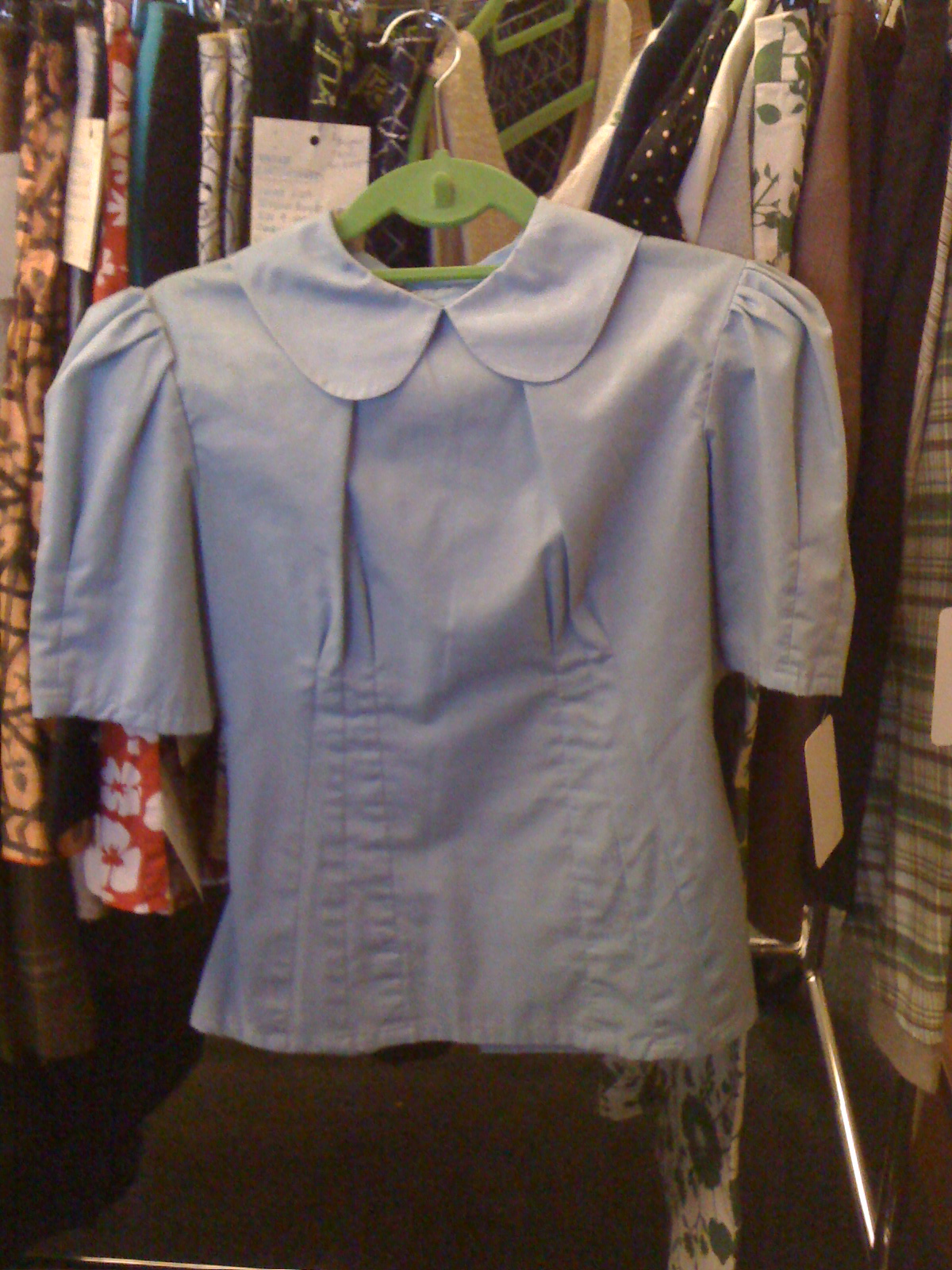
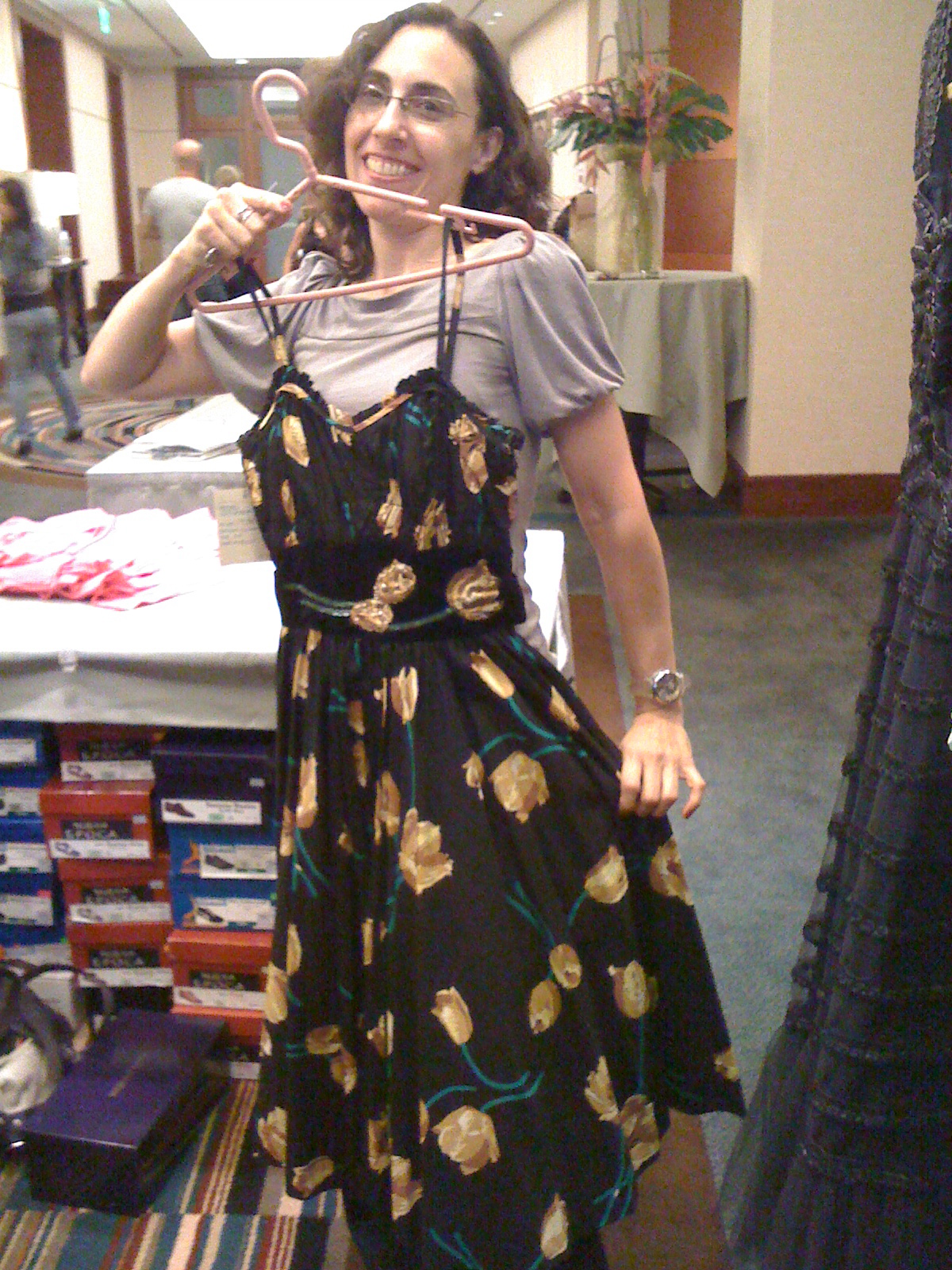
Working the booth with My Heinies was Model J Vintage, the Etsy store of New York dancer Joy Grad, which specializes in “a lifetime of collectibles directly to you from my personal closets and new adventures.” She turned up the volume for ILHC, offering a collection of both dance-ready and exquisite vintage and reproduction items from her collection and from Carol Fraser‘s closet. I swore I wasn’t going to buy anymore gowns, but I couldn’t pass up a 1940’s gown made of green silk, with a chevron bodice and velvet bow – it was a triple threat and I didn’t stand a chance. 😉
Last, but certainly not least, Mike Thibault of Vintage Jazz Art set up a gorgeous display of his framed prints, which are simply stunning in person. If you have an empty spot on a wall in your home, consider filling it with a daily reminder of your awesome dance hobby…
Thanks to everyone who organized the event and to those sold their wares at IHLC! I hope to return next year!
Gilkenson swagA most exquisite pair of heels from the late 1800's/early 1900's, with jewels on the heelsMy Heinies at ILHCAn array of HeiniesSome delicious new shoes, courtesy of My HeiniesAn adorable blouse from Model J VintageJoy showing off a lovely vintage dressThe gown!That glorious magnolia-like blossom I was telling you about, front and center, from Forties ForwardThe coy ladies of Forties ForwardThe Vintage Jazz Art display



















 Lindy Shopper