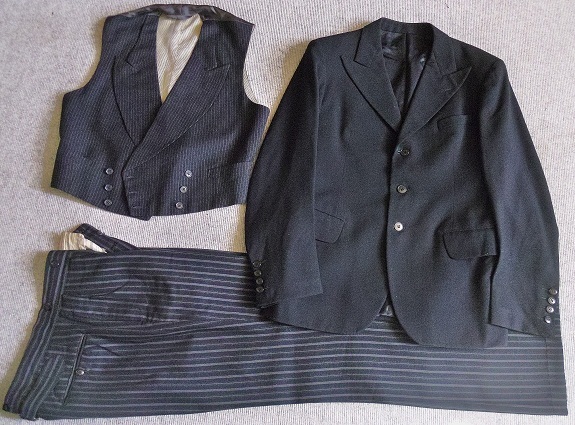
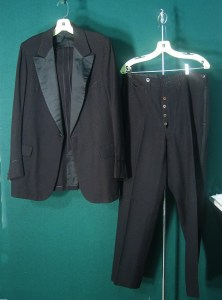
This kind of thing shows up so rarely that I couldn’t resist posting this set of a Norfolk jacket with matching knickers – 2 pairs! If you happen to rip a hole in the seat of your pants doing something awesome on the dance floor, you’ll have a spare. The size of this is very small for men, a 35 chest for the jacket and a 28 inch waist on the knickers, but those are also pretty standard lady sizes, so this little suit gets filed under ladies and gents. Whoever wears this is going to look badass.
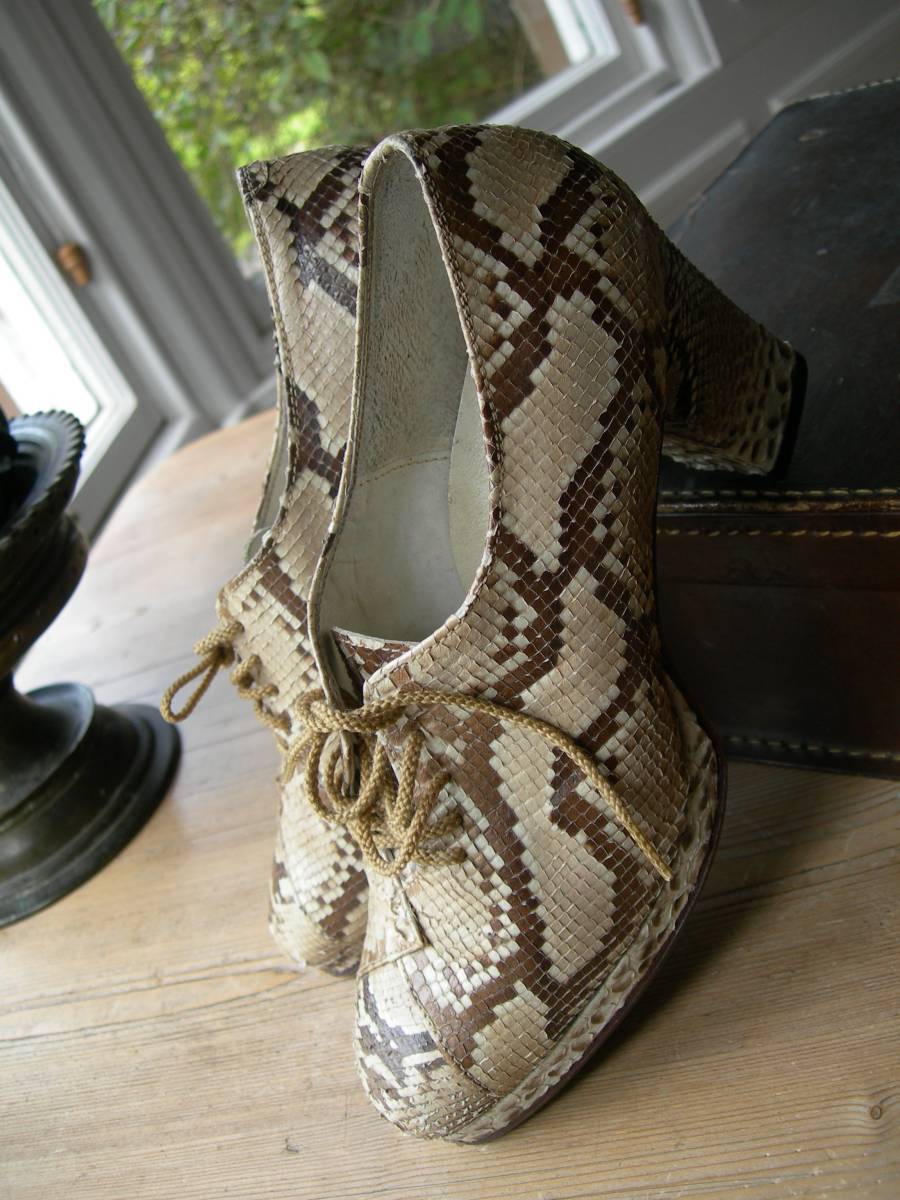
Ever since my grandmother told me about dancing a hole through the sole of her red snakeskin pumps in one night of dancing during WWII, I have been pining for a pair of my own. While these are neither pumps nor red in color, this pair of snakeskin (or “python” as the seller lists) 1930’s oxfords is a pretty awesome curiosity (although, with the slight platform, would you place them as 1940’s?). The condition is remarkable and so is the pattern and the way the pattern is placed on the shoe.
I also love hearing about companies that are still in business from the swing era, with this pair originating overseas:
“This is an extraordinary find – a pair of vintage 1930s real python skin shoes, made by the famous bespoke Hong Kong shoemakers Kow Hoo. The company opened in Shanghai in 1928, and moved to Hong Kong in 1946. They still make bespoke, handmade shoes today – the last firm to do so in Hong Kong: www.kowhoo.com/hk”
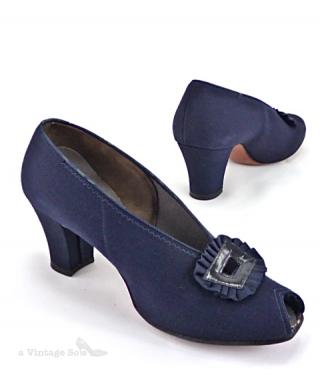
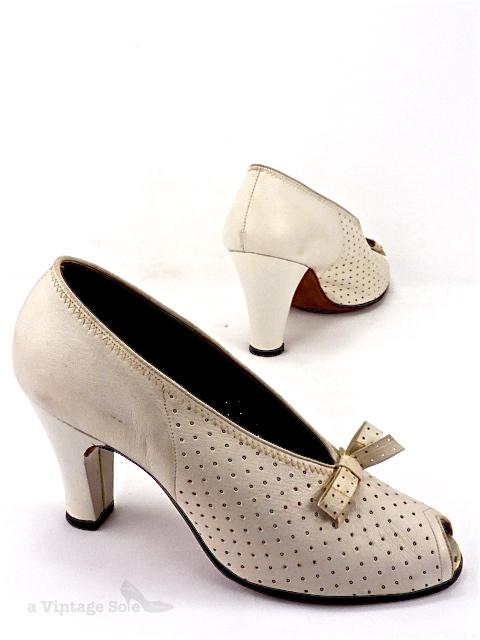
Aside from Re-Mix Vintage Shoes‘ retail location, I was not aware of a retailer specializing in dead stock shoes – until now. I happened upon A Vintage Sole and was delighted to find an entire website devoted to dead stock shoes from many eras, including the swing era. I was immediately awash with questions of “how…?” “where…?” “what..??!” Just amazing.
This site is also a haven for irregular widths – it is apparent that the buyer found whole sets of stock for a certain shoe, sometimes in multiple colors, and almost always in multiple widths. You can search their inventory by size, width, and color. The only criteria missing would be decade. 🙂
So, back to my questions – thankfully, there’s FAQ page to satiate my curiosity:
“Where do you buy your shoes? We find people with vintage shoes to sell. If they are in mint condition, we’re interested. We’re pretty open-minded when it comes to our sources. Keep in mind that all of our shoes are still in the box and have never been worn.”
The owner, Libby, sounds like a kindred spirit – “A Vintage Sole began with a love of shoes. From there it grew into a bit of an obsession. I searched high and low for authentic vintage shoes. One pair became two. Two pairs became four. Four pairs became eight until I had so many shoes I had to pass them on to you…Growing up in the Midwest, I also loved the thrill of spending weekends driving around the many small towns filled with antique shops hiding vintage gems. Have you ever been to a garage sale, second-hand store, or antique shop and found something that was so amazing you had to get it even though it wasn’t quite right for you? When you picked it up you thought, “My friend would love this!” That’s how I feel. I know you’ll love what I’ve found for you. Who wouldn’t love an authentic pair of gorgeous, vintage shoes? The shoes I sell have never been worn! It’s time they had their moment in the spotlight because they are too beautiful to stay boxed up forever. a Vintage Sole offers footwear in limited quantities that enables your shoes to be as unique as you are. We celebrate individuality and flair. Love for great shoes is a passion to share. From me and the rest of the staff of a Vintage Sole, we hope you truly enjoy your shoes!
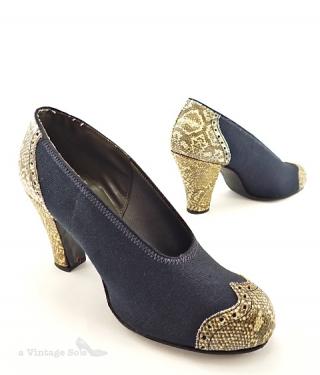
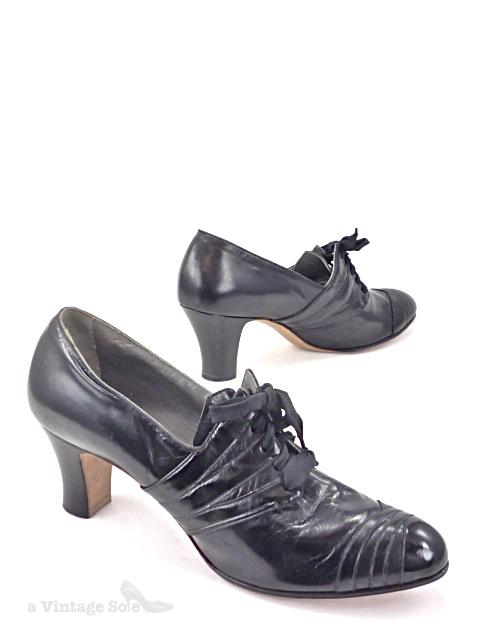
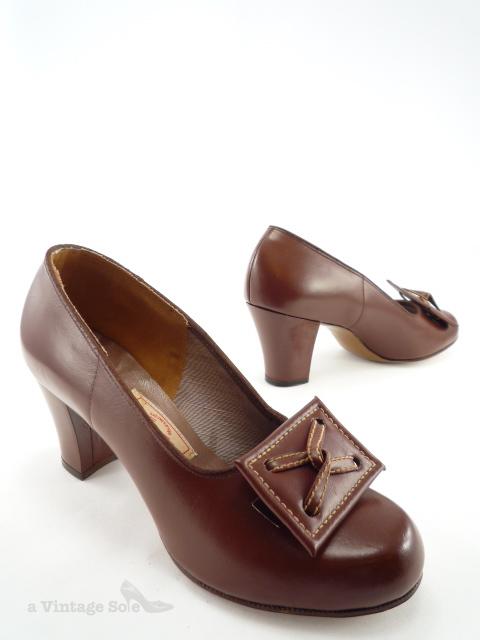
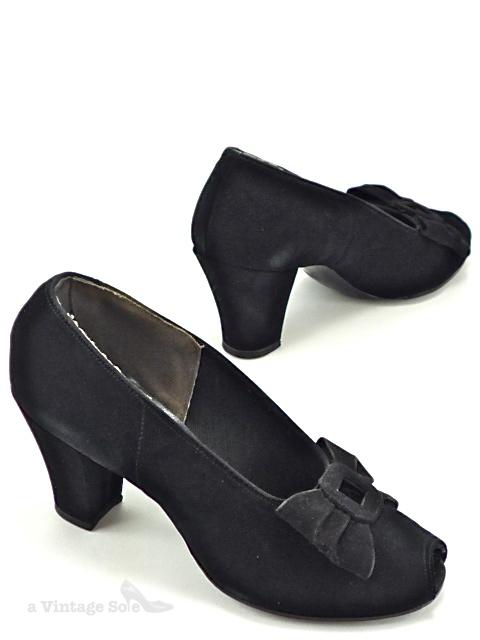
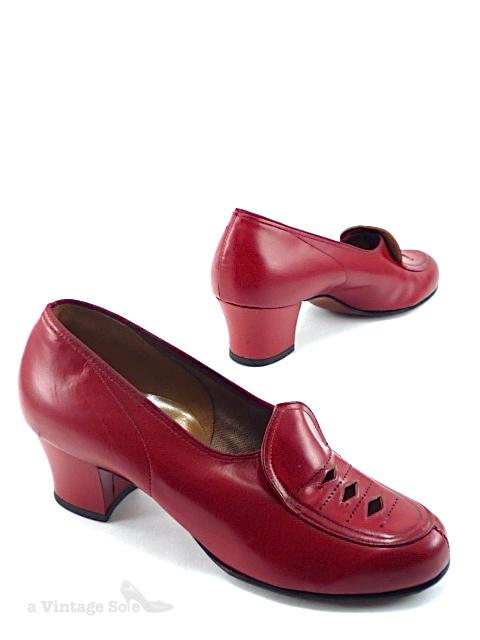
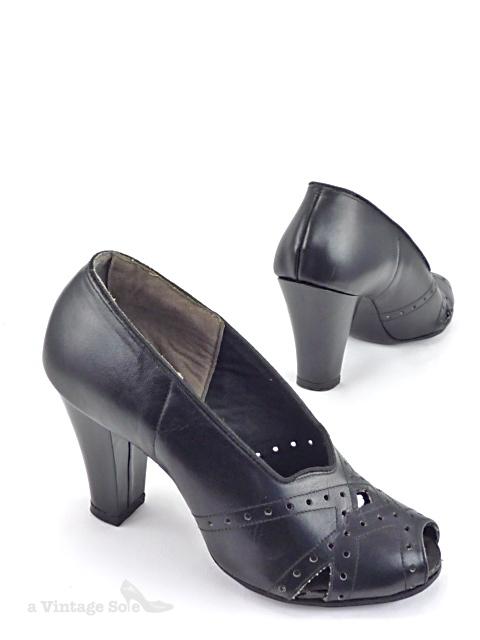
Now for the shoes! Here are some favorites from A Vintage Sole:
Princess – 1930’s heel, looks narrow but some sizes have regular and slightly wide widths!Licorice Whip – mid-1940’s shoeNarcissus – late 40’s shoe, also available in black and white comboIrene – early 40’s shoe, also available in blackBeatrice – black suede early 40’s shoeJoyce – mid-40’s shoeMimi – late 30’s heels, also available in brownMissie – early 40’s shoe, also available in blackJacqueline – early 40’s shoeDot – late 30’s heel
I’m always on the lookout for dancing undergarment solutions. Like the effect of My Heinies, it’s always nice to see a bit of color under a twirly skirt (and that things are covered), and it’s also nice to see a bit of a slip, or in the case of my new acquisition, a little satin and/or lace with full coverage.
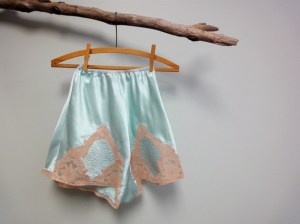
I picked up a pair of 1930’s tap pants at All Balboa Weekend and am in heaven. They just don’t make the lace like they used to and the overall effect with the high waist, comfortable leg opening, and the peach silk and lace combo is very elegant. I could wear them under just about any dress, but where I found them particularly useful was under very short dresses, like those that you may pick up from Forever 21 that are just at mid-thigh (or higher, if your legs are longer than mine). I have had trouble with slips and short dresses because, at some point, the dresses are just so short that the slip becomes a liability, either sticking out the bottom when you are standing or peeking out when you sit down. I couldn’t go without because any good Southern girl wouldn’t be seen in a dress that showed the outline of her legs and getting a shorter slip would be an exercise in futility. The tap pants worked like a champ. Where I generally despise shorts because they ride up when I sit down, the tap pants rode up enough to not stick out from under the dress when I sat down and were still comfortable because of the silk. There’s all this going for the tap pants, plus the twirl factor will be lovely!
I started seeking out other forms of tap pants and there are also pettipants, although pettipants may also refer to longer versions of the slip pant. I found the Wikipedia entry on pettipants quite amusing:
“When pettipants were fashionable, they were usually worn under skirts, dresses, culottes, or walking shorts for modesty or comfort. However, they are not considered a modern or popular style; currently they are most likely to be worn by square dancers or persons involved in historical reenactment. Unlike other types of underwear, pettipants will not ride up and eliminate hot-weather chafing.”
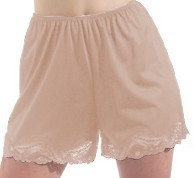
Well, then. Like the petticoat’s evolution into the slip, the pettipants have also evolved (although the square dancer and reenactment versions still exist). When you search for pettipants online, something akin to the 1930’s tap pants appears in the search results. The modern tap pants I found are a bit scantier, but there are some potential candidates for dancewear. Here’s what I’m thinking may work:
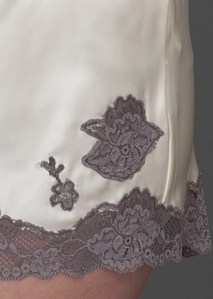
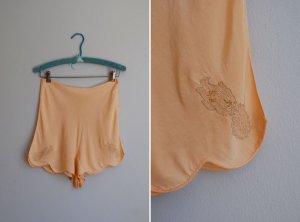
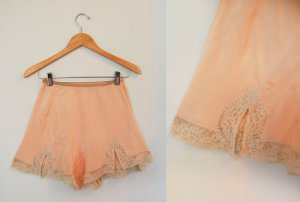
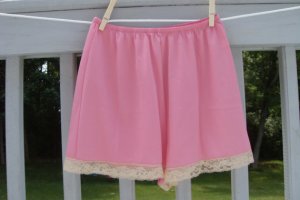
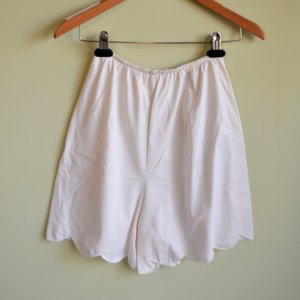
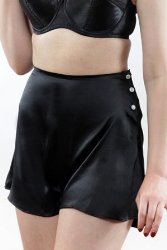
Pettipants on eBay, available in multiple sizes and basic colors – white, tan, ivory, blackMore low rise, but check out the lovely lace detail. Available in blue, tan, pink, and off white.1930’s tap pants with scallop detailFrom the 1940’s, another peachy pair, with slits in the front – for high kicks?Dead stock, vintage – on a model, so you can see about where they would fall when wearing themThis pair from the 60’s is crazy, but the bows! I could see someone creative pulling them off.A little pink pair of pettipantsScallops are adorable!A bit pricier, but quite fab!A plainer option, if lace isn’t your bagThe bargain pair on Amazon, $6 – available in white, black, tan, and sandI do love a button detail – this pair is from What Katie Did
It’s rare that anything in vintage menswear shows up in multiples on eBay, but I kept coming across good things at good prices, so here’s a selection of menswear goods from eBay this week:
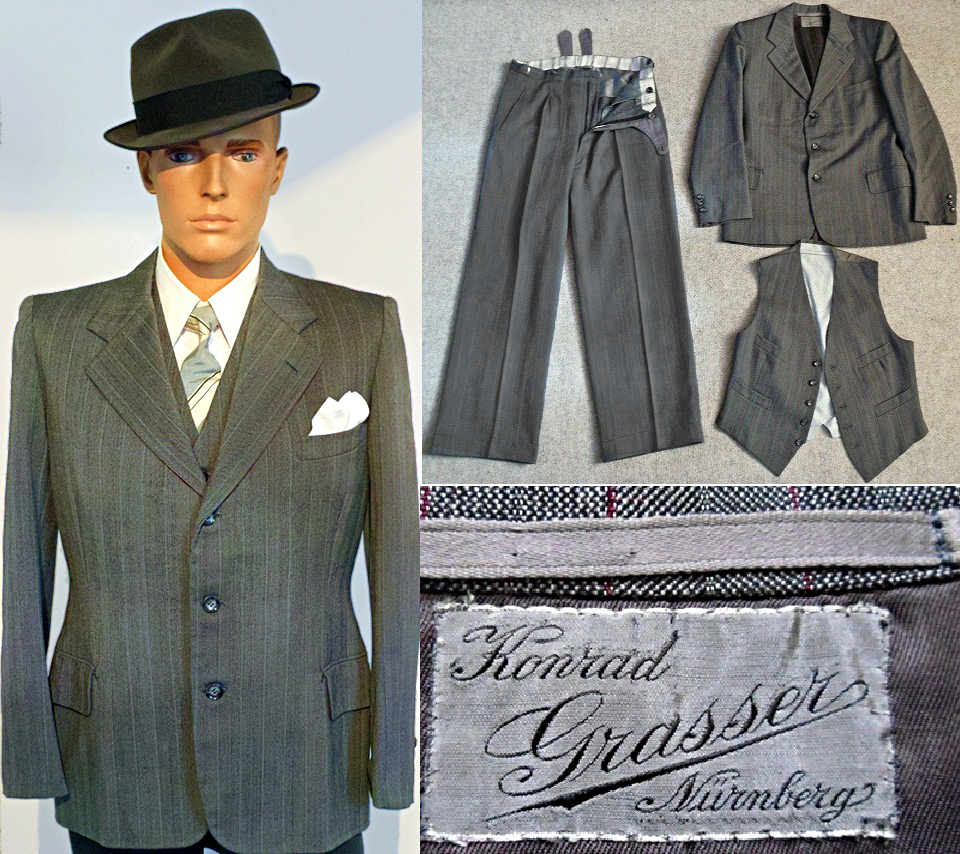
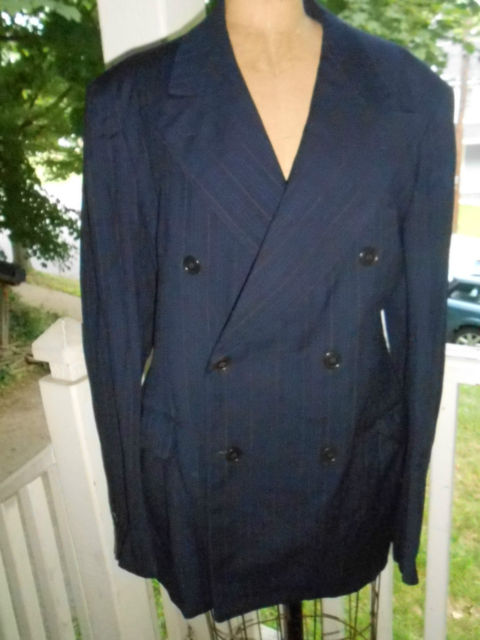
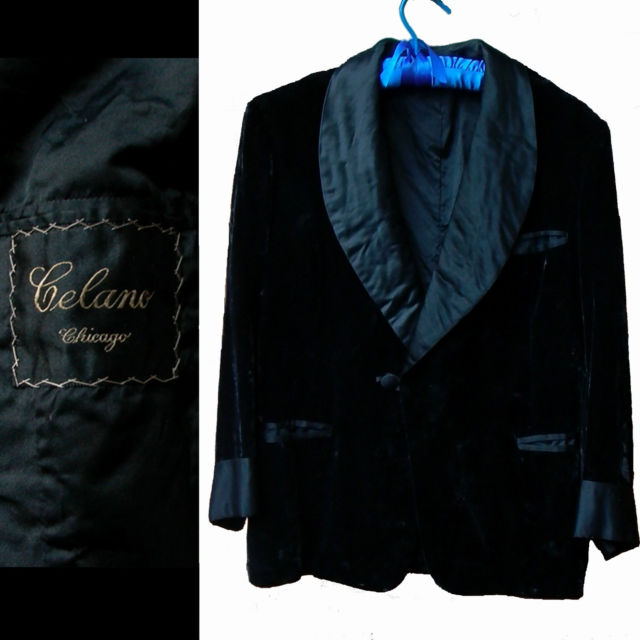
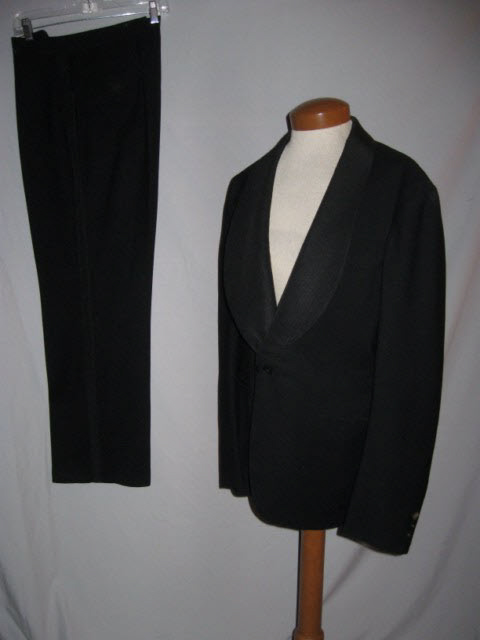
1930’s to early 40’s German “Stresemann” Suit means it’s business time – size 36 or 38, starting bid $10Another great 30’s/40’s German suit, size 36 or 38, starting bid at $10Double breasted navy 1940’s suit, about a size 42, bidding at $36Velvet 1940’s jacket – swankyI do love a tuxedo with a silk faille lapel…
I hear a lot of questions about how to isolate the decade, or portion of a decade (or in rare instances, the year), in which a particular garment was made. How do you identify the date of a garment based on the details, fabrics, notions, etc. included the garment? My initial answer is to do your homework, but my learning mostly consisted of shopping for vintage with my mother, asking her to identify the decade, and having her point out different identifying details. I can’t loan out my mother to all of you, so you’ll have to learn the old fashioned way: book learning (or in the 21st century, the Internets).
Kim at Time Machine Vintage directed me to the Vintage Pattern Wiki to get some ideas for dresses, but I was delighted to see that you could search their extensive directory by the type of garment and also by year. I see other compilations of patterns for sale that usually group by decade, but I’m just anal retentive enough to want to add more mid-1930’s dresses to my collection, or to want to make sure that late 20’s/early 30’s dress is actually late 1920’s. Regardless of your OCD level or absence thereof, this website is a useful resource for anyone who would like to learn and understand more about the fashions from each of the swing era decades, down to the year. Another great feature of this site is menswear and children’s clothing included in the patterns, which is not something I run across very often.
Enjoy this resource, I’ve already spent portions of two evenings going through the early 1940’s stuff – this could take a while!
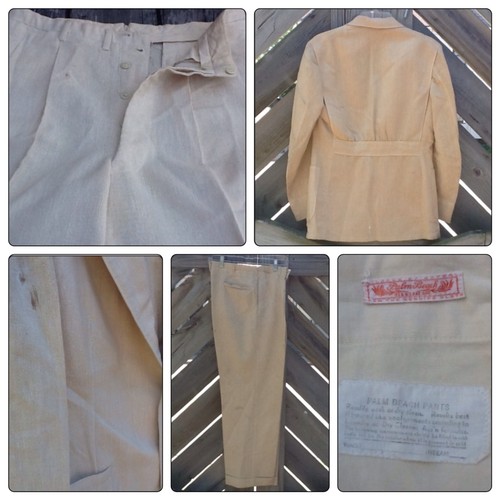
In these warmer days, a Palm Beach linen suit is the perfect way to dress up without sacrificing too much comfort. Right now, eBay has just such a suit from the 20’s/30’s, with a starting bid of $100.00. Check out the action back on that jacket!
This suit is not without issues, but it’s such a rare find that, for the right price, I’d be willing to take a chance. The main issue is that the jacket and pants are slightly different in colors, which the seller attributes to the jacket being worn separately and more often. This suit would be just as fantastic as separates, even if a dry cleaning didn’t work out the color differences.
I’m going to begin chronicling pairs of shoes that I would shell out lots of money for, if only they were wider than 2.5 inches at the ball of the foot. I don’t know what sort of lives these 1920’s women led, but they must not have taken a step barefoot in their lives, have subjected themselves to foot binding, and been carried around in a sedan chair.
If you have narrow feet, for the love of everything wonderful, please start buying all these amazing vintage shoes!
I have three pairs in desperate need of reproduction this week (Re-mix Vintage Shoes, I hope you are taking notes. 😉 ):
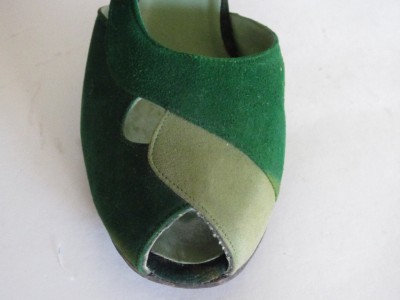
Black leather Mary Jane, with two straps meeting in the center before crossing the top of the foot, and the cutouts are just screaming AWESOME. Cutouts from the top, cutouts from the side, this shoe looks good at every angle.There’s no one angle that really captures the awesomeness of this shoe, but I’m a sucker for green two tone heels and this pair is really unique in the way that the two shades work with the straps and curvature. This would look awesome in purple, too.View #2 – check those straps!GAH! These are just too much, the snake skin, velvet, stitching, cutouts… *passes out*
While searching for 1930’s reproduction clothing, I stumbled across Electric Gypsy, a UK-based retailer of handmade reproduction clothing from the 1930’s through the 1980’s. For each decade, there are a few choice garments made with a selection of fabric options, and I was excited to see that they went as far back as the 1930’s. Don’t let the psychedelic graphics on the website fool you, there is good swing era-inspired stuff here.
From the website: “At Electric Gypsy we also have our own label of handmade vintage and retro inspired clothing. We use a mixture of original vintage fabrics and kitsch cool new fabrics. Many pieces are one-off or short runs, so you are guaranteed to find something that is unique and original, whether it be a 1960’s inspired shift dress or a 1950’s Rockabilly skirt with a modern twist. Each item is individually handmade by us in the UK. We create our designs by modernising vintage patterns, designing our own patterns from scratch and customising old vintage clothing.”
Here’s what I’m loving:
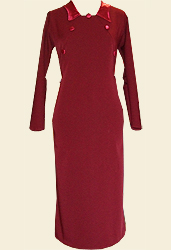
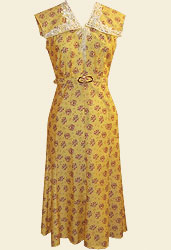
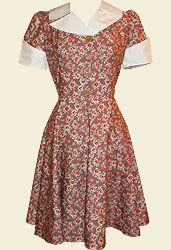
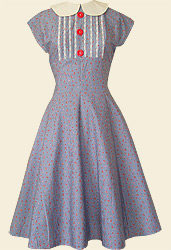
OMG this kick-pleat 1940's skirt1940's sweetheart dress1932 Midnight in Paris dress1930's cape collar dress1940's tea dress1950's diner dress
The weather is freezing here, so of course I want to be in a sundress or something like this 1930’s dotted swiss dress, with adorable double piping, Peter Pan collar, and fauxlero detail! Someone buy this and whisk me away to a warmer destination…with a $14.00 starting bid this could be a steal. 😉
Portland-based repro maven Jitterbuggin is running a Facebook promotion where YOU could win $100 in Jitterbuggin merchandise. You want this $100. How can you enter to win?
From the Jitterbuggin website: “This is a very special gift certificate! It will be given away FOR FREE when the Jitterbuggin Facebook Page reaches 1,000 likes! Once the page is at 1,000 we will publish a post that you can comment on to enter to win. We will number the comments in the order they were received and enter them into a random number generator to declare a winner.”
As I’m writing this post, the Jitterbuggin Facebook group sits at 786 fans – an impressive feat! But to get 1,000 fans we’ll need you to “Like” the Jitterbuggin Facebook page, maybe get your friends to “Like” it as well. Once the 1,000 mark has been reached, then (and only then) will it trigger the post for the giveaway. Now that you have your homework…go forth and Facebook “Like,” and check out the goods at jitterbuggin.com!
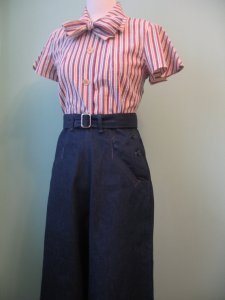
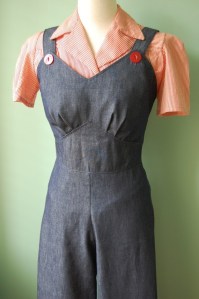
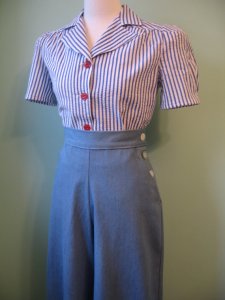
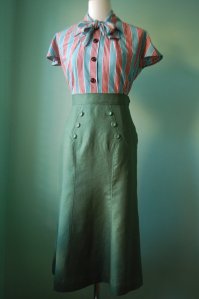
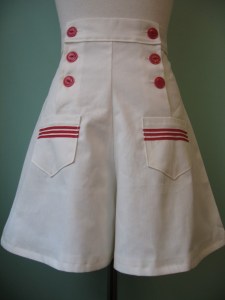
I’ve been following Allure Original Styles for a while, from her initial offerings through eBay as seller buddhaboogie (which is still used to sell what appears to be samples), to a full-fledged Etsy store where you can purchase custom made reproduction swing era garments. Allure Original Styles distinguishes itself from other reproduction sellers by creating an extensive line of pants and complimentary blouses. The fabrics range from wool gabardine to light-medium weight denim, to cover both dressy and casual pants needs. I am probably most excited about having wide leg denim options – while I love to dress up, sometimes you have you wear jeans for more casual occasions and shopping for jeans is only a step above shopping for a swimsuit on the loathsome activity scale. What could be more comfortable for everyday wear than a pair of flattering wide leg lightweight denim jeans?
There are also some great dresses and other separates from the store. So much to love here…I might learn to love wearing pants again:
Adorable - high waist belted denim trouser with contrast top stitching, complimentary seersucker blouse with neck tie *drool*1940's reproduction overalls - so stinkin' cuteClassic wide leg trousers with side buttons30's/40's belted skirtDesperately want this dress in my size...1930's blouse - love the bow and the zig zag seam below the bust line1930's sailor skirt with fantastic seam detailSailor shorts! There are also pants available in a similar style
This post was written by Lindy Shopper. Comic strip of unknown origins, featured in Town and Country Magazine, January 2012
While reading my mom’s copy of the January 2012 issue of Town and Country, I ran across a comic strip detailing the history of the tuxedo – not normal comic book fare, so I was intrigued. Here’s your history lesson for the week: according to the strip and Wikipedia, the word tuxedo comes from the Lenni-Lenape Native American tribe (also known as the Delaware Indians), who were allegedly called Tuxedo (meaning “he has a round foot” (which may be in reference to the wolf), “place of the bear” or “clear flowing water”) by their enemies the Algonquins. The Lenni-Lenape lived near a lake which they named “Tucseto,” which later became known as Tuxedo Lake, and the area where they lived was called Tuxedo.
How does a tribe of Native Americans and a lake relate to the modern formal suit? In 1885, Pierre Lorillard IV developed a piece of land his grandfather owned in Tuxedo for a summer resort for the wealthy and well-to-do, naming it Tuxedo Park. He then “organized the Tuxedo Club and the Tuxedo Park Association, as hunting and fishing preserve (and society), and surrounded the property with a high game fence. In 1886, he built a club house, which saw the debut of the short dinner jacket, which soon became known as the Tuxedo jacket. Eventually, the Tuxedo ensemble, featuring the short dinner jacket, became the accepted dress for formal affairs. To give you some perspective on the class of people who frequented the Tuxedo Club, the “Blue Book of Etiquette,” written by Emily Post, was “based on what she observed inside the great stone gates of Tuxedo.”
I am amazed that the basis for modern formal menswear originated as far back as the 1880’s, but this demonstrates how the tuxedo has withstood the test of time.
As the modern Lindy Hop community matures, I see more dancers donning a tuxedo (or part of a tuxedo) for New Year’s Eve, specifically at Lindy Focus (alas, I will miss my first Lindy Focus in six years!). Just adding a bow tie to a black suit can elevate your look, or wear a vest/bow tie combo for maximum mobility.
Tuxedos are more attainable, thanks to the advent of eBay, but even thrift stores have tuxedos, sometimes castoffs from formal wear stores or a donation that simply doesn’t fit or isn’t used (and is usually rarely worn, so it good condition). You can often acquire a vintage tuxedo for less than the cost of a vintage suit because they are the garment that was worn least and survived the decades. It amazes me that people spend money to rent tuxedos when for the same price or less you could buy one.
Here are some lovelies on eBay and Etsy to make your New Year’s Eve classic and well-dressed:
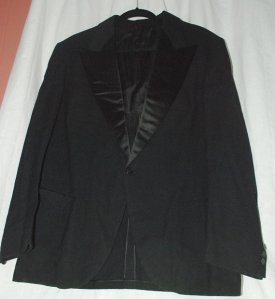
1930's tuxedo with a faille shawl collor, size 42, buy it now $65.001930's tuxedo with tails, white vest, and white tie, size 38, $75.00 starting bid - paging Fred Astaire...1940's tuxedo, button fly, size 40, buy it now $30.001950's shawl collar tuxedo on Etsy, $98.001940's tuxedo, size 44, $65.00
I’m in a spirited mood this week and perhaps some more lovely shoes will get you feeling merry and bright. Here’s a bevy of vintage beauties from Etsy. Enjoy!
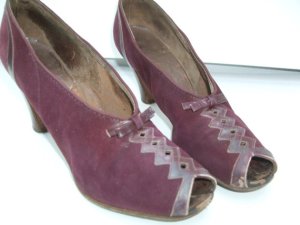
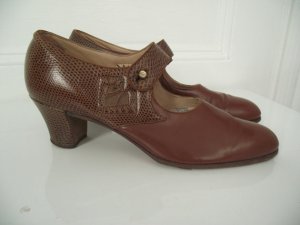
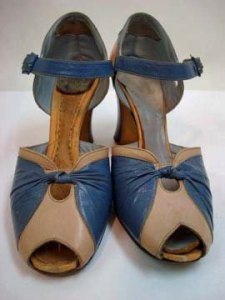
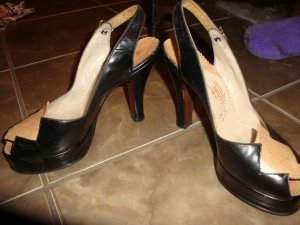
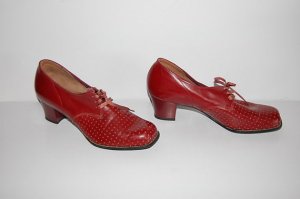
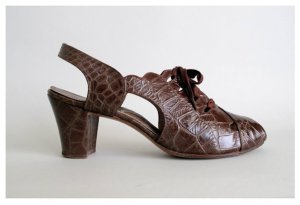
Burgundy 1930's shoes with crazy cutout detailsPlum 1930's peep-toe shoes with lovely cutout/zig-zag designBrown 1930's Mary Janes with embossed detail and tone on tone texturesBone leather heels with cutouts in a wide (EE) width!1930's/40's cornflower blue/salmon pink peep toe heels1940's two tone black/tan platformsRed 1940's perforated oxfordsOh, love the detail on this shoe, like eyelet lace...1940's lace up, sling back heels
New colors! Free shipping through December 31! We’ll start with one of my favorite Re-Mix Vintage Shoes styles, the Balboa, which appears to have received a slight redesign along the toe cutouts. The wonderful pepper/palm green combo is back, and they’ve added two new colors – a butterscotch/taupe combo and silver! I’ve been waiting for these to come out in my favorite metallic. 🙂 I don’t see the new colors on the website, so I’m going to post the graphic from my email with all the information and photos of the lovely new shoes, in other styles as well. Enjoy!
























 Lindy Shopper