
This post was written by Lindy Shopper.
This is another article I’ve written for Yehoodi, with this topic at the request of the Yehoodi staff – enjoy!
Vintage or reproduction? The obvious answer is both, but I’d like to delve into the pros, cons, and considerations that go into the collection of both and the considerations that go along with the decision to wear each of them.
CRAFTSMANSHIP

Clothes made in the swing era were rarely mass-produced, and certainly not on the scale that clothing is produced today. The techniques for tailoring and the training that most women went through as a part of growing up to learn how to sew and mend their clothing is almost a lost art today, as is the art of tailoring men’s suits. So, while the clothing is old, it is usually very well made and, if in good condition, can be mended and altered with relative ease. The tailoring and details like pintucks, smocking, and embroidery can take many working hours to make, hours that modern retailers rarely put into their garments without passing on a lot of cost to the consumer.
That said, there are some reproductions that do provide these details, but they don’t come cheap. Trashy Diva, who mass produces dresses, puts a lot of thought into their reproduction garments, keeping the tradition of matching belts, contrast buttons, and interesting dressmaking details. Likewise, ordering something custom from a tailor or online custom clothing service will get you that quality, but you’ll also see that quality come out of your bank account.
DURABILITY
Here’s the big argument – what if I rip something? The fear of destroying vintage is something I dealt with for a long time, even after ripping the back out of two vintage dresses and seeing that they could be fixed without noticeable signs of mending. Obviously, reproduction garments will be more durable because the fabric is newer, but that doesn’t mean that the newer fabric won’t rip. Part of the durability issue, for both new and old garments, can be tackled by some careful considerations before purchase – does the fabric feel durable? Can I move in this (do some solo jazz steps in front of the mirror in the dressing room)? Does it fit me properly or is it too tight in one or some areas? Are there parts of the garment that could get in the way of dancing?
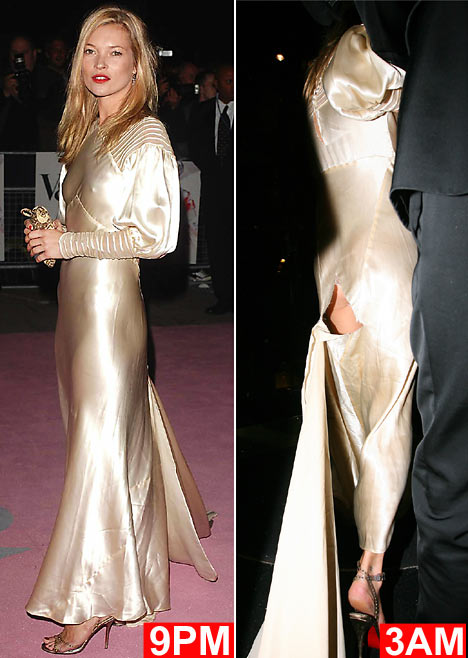
Reproductions will win this point, but not all vintage should be discounted. I’ve got some vintage crepe dresses that are indestructible and the construction of vintage men’s jackets really speaks for itself.
ORIGINALITY
Reproductions have come a long way since I started dancing, as clothing makers have begun to move away from the black, white, and red with polka dots color scheme and embrace prints, period colors, and period appropriate fabrics. I’ll continue to use Trashy Diva as an example because they do it so well on a large scale – some of the rayon prints they choose for their fabrics are so spot-on that it’s hard to tell if the dress is vintage or new. Other fabric choices, such as silk crepe or a knit that looks like wool jersey (but without the itch), are period appropriate, upgrade the look of the garment, and, in some cases like the jersey knit, provide a modern upgrade of a classic fabric that makes it even more wearable for today.
You can work with a dressmaker or tailor to make your vintage reproduction unique or an exact copy a garment. This does require you to become involved in the creative process of the garment by selecting fabrics, buttons, details, notions, and any considerations you have about the fit of the garment. It took me a while to become comfortable being a part of the creative process (what if the fabric I picked out looks bad?), but after spending a little time in a fabric store and familiarizing myself with fabrics used in both modern and vintage clothing, I was able to embrace the creative process as a new challenge – to collaborate with the tailor to put together a look, in a fabric and color/print I love, with a pattern I love, to create a new garment that is vintage by design with a reflection of my personal style.
With all this in mind, there is hope; however, the creativity of seamstresses and tailors past is far reaching and the patterns much more complicated – as the number of skilled sewers was higher, the patterns of the swing era were more complicated and counted on the person sewing the garment to make certain dressmaking leaps in creating the garment. I say this because my mother has made me a few dresses and even though she is an extremely skilled seamstress, her experience was primarily through the streamlined silhouettes of the 1960’s and 70’s, not the draped, detailed, side zippered, crazy seamed 1930’s and 40’s. What I’m getting at is that, on top of the already unique nature of these clothes and fabrics that are no longer made, you have a skilled population who more often embraced the task of clothing design/creation and the creative challenges that go along with it. I believe those creative challenges resulted in some truly original designs – some of them may fall short, but many of them are what makes owning vintage clothing such a pleasure in our mass produced world. I often use these creative choices of the past to inspire my own reproduction creations.
AVAILABILITY
The reproductions will win this point – even though vintage comes in all sizes, for the most part, it’s one of a kind and finding something with your measurements can be difficult. For men, vintage daywear is nearly impossible to come by. Reproductions, whether mass-produced or custom, are able to be replicated in multiple sizes. With the rise of Etsy, the Vintage Pattern Lending Library, and other web-based and local tailors who have taken an interest in making reproduction garments, reproductions of swing era clothing are more available now than ever.
FIT
Fit actually works three ways in this discussion. The best way to get something fitted is to have a reproduction made for you. In my opinion, the next best fit usually comes from vintage clothing, especially if you are going for accuracy. For example, Trashy Diva, while divine, mentions in some of their garment descriptions that they have raised the waist line to a more empire waist, which is neither period appropriate nor the most flattering cut if you have an hourglass shape or a small waist. Other reproduction makers will cut corners, either with tailoring or fabrics (stretch fabric, while sometimes helpful for movement, does not make a garment FIT any better if the garment is ill cut), to make a one shape fits all silhouette which really only flatters a certain body type that most of us do not have. Vintage garments are usually constructed in such a way that they can be modified, while mass produced reproductions are made without ample hems to be let out or seams that are surged and tight, without that extra 1/2 inch or inch of fabric that might be available to be let out to make something fit just right.
SUITABLENESS FOR DANCING
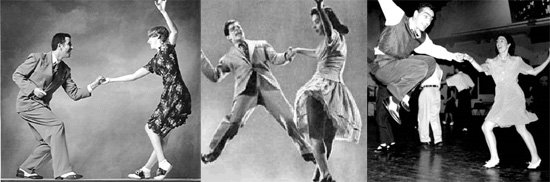
This can be pretty garment-specific, or even year-specific. I don’t see a lot of early 1930’s reproductions because the hemlines were lower and some of the skirt shapes not necessarily movement-friendly. When using an early 1930’s pattern to create a reproduction, I usually ask that the hemline fall just below the knee, instead of at mid-calf level so when I dance and compete people can see my legs. The designs of the late 1930’s through 1950’s are, overall, pretty dance friendly and I think most reproduction swing dance garments draw from this time frame. Reproductions usually come in more wash and wear fabrics, which is helpful to dancers because we sweat a lot. Only a handful of reproductions I’ve encountered seem to have issues with dance-ability, usually relating to fabric choice (silky/slippery, wool, synthetics that don’t breathe) or the cut of the sleeve or arm hole – I always do an over the head test with my arm to test a garment’s range of movement.
COST
Overall, vintage clothing is cheaper than buying a reproduction. There are obvious exceptions to this rule, but generally, if a vintage dress costs more than the reproduction, it’s probably not something you’d want to wear to a dance to sweat in because it’s a quality piece. Most of the vintage I purchase for dancing is less expensive because it’s a common silhouette, in a common (usually durable) fabric, and it’s second-hand goods. Because it costs less, I won’t feel so bad if something happens to it on the dance floor. With reproductions, you are paying for the labor and fabric with today’s costs of producing, distributing, and marketing the garment. However, that added cost can mean piece of mind if you are truly concerned about ruining something vintage or if you are particularly rough on your clothing.
I’m sure there are other pros and cons and I’d love to hear your thoughts on this topic – feel free to chime in or let me know if you have any questions.

 Lindy Shopper