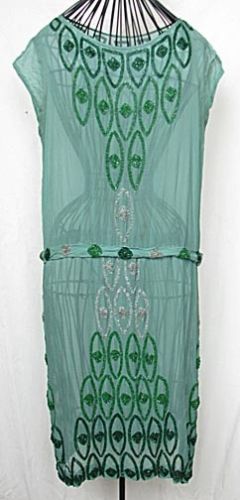
After finding this gorgeous dress on eBay, I was inspired to post about cheongsam (plural cheongsams?). I have loved these sexy Asian dresses since I saw the opening sequence of Indiana Jones and the Temple of Doom as a kid. Also known as “qipao” in Mandarin, the cheongsam has a long history that overlaps with the jazz age and swing era.
According to Wikipedia, the original qipao was wide and loose, and meant to cover a woman’s shape, but “the modern version, which is now recognized popularly in China as the “standard” qipao, was first developed in Shanghai in the 1920s, partly under the influence of Beijing styles. People eagerly sought a more modernized style of dress and transformed the old qipao to suit their tastes…it was high-class courtesans and celebrities in the city that would make these redesigned tight fitting qipao popular at that time. In Shanghai it was first known as zansae or “long dress” (長衫 – Mandarin Chinese: chángshān, Shanghainese: zansae, Cantonese: chèuhngsāam), and it is this name that survives in English as the “cheongsam”…as Western fashions changed, the basic cheongsam design changed too, introducing high-necked sleeveless dresses, bell-like sleeves, and the black lace frothing at the hem of a ball gown. By the 1940s, cheongsam came in a wide variety of fabrics with an equal variety of accessories.”
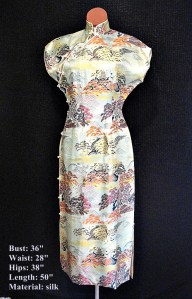
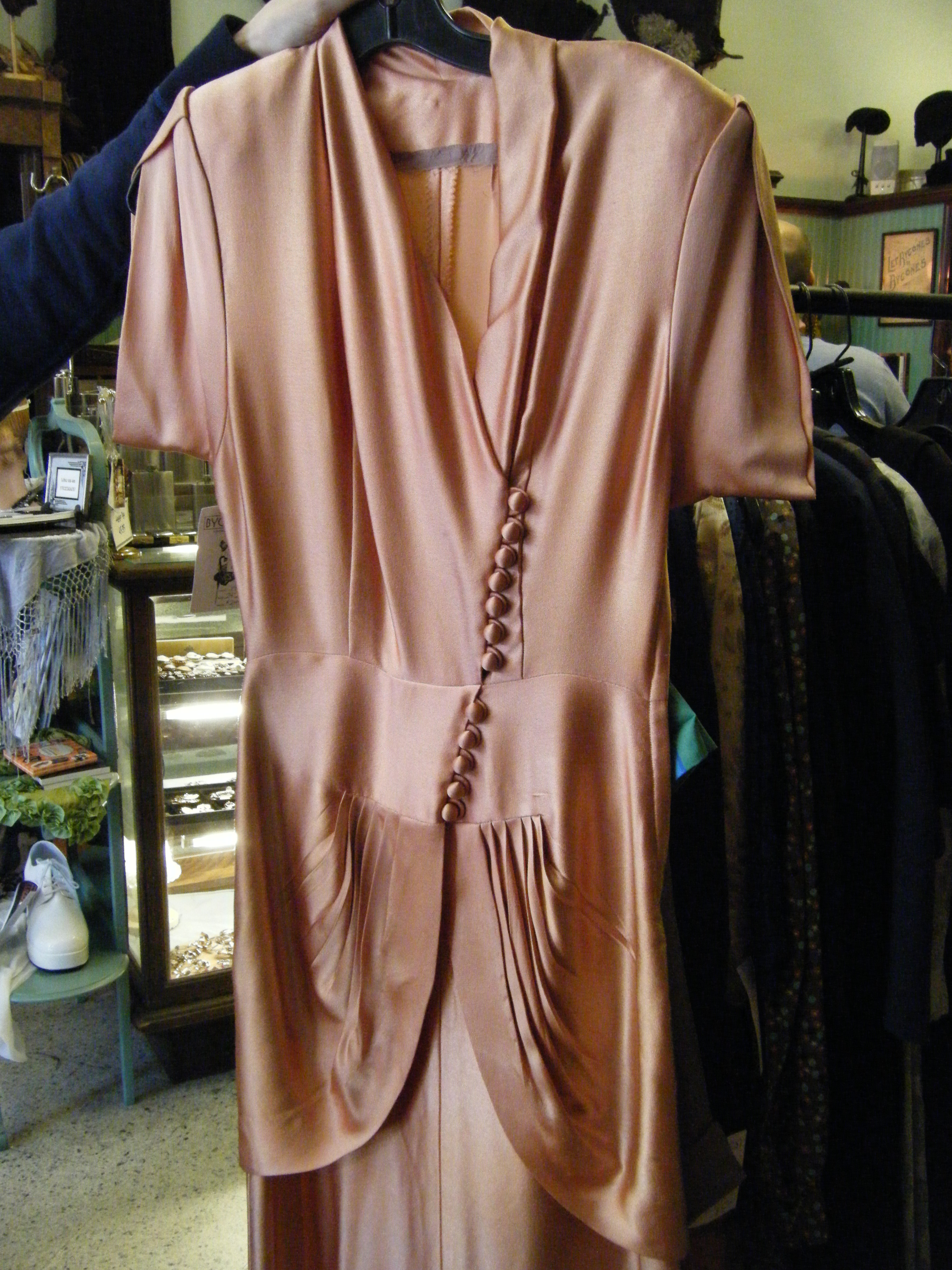
Case in point, the amazing 1940’s cheongsam pictured at above/right, with a gorgeous silk pattern, double piped seam along the neck with fantastic toggles going all the way down the side of the dress. While the trend originated in China, this dress was made in Japan. I also see that the bust/waist/hip ratio on this dress is a little more forgiving than the versions sold today, which leave little room in the hips. Someone buy this dress because you will look so elegant in it!
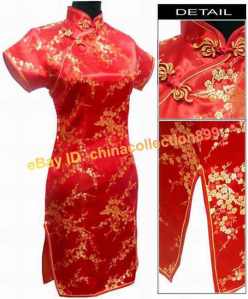
If you’d like a new cheongsam, there are multitudes of them on eBay and other internet retail sites, some as cheap as $10.00. When I had to come up with an inexpensive costume for The Carolina Fascinators, I remembered that I’d been wanting one of these dresses and how they came in an array of colors, sizes, and prices on eBay. These dresses are not made of silk, obviously, but if we are going to sweat in them, perhaps a cheap dress isn’t such a bad idea. These dresses are visually stunning, in great colors and prints, and come in a variety of styles (sleeves, sleeveless, knee length, calve length, halter, etc.).
There are a few drawbacks that we discovered – they are cheaply made and we had to sew the snaps back on, reinforce the toggles, and if you don’t get the right size you may split a seam while dancing. Those slits are there so you can move, because this is supposed to be a form fitting dress. The cut on these dresses was not conducive to any of our shapes – narrow hips meant ordering a size that fit the hips and all of us had to have them tailored to take them in at the waist, or bust, or both. However, it was worth the tailoring and mending because the dresses looked amazing in the end.
Also, don’t get hung up on the size labels. This girl needed an XXL for the hips. Those of you that know me know that the booty is not THAT big. Buy the size you need, based on the size charts provided.
I’ll leave you with a video clip of my initial inspiration. As an FYI, if you want Kate Capshaw’s sequin cheongsam, Sequin Queen will make you one for $250.00. 😉
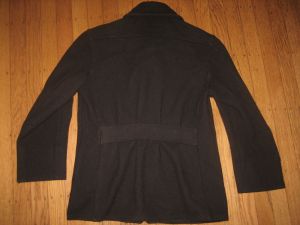
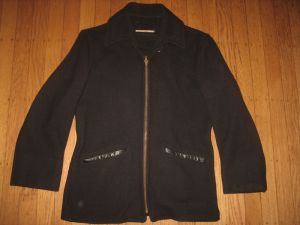
This Norfolk work jacket, which the seller labels 1920’s/30’s, was made by Shenandoah Tailoring Company of Mt. Sidney, Virginia, and has some interesting bits of tailoring going on. From the front it looks like a work jacket, with pretty plain front, pockets, collar, and a big metal zipper. From the back, it looks like an elegant belt-back jacket, with tucks that look like they could be ironed out for definition. The jacket is also unlined, which I find odd, and the seams are piped with a trim so the fabric doesn’t unravel. There was a spot with threads (which can be pulled out) where the coat had a patch at some point…it would be interesting to know what was on the patch.
The jacket is labeled a 34, but the seller says he fit into it snugly at a 38, so it could fit a 36, with some fabric in the cuff of the sleeves to let out for tailoring. Starting price is $24.99, which is a great price for a coat, period; however, I don’t know what delusions of grandeur the seller had listing the Buy It Now at $1,200. I think I’d take my chances in the auction!
I am always pleased when sellers list seasonal items during the right season – when you are in the mood for something, retailers usually respond, and right now it’s the smell of cinnamon, clothing that sparkles, and Ella Wishes You a Swinging Christmas playing overhead (how did they know?! 😉 ).
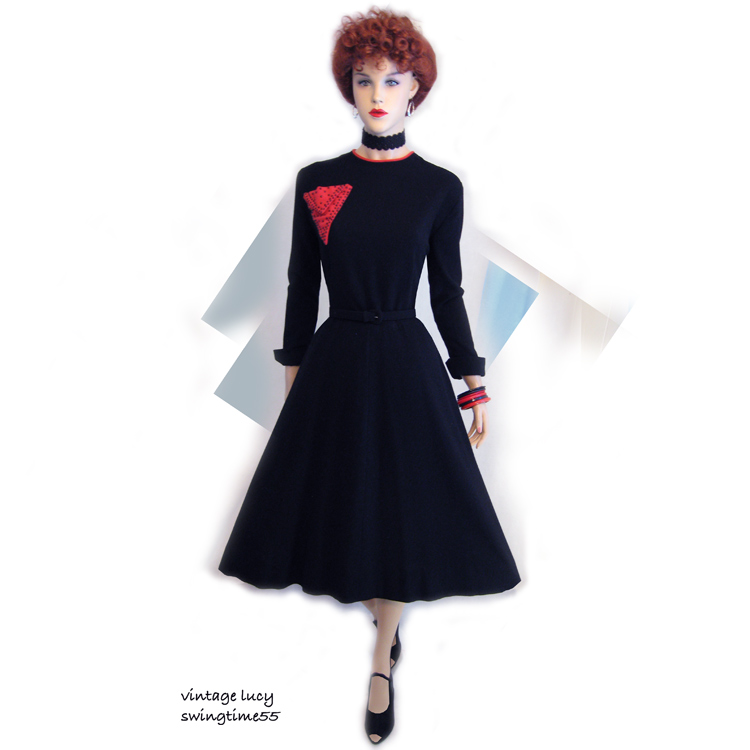
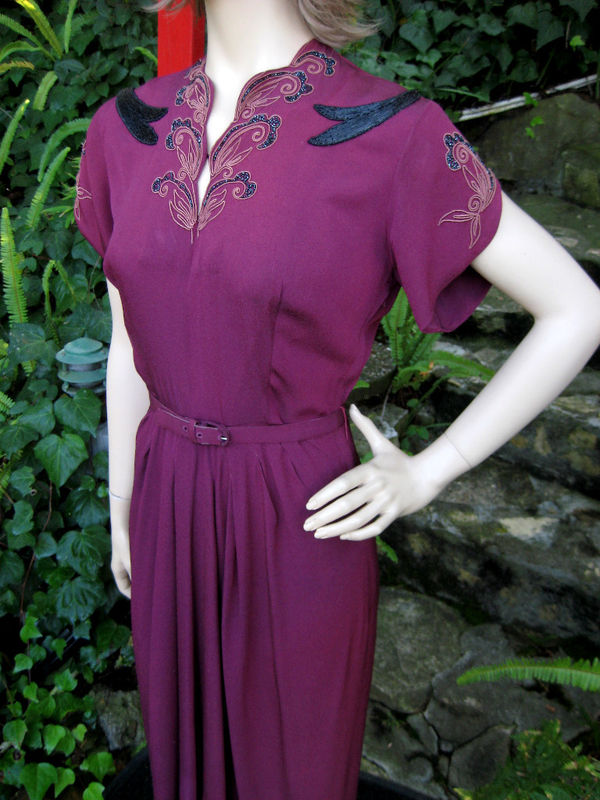
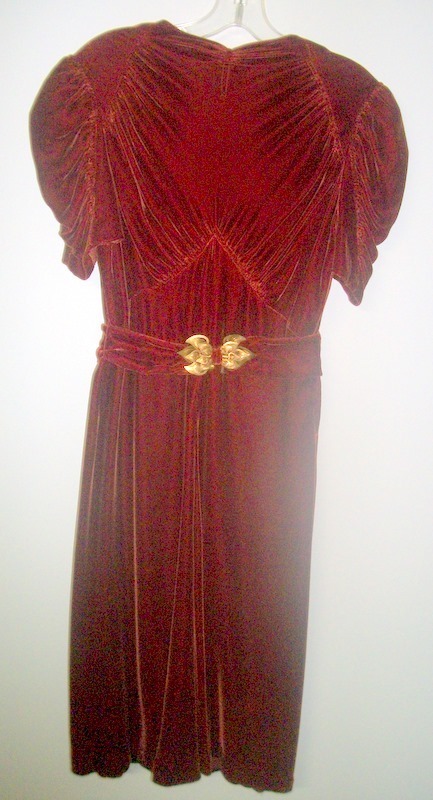
I can’t give you the cinnamon, but here’s the Ella, and some vintage dresses from each of our swinging decades that really sparkle:
This 1950's holiday dress intrigued me - I like the clean shape of the black dress, with long sleeves, and this sort of geometric corsage/pocket/thingy adds this modern bit of excitment and pop of colorI am so in love with this 1940's maroon/fuschia belted dress, with just enough detail in all the right places - oh, the embroidery and beading! *drool*What would a proper holiday dress selection be without velvet? Please ignore the crappy photography from this seller and focus on the awesomeness of the tucking, draping, and gorgeous belt buckle on this 1930's dress.A 1920's dress in my favorite holiday color, with ombre beading and beading on the belt in my size...now, where is that $220 I need to buy it...
I’m on a dress kick this week, so bear with me. Today we have this amazing 1930’s dress, in my favorite color, with lots of lovely details – the faux jacket (fauxlero?) with inset “blouse” in a slightly off (but complimentary) shade of green with a blossom print, contrast cuffs, Art Deco belt buckle, pleating on the front and back of the skirt, and a little “knot” at the back of the neck. So charming, this level of detail is fantastic, but doesn’t overwhelm. Can someone replicate this for me?
The seller has this listed as a 1920’s dress, but I would argue that this is a late 1930’s style, given the higher waist and the type of detailing. Thoughts?
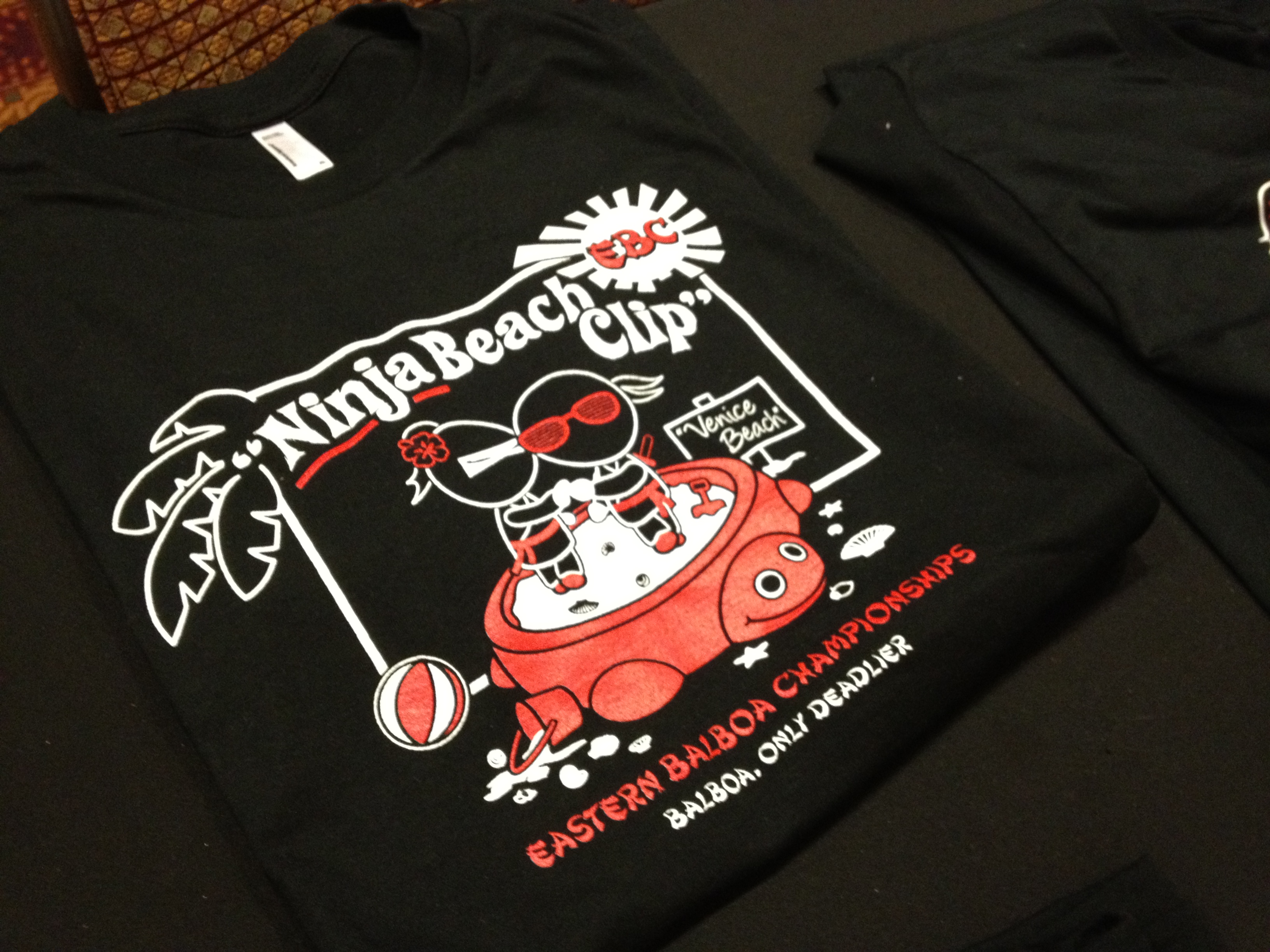
It’s already wonderful that the Eastern Balboa Championships is just a short drive away, but this year EBC really had the feel of a top notch swing dance event, brimming with a level of excitement and enthusiasm that is almost unrivaled. EBC already felt like a Balboa family reunion, bridging the gap between All Balboa Weekends, but this year it felt like EBC really came into its own as an event. The new hotel for this year’s EBC, the North Raleigh Hilton, provided a lovely ballroom space, a big hallway with chairs and tables for vendors, registration, and for hanging out, and there were no shortage of extra rooms for practice space. There were competitions for everyone and I am proud of the newer Raleigh/Durham Balboa dancers, some of them only dancing Balboa for a few weeks prior to the event, taking the challenge head on and entering their first amateur competitions.
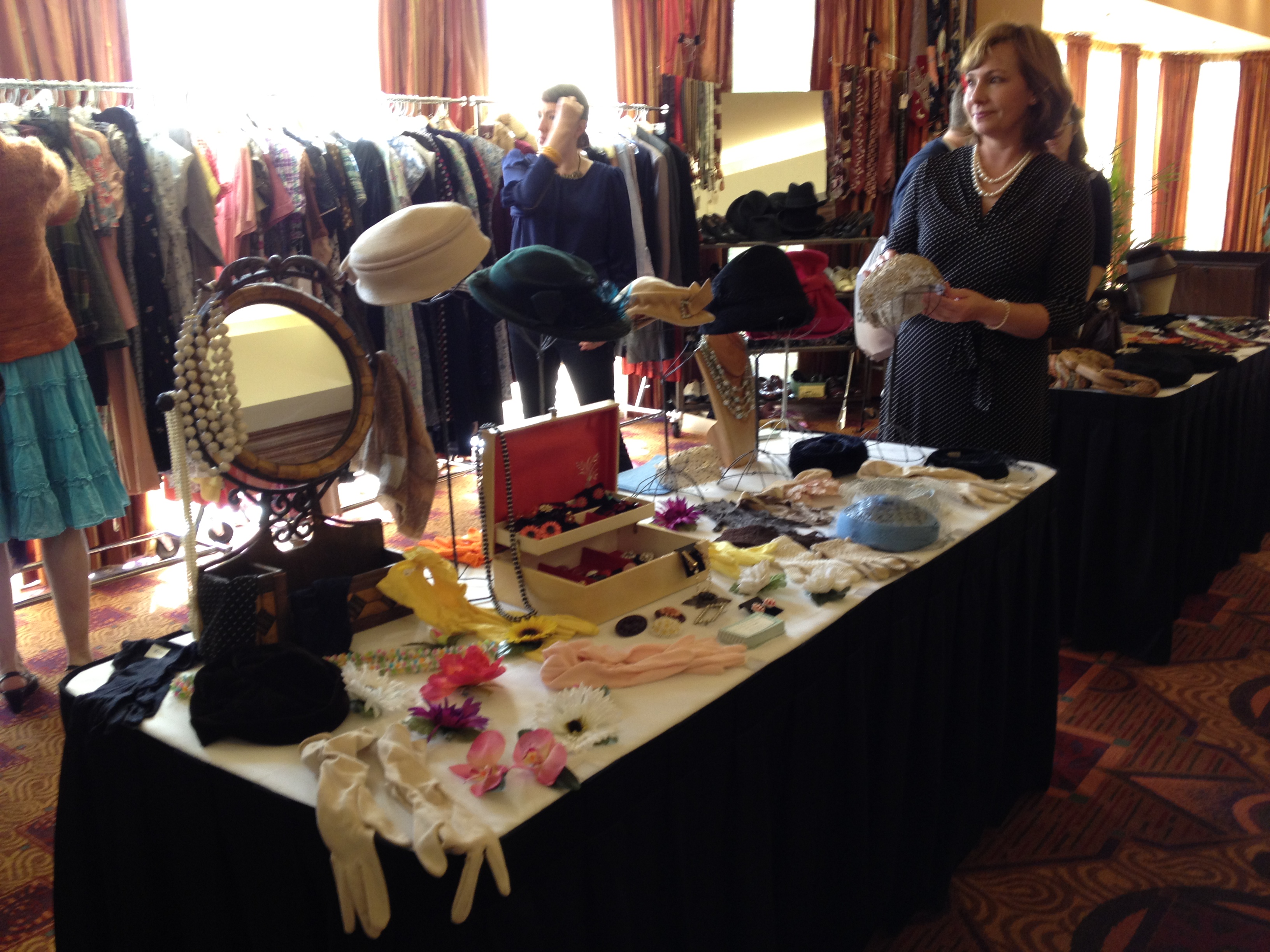
Some of the Vintage Collective spread
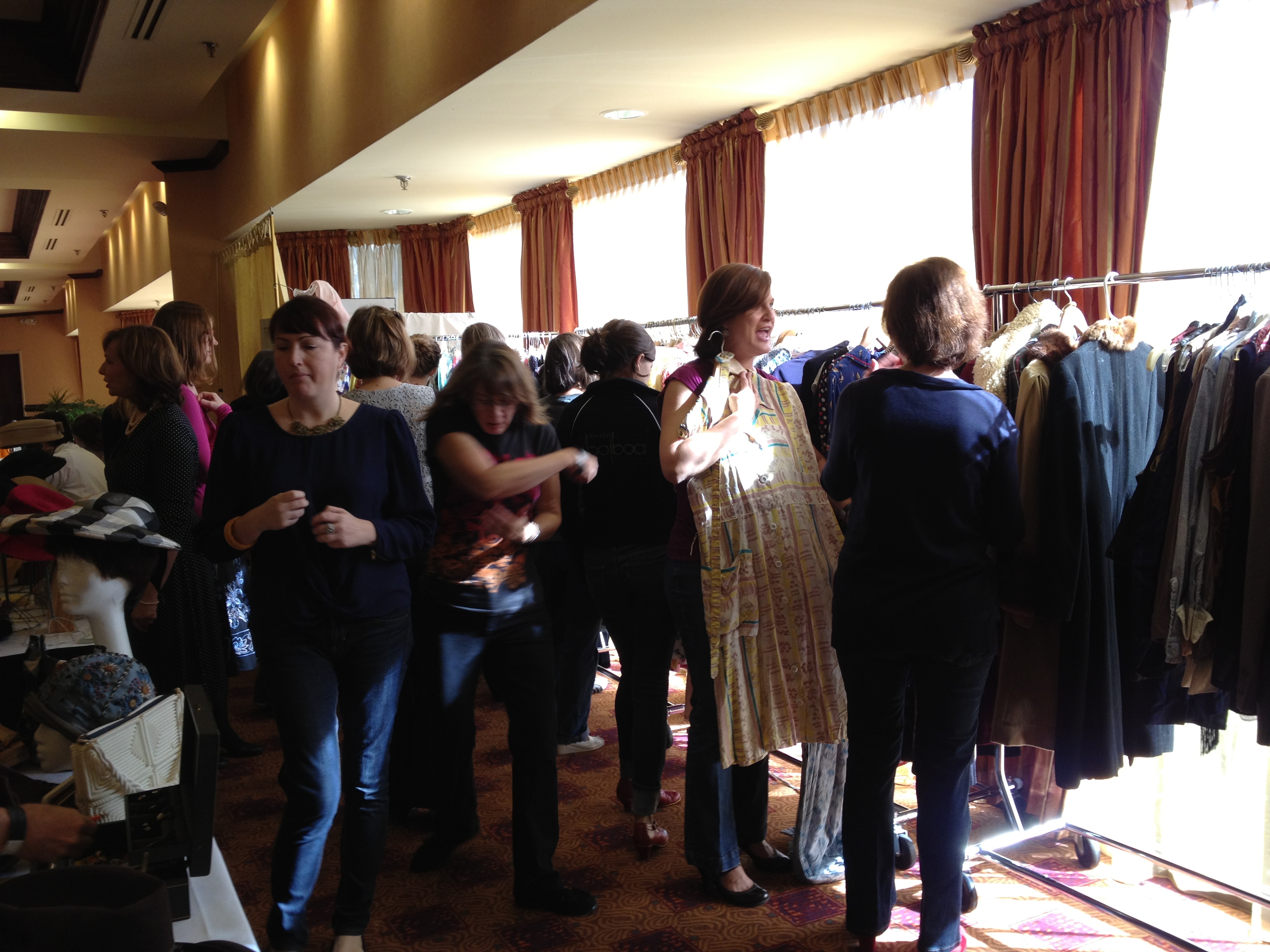
This year, EBC grew from one vendor to four vendors. The solo repeat vendor, and one that is near and dear to my heart, is the Vintage Collective (Andi Shelton, Claire Villa, and Laura Churchill Pemberton), who paid attention to what was bought and who purchased it last year, then went out to their sources to find even more of these vintage goods that swing dancers wear. The result was four large racks of clothing from the 1920’s through the 1940’s, both men’s and women’s apparel, three tables of accessories, and a giant shoe rack. The Vintage Collective was only set up for one day, Saturday from 9 a.m. to 9 p.m., and I was there with my fellow vintage poachers at 9:00 sharp, freshly rolled out of bed and ready to commence with the hunt.
I intended to go grab the goodies I wanted, then go back to bed, but it was so exciting trying on clothes with my friends and choosing outfits for people that it was lunchtime before I knew it. I think Rita Shiang got my two favorite dresses of the day – a 1930’s sailor dress with red trim and a 1940’s brown floral rayon dress with amazing draping and a fishtail attachment in the back, you know, for sass. Again, I forgot to take photos of all this good stuff until the end of my shopping visit, I got so wrapped up in the experience…
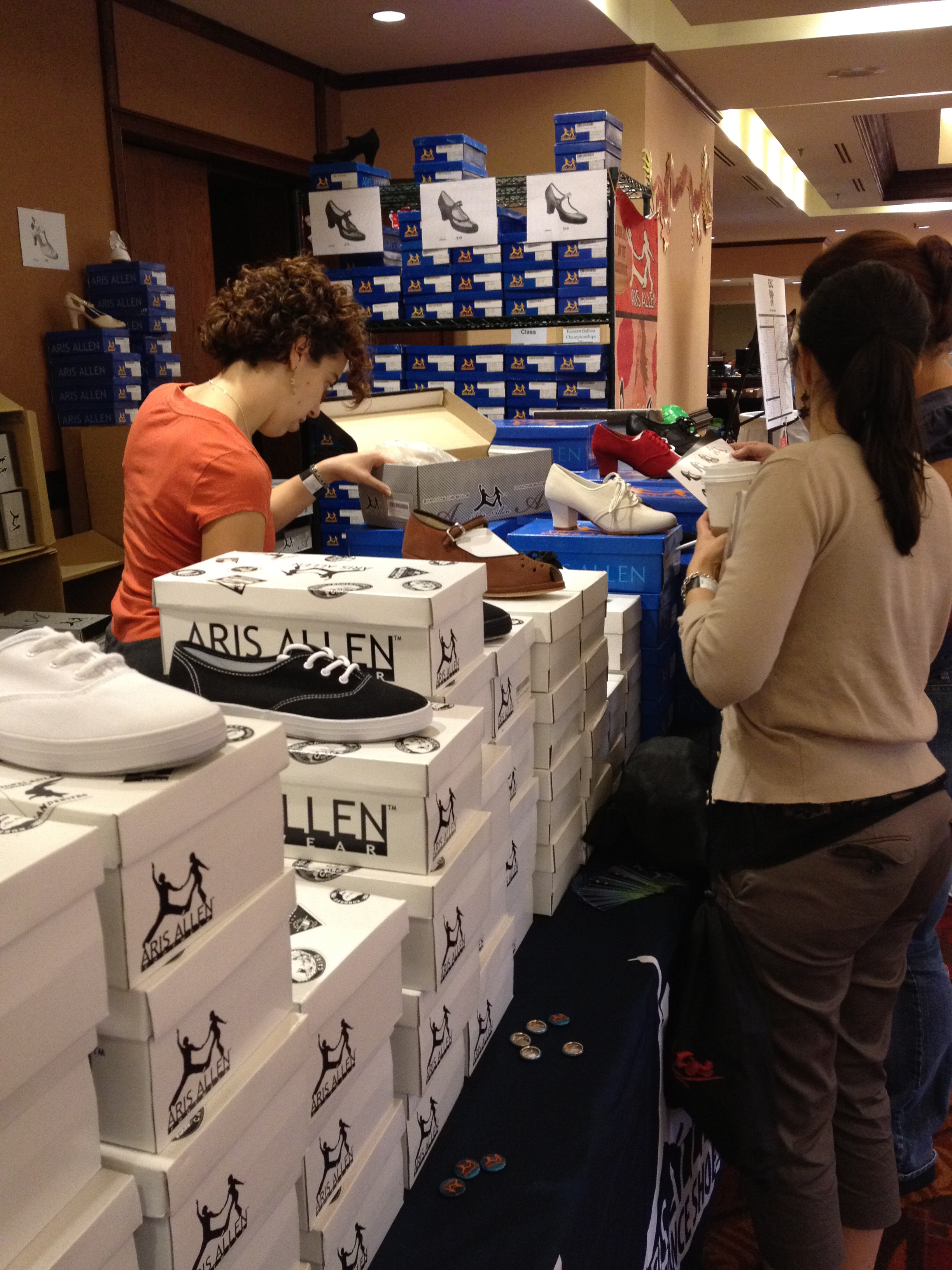
So many shoes!
Next, we have Dancestore, the anchor vendor of any major swing dance event and one that is continuously welcome, as they continue to provide reasonably priced, reproduction dance shoes that are essential to any swing dancer’s wardrobe. At one point, Frankie Hagan stopped dancing and came up to me to show me that his heel had come off his shoe. About 10 minutes later he came back up to me to show off his new pair of Aris Allen cap toes. THIS is only one of the great reasons to have a shoe vendor at your event. Another is to be able to actually try on the shoes to ensure a good fit. Then, at the dance on Sunday night, Kara Fabina announced that Dancestore would be selling their entire inventory at the event for 40% off for the next 15 minutes. YES!!! There was a rush to purchase the discounted shoes and even I decided to replace my pair of white mesh oxfords that I had danced a hole through the toe – at 40% off, how could you not?
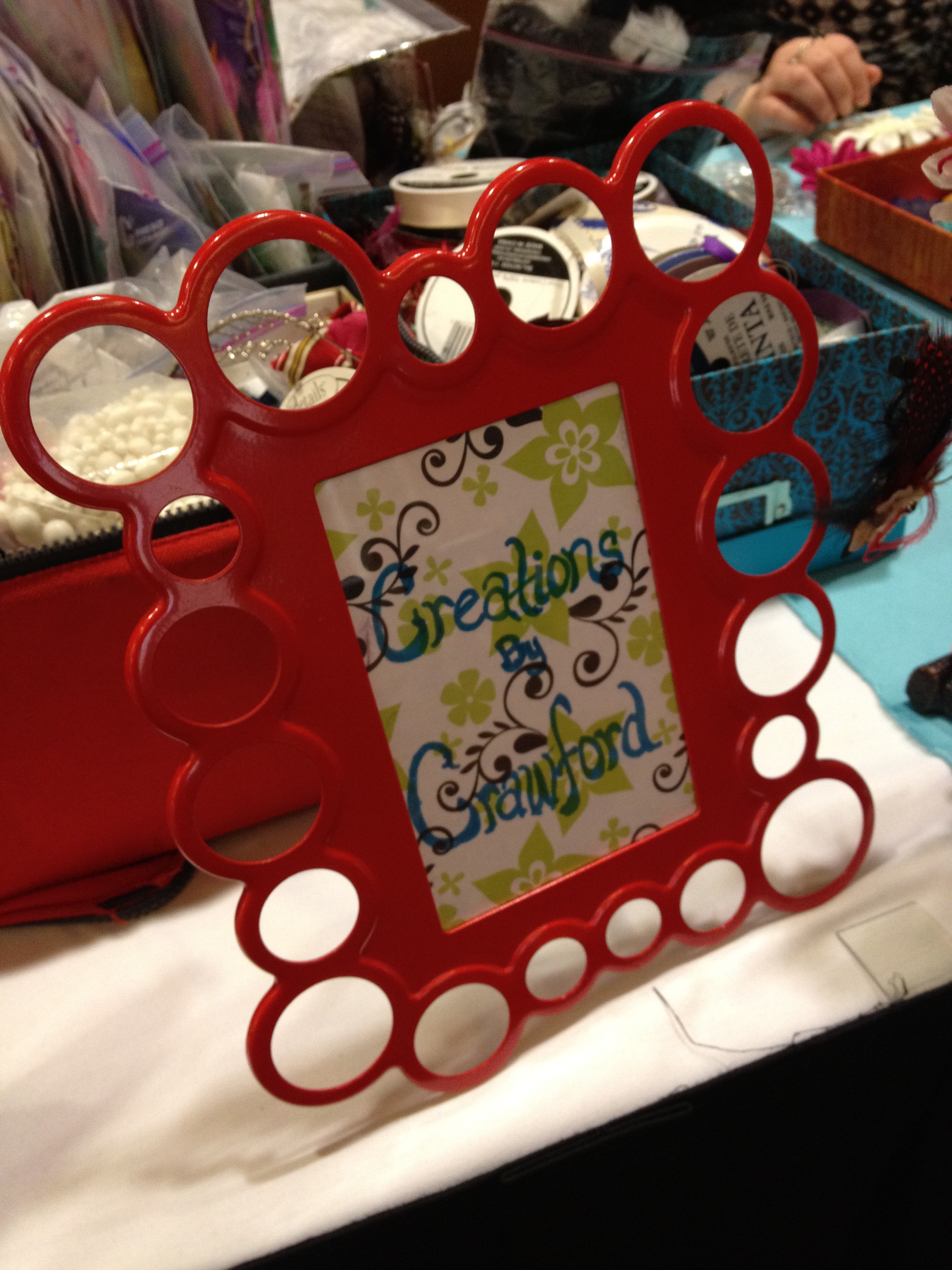
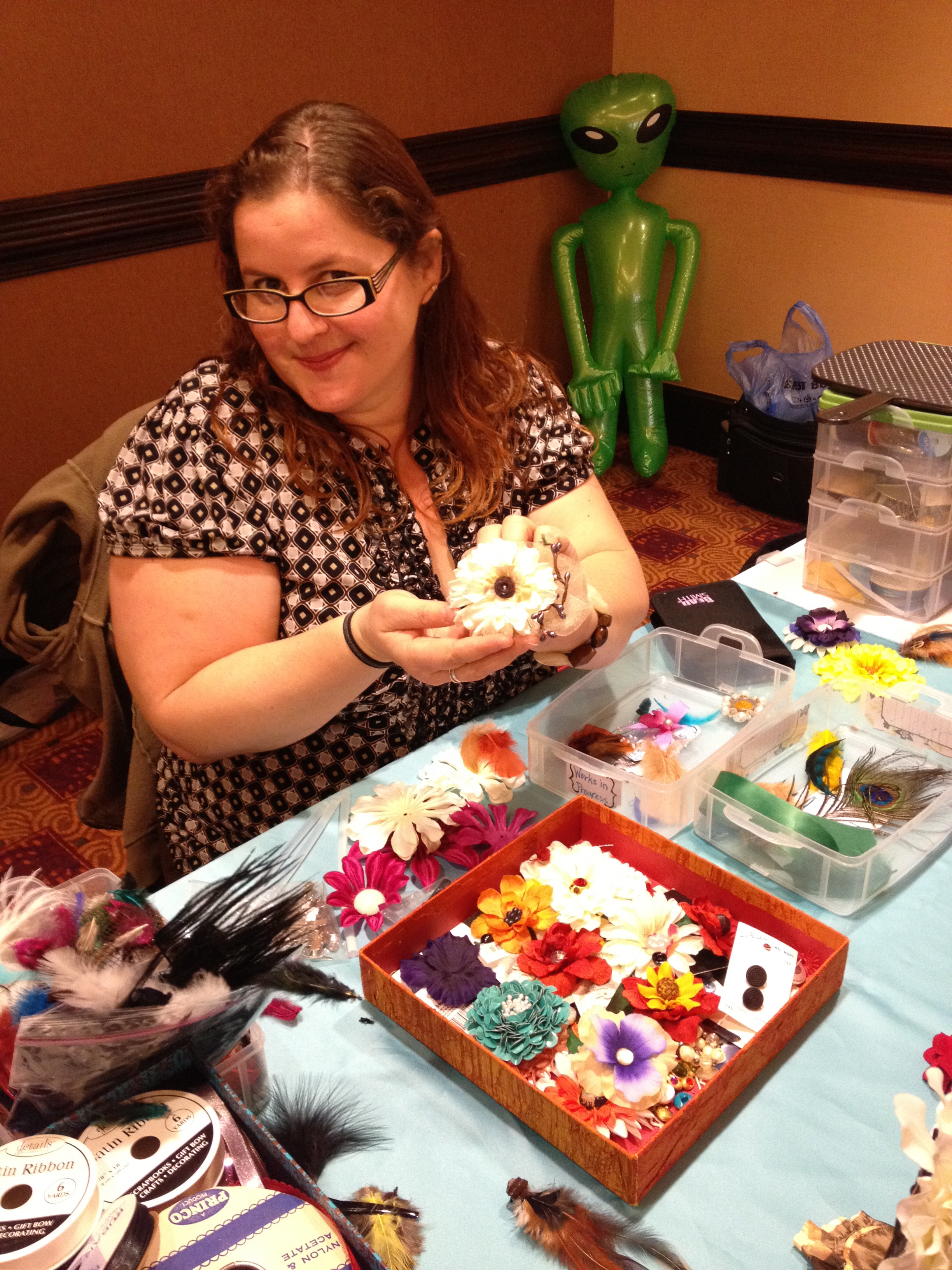
Creations by Crawford is Sharon Crawford’s name for the hair flowers, fascinators, boutonnieres, and other clothing ornamentations she makes. I was a bit confused when I saw Sharon’s vendor space, as there were a few items for sale, but it mostly looked like a craft studio, with supplies everywhere. Then Bill Speidel showed me his boutonniere and explained that Sharon had made it custom to go with his outfit. I looked over and Sharon confirmed, as she furiously sewed together one of her creations for a customer. This is a new approach and one that can work at a weekend event – you have a bit of a captive audience if the shopper is there for the weekend, why not make something to go with what they are wearing if they have the time to wait? By the end of the dance you can have a custom piece that you know will work with something you have.
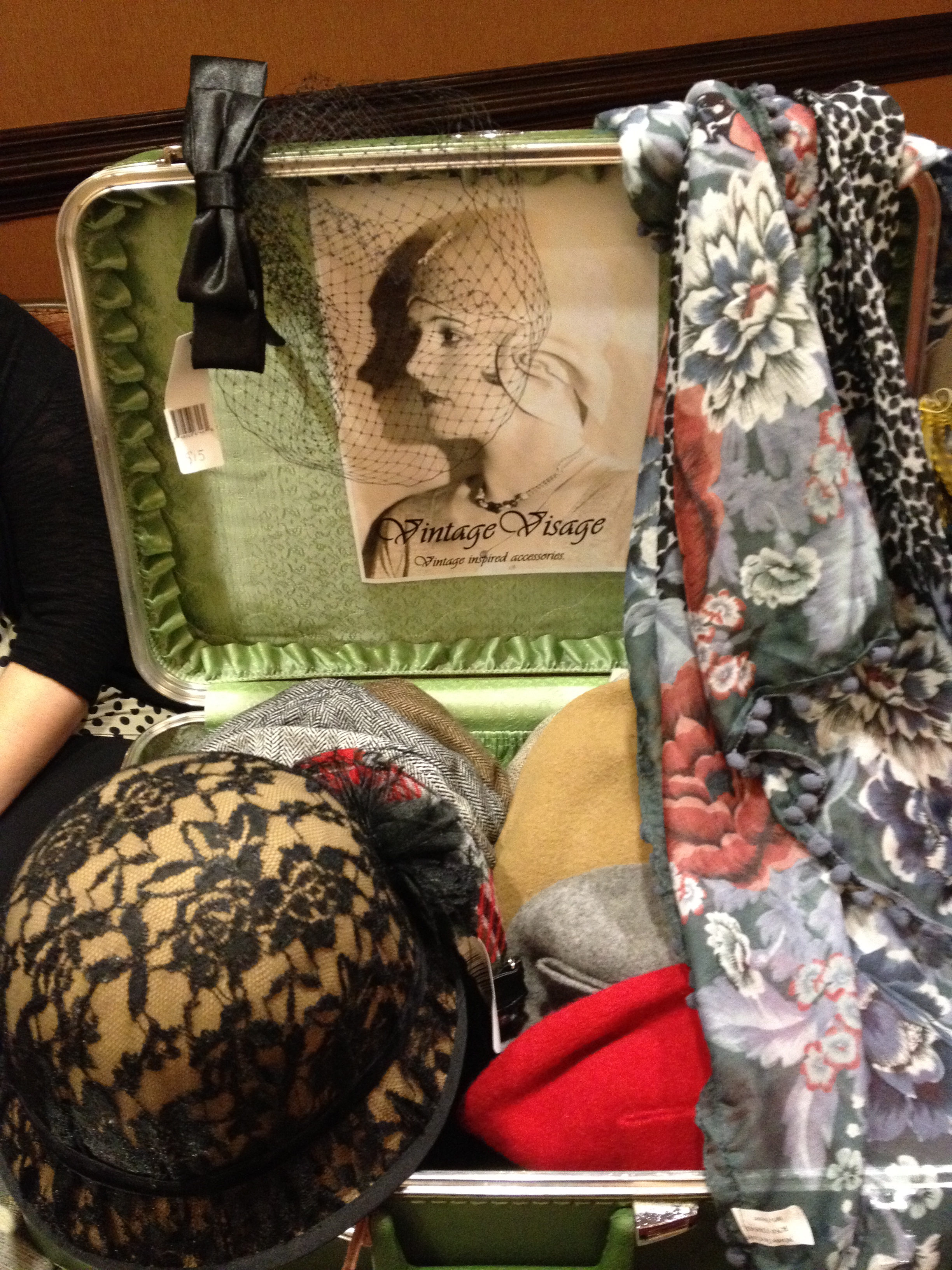
Finally, we have Vintage Visage, the brainchild of Kathryn Meyer, who had a fantastic display of vintage-inspired hats and accessories for sale, including hair flowers, fancy gloves, hats for ladies and gents, and the ever essential fan. Whoever has the foresight to sell fans at dances is always tops in my book. If you are looking for Kathryn and her wares after EBC, she is a regular vendor at Richmond’s Second Saturday dances.
And that about wraps it up for another great year at EBC! Here are some supplemental photos of the vendors:
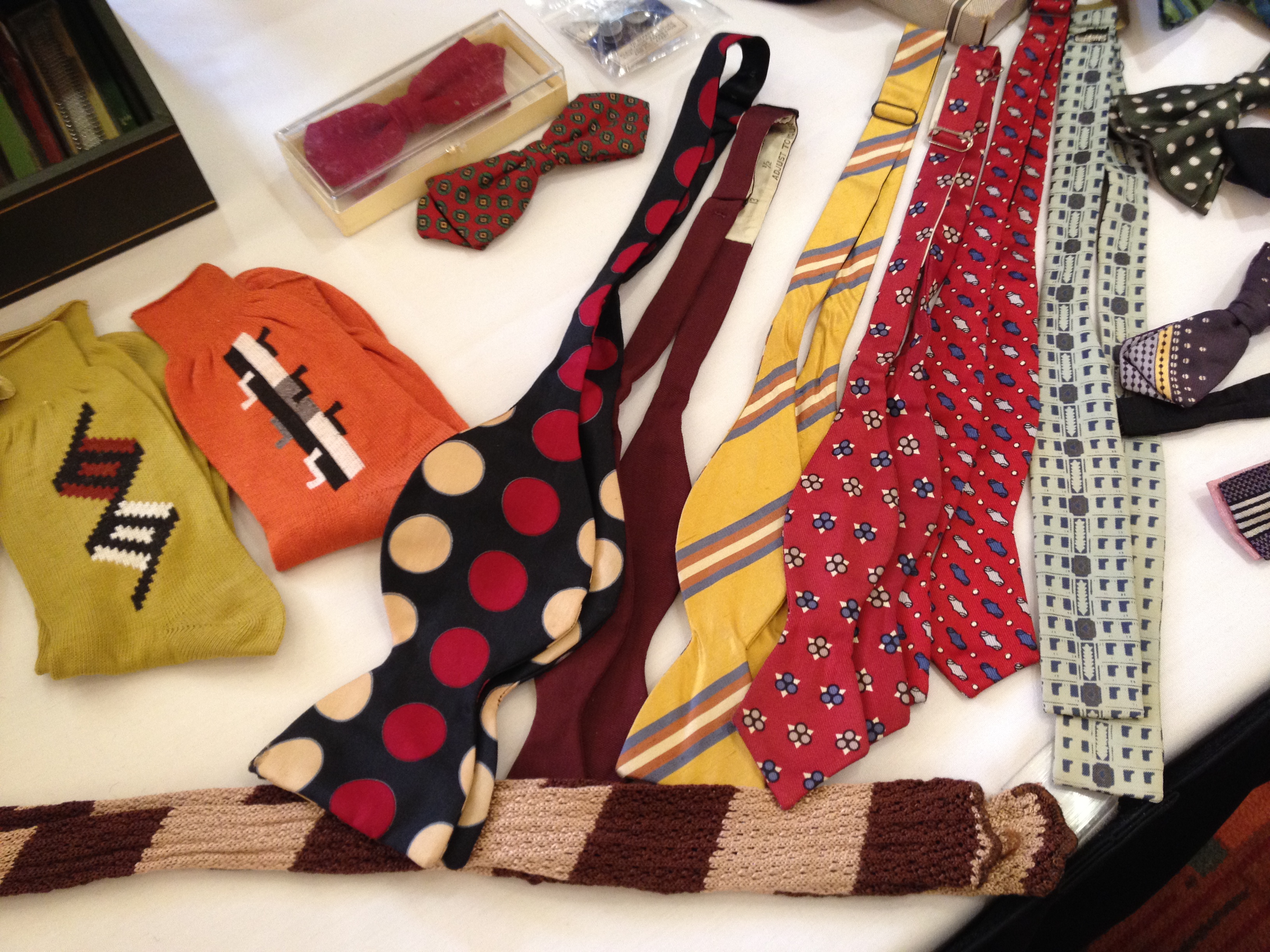
My favorite Dancestore wedge in brownNelle Cherry models a Dancestore limited edition two tone mesh and leather heeled oxfordSharon shows off her handiworkKathryn and Meghan with the Vintage Visage spreadHats and purses - even a 1920's cloche! From the Vintage CollectiveAdorable socks and ties from the Vintage CollectiveThe Vintage Collective's shoe rackElizabeth getting ready to hit the dressing roomLovely fabrics from the Vintage Collective dressesHappy shoppers!
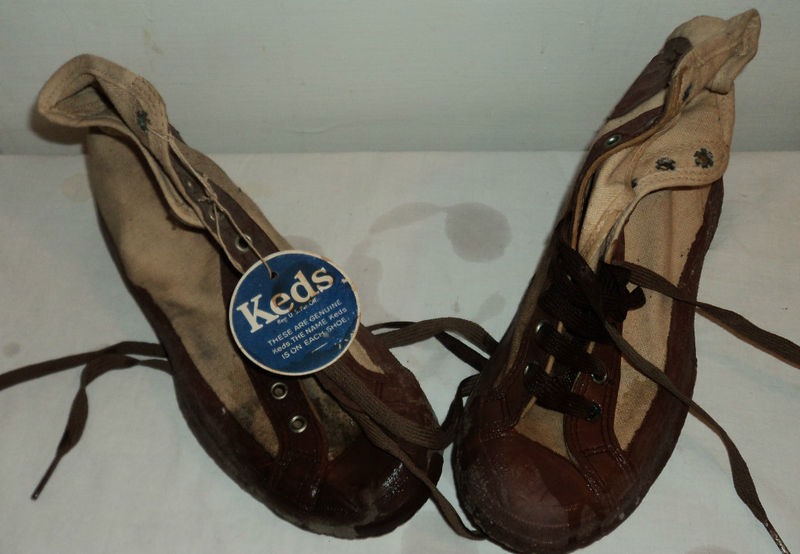
File this under curious goods, as I’m not sure these shoes are in a condition to be worn. First we have two pairs of Keds, but these Keds are not your everyday canvas dance shoe – the first pair looks a bit like a pair of Chuck Taylors, made with leather accents and some traction on the rubber soles. The second pair is a pretty straightforward pair of canvas high tops, but with a dress heel instead of a flat rubber sole. Interesting…
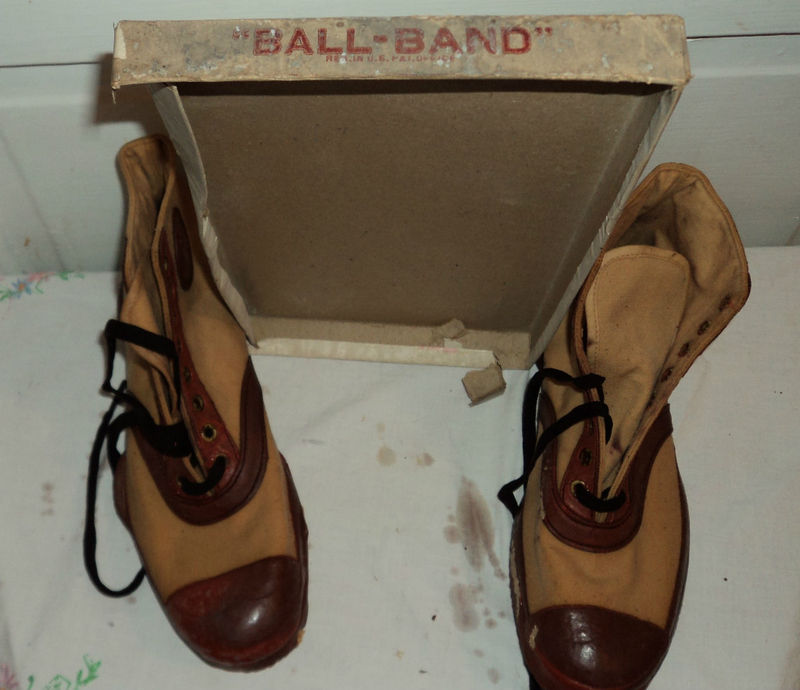
Finally, this same seller, who found these old athletic shoes at an auction for a shoe store that had closed in the 1930’s and was finally liquidating its inventory, has a pair of “Ball-Band” rubber soled sneakers, which look like an elegant hybrid between a pair of Chuck Taylors and a pair of two tone cap toed oxfords – very cool! I’d like to see this style in reproduction.
The "Ball Band" athletic shoesDead stock 1930's KedsKeds with heels!
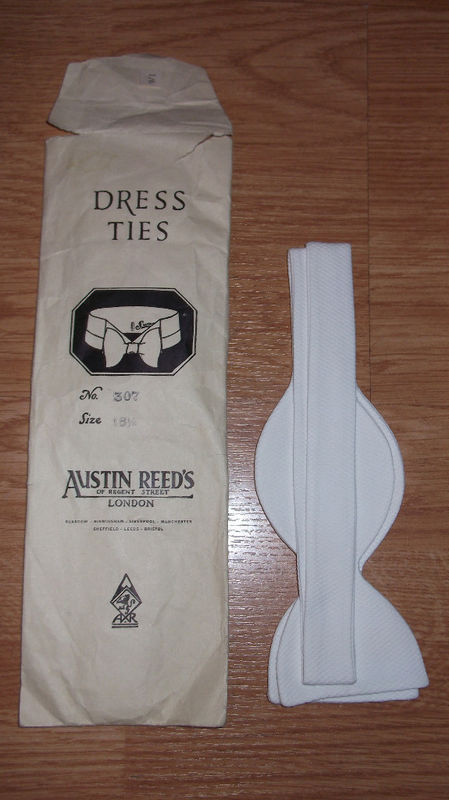
Oc-Tie-ber may be over, but its spirit lives on – add to your neckwear collection by picking up one of these dead stock (read: vintage, but never worn/new in packaging) Austin Reed white bow ties on eBay, size 15 1/2. Wouldn’t this look fantastic with your New Year’s Eve tux, or with a colorful shirt, or maybe pair with a vest?
Bidding is still under $2.00 for both auctions, so you may spend more on shipping than you will on the tie!
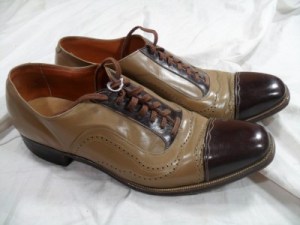
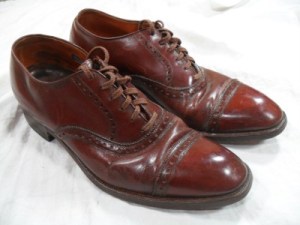
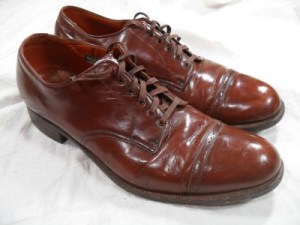
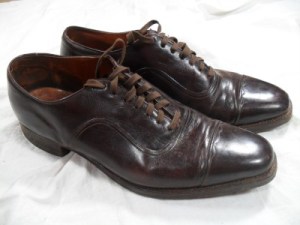
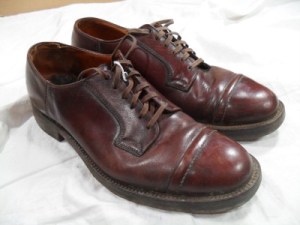
Some great shoes popped up on eBay from seller hopalong.acropolis, who found several pairs of vintage 1930’s/40’s cap toe shoes from an estate sale in a size 8. Starting price is $19.99 for each pair – take a look!
These two tone brown shoes are HOTBrown cap toes with nice broguing detailsA less fancy pair of brown leather cap toesDark brown leather cap toe oxfordsAnother pair of brown cap toe oxfords, but the soles look a bit thicker on these...maybe these are work shoes?
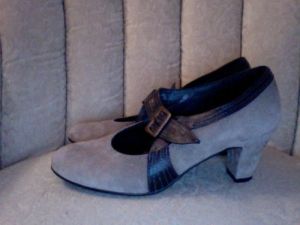
There are a few really good deals on eBay right now for Re-mix Vintage Shoes and Aris Allen dance shoes. For starters, there is a pair of worn-once Remix Deco shoes in the gray suede/black leather combo, size 9, with a starting bid of $10.00. These shoes retail at $194.00, so $10.00 just seems crazy. My guess is that the bidding will go higher than this, but any Remix shoe to be had under $50.00 is a major win.
Re-Mix pleated toe wedge
The next Remix deal isn’t as good, comparatively, but it’s still a pretty awesome deal – $89.99 starting bid for a pair of silver pleated toe wedges, size 11. I love Re-Mix wedges and silver seems to go with everything. 🙂
Finally, the best deal of the week as a pair of lovely Aris Allen white satin 1930’s heels, size 10, with a starting price of $0.99. That’s right, 99 cents! The shipping is more than the cost of the item, but even then, it still puts you in a pair of dance shoes for less than $15. Winning!
The Triangle Swing Dance Society has requested a post about where to shop locally for vintage or vintage-inspired swing dance clothing in the Triangle area of North Carolina (Raleigh, Durham, Chapel Hill). In the spirit of shopping locally, there are a few places I would recommend to find garments, but keep in mind that this is never a sure thing – vintage shops have one of a kind items and you may have to visit a shop several times before finding anything; similarly for retailers, things that may be in stock one season will not be carried for another season. I’ll list some of the more consistent producers and some general ideas about where to look for these things.
Dolly’s Vintage
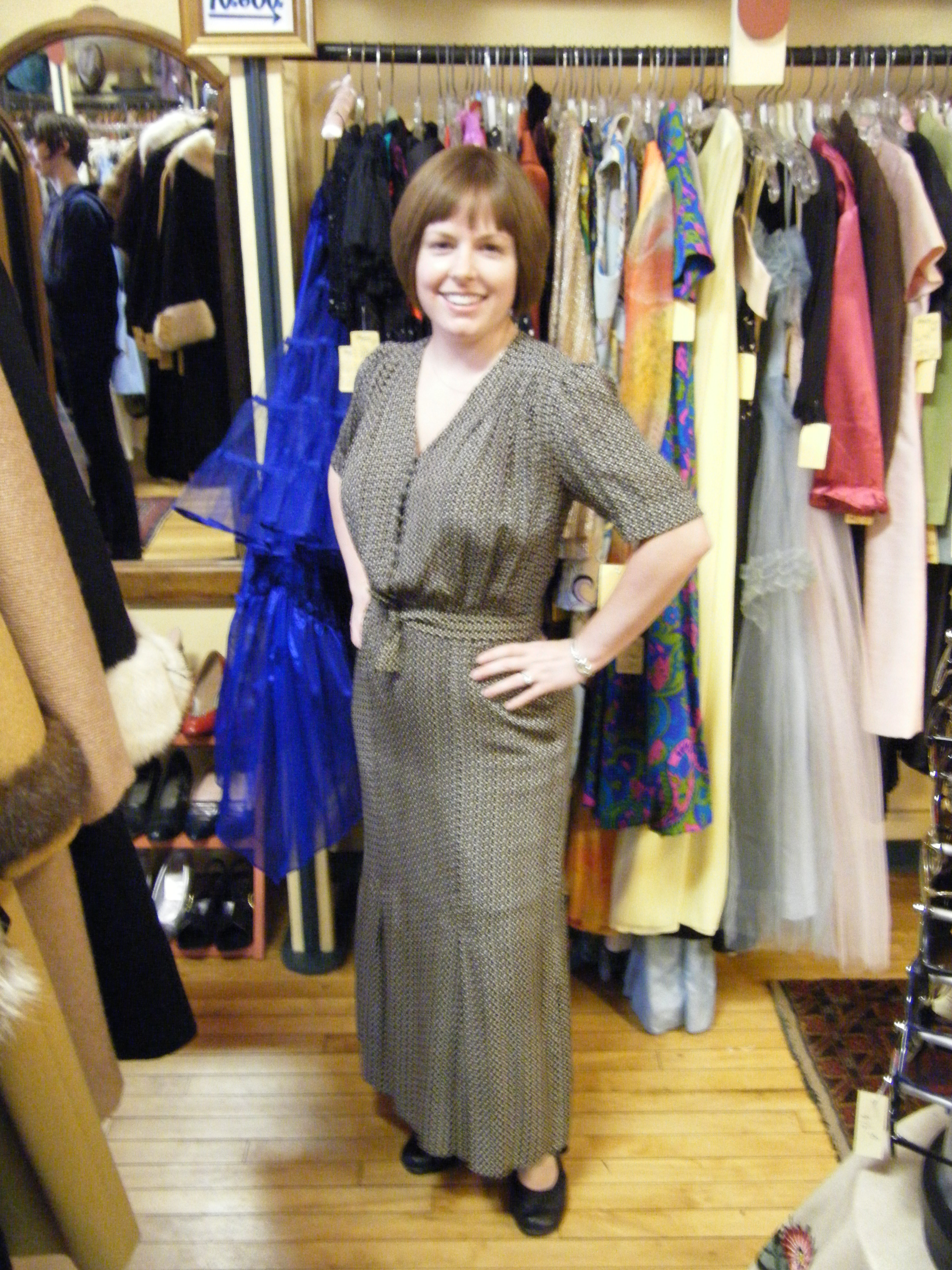
Dolly’s Vintage is in the forefront of my vintage shopping right now because my office is two blocks away from this delightful shop and I often (read: 2 or 3 times a week) stop by the shop to chat with Jennifer Donner, the amazing and talented owner of Dolly’s, and to soak up some of the cheerful atmosphere of the store. Dolly’s is also the most reasonably priced vintage store I have ever encountered. Where other vintage stores would charge $40-$100 for garments, or even more, Dolly’s keeps everything just below that range, with most items between $20 and $30. Jennifer stocks decades from the 1920’s through 1970’s (with a few choice items from more recent decades), but keep in mind that 1920’s, 30’s, and 40’s garments will be much rarer and she may not have anything in stock, but you should still ask so that she knows how many people are looking for these garments. She will be more likely to purchase these items from people clearing out estates if she knows there is a demand. I can usually go into Dolly’s and find a few 1940’s items, and definitely a lot of 1950’s day dresses that are perfect for swing dances. For men, Dolly’s has a great selection of sport coats, pants, shirts, and an entire rack of 1950’s skinny ties. If you see something you like, you should either buy it immediately or ask her to hold it if you need to think about it or find something to match it – the clothes fly off the racks in that store and she stocks new items every day just to keep up with the demand. I know some of the Triangle dancers are already a fan of Dolly’s, as I’ve seen Elizabeth Tietgen pick up a 1920’s cloche, Holly Owens bought an adorable polka dot dress that she wore to a dance at the Century Center recently, and Jason Sager purchased a wig here for RDU Rent Party’s role reversal night.
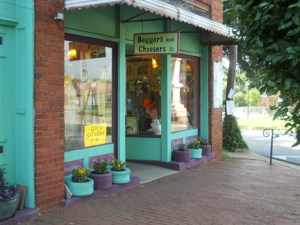
While not technically inside the borders of the Triangle, Beggars and Choosers should not be overlooked. It is a bit of a drive to Pittsboro and they are only open on some Saturdays, but this is the only place I know of in the Triangle that stocks clothing from the late 1800’s through the 1970’s and consistently has a few items from the jazz age and swing era. I see a lot of conflicting information about when this store is open, so it’s best to call ahead before you decide to make the trip. This is a gold mine for men’s and women’s vintage clothing, so I promise it will be worth the effort!
While they have no brick and mortar store, the Raleigh Vintage Collective has a lot of swing era clothing and accessories available for purchase through the web. They are a group of ladies who periodically have trunk shows around Raleigh and list their wares on Etsy (Raleigh Vintage and Time for Vintage). Most notably for dancers, they will have a trunk show at this year’s Eastern Balboa Championships, back by popular demand after last year’s trunk show, which featured only items from the 1920’s through the 1950’s – no digging through polyester to find what you want and no question about the garment’s decade of origin.
There are a few other vintage stores in the Triangle, but my experience with them in finding garments for swing dancing has been unsuccessful, as they stock 1960’s or later garments. Men may find them more useful, as menswear has changed fairly little over the past century. For example, The Clothing Warehouse in Chapel Hill had a rack of men’s vests that looked promising.
Other random notes: Someone who designs for Urban Outfitters must have a penchant for vintage hats because I always seem to find great vintage-inspired hats at this store. I always make sure to stop in at the Southpoint Mall, Durham location when I am there to browse through the accessories. Also at Southpoint, Anthropologie is a store that has built its brand around vintage-inspired clothing and accessories. The prices may set you back, but they always have a good sale rack and, if you find something on the sale rack or in the store that is not in your size, they will locate your size in another store and have it shipped to you.
Gents, the best and cheapest place for you to look for things are your local thrift stores. When my grandfather passed away, most of his suits went to a thrift store – jackets and suits from the 1950’s forward, most of them only worn on Sundays so they were in great condition. I see a rack of suits and sport coats and every thrift store I go to and this can be a great place to pick up something cheap that you don’t mind sweating in. You may also want to check shoe repair places for vintage dress shoes, as people leave shoes or bring them there to sell them. Men’s shoes, for the most part, are easily repairable and able to be shined up to look as good as new. Main Street Shoe Repair in Durham always has several pairs of cap toes and wingtips that look dance-ready, at a fraction of the price of a new pair of shoes.
Finally, Remix Vintage Shoes, a company based out of California that makes gorgeous reproduction shoes, sells their shoes in a couple of stores in Durham – Magpie, a boutique in the West Village tobacco warehouses, and Cozy, on Ninth Street. Neither store carries the entire Remix line, but if you find a pair locally that you like it will save you about $20 in shipping from Remix in California.
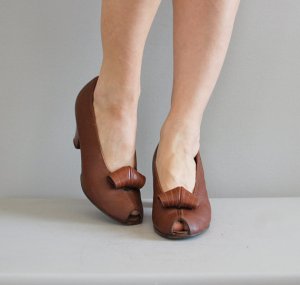
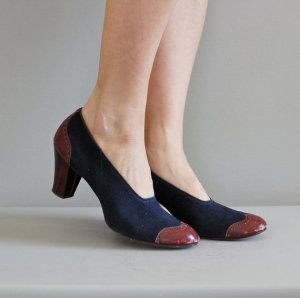
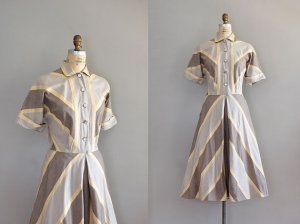
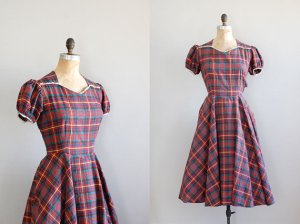
There are vintage stores that seem like they have everything but the kitchen sink; then, there are vintage stores that are “curated,” full of carefully selected items that may evoke an era or perhaps only carry the choicest items. I could tell that Dear Golden Vintage on Etsy was one of these stores, even before I read the store description – the collection of items in this Etsy store is truly choice, and selection of things more lovely than the last.
Dear Golden Vintage sets a beautiful scene with clothing and accessories and you should definitely peruse all the online offerings, but here are my favorites:
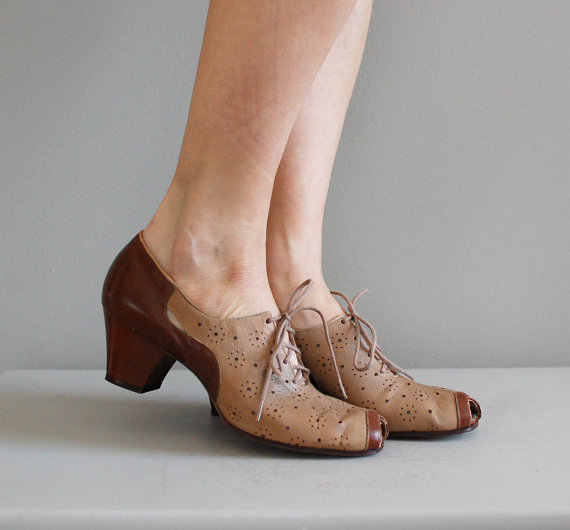
Blue 1920's cloche1920's silk chemise1940's chocolate curl heels - WANTBlue suede and brown leather two-tone shoesCotton eyelet 1930's dressI'm a sucker for a chevron dressAdorable plaid 1940's dressBlue peplum dress with cutouts - HOTTTTT1950's party dress with giant pockets
It was another wonderful year at Richmond, Virginia’s Jammin’ on the James, both the dancing and the shopping. Some of my favorite vintage shoppers – Lily Matini, Elizabeth Aldrich, Bill Speidel, and, a new addition to my vintage cavalry, Josephine Stewart – made cameos at the event this year and it made Saturday an exciting and bustling day at the vintage shops in Richmond. I reported on my trips to Richmond’s two best vintage shops, Halcyon and Bygones, after last year’s Jammin’ on the James, but there’s always new inventory to scout.
Step into Halcyon!
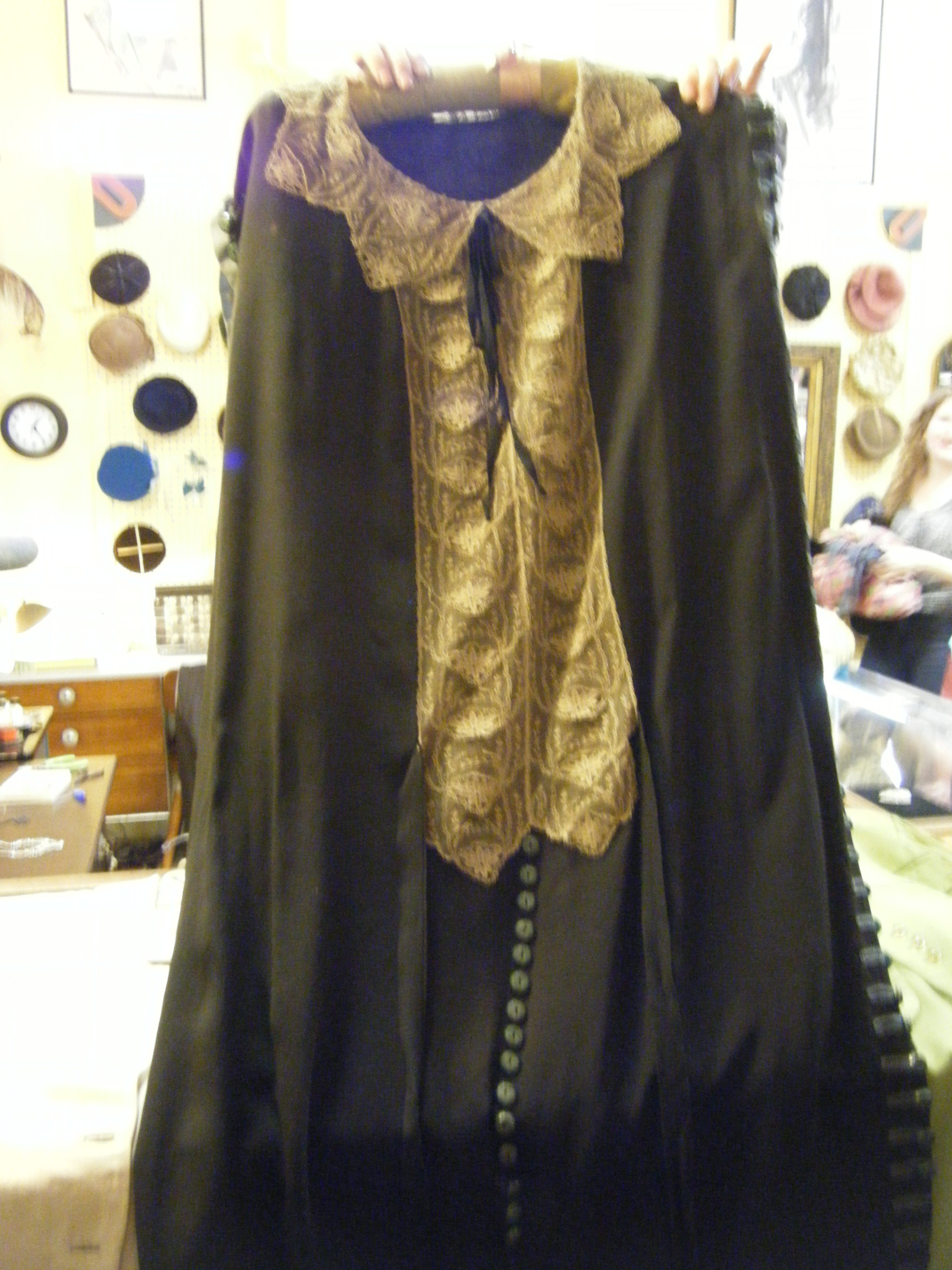
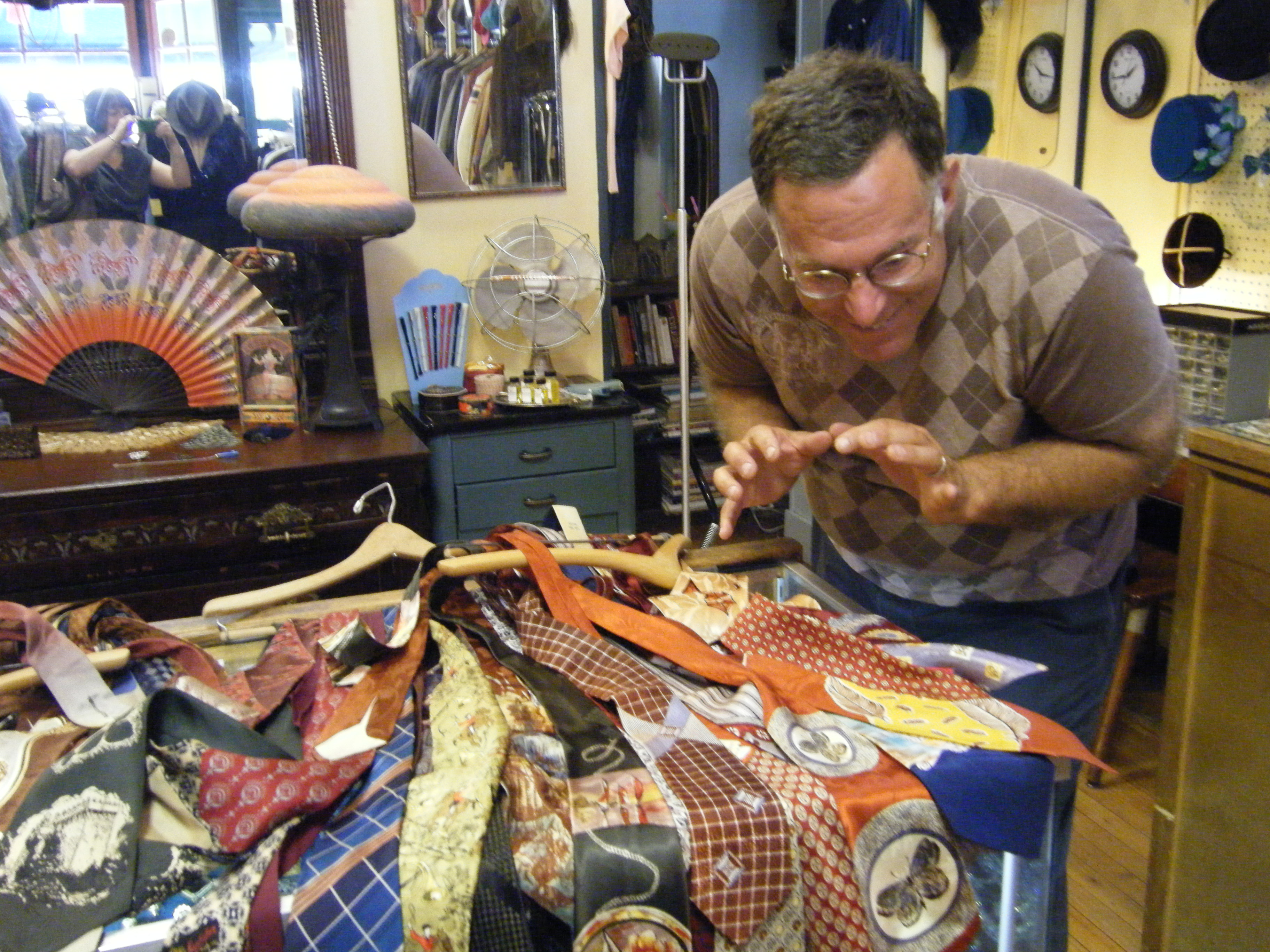
Halcyon is my favorite Richmond store because it is so inviting – beautifully decorated, not too large/too small/too crowded, with a carefully chosen selection of garments that leaves you with the feeling that the entire store is filled with the “good stuff,” no filler. This year was no exception and I left with one beautiful 1930’s dress, but there were several other things I probably could have taken home if the budget had allowed. After we expressed interest in ties, Angelica from Halcyon pulled out the hidden rack of beautiful 1930’s ties, including one with circles and butterflies that Bill and I both claimed, but, ultimately, Bill won out because my husband wouldn’t answer his phone to tell me if he would wear the tie. Bill also scored a vintage Alexander Calder inspired tie by Carnival Jones, Elizabeth left with a lovely black faux fur jacket, and I left with a 1930’s silk dress. There were some really lovely pieces from a Richmond estate, including a 1920’s dress that must have had over 100 green bakelite buttons down the front and both sides.
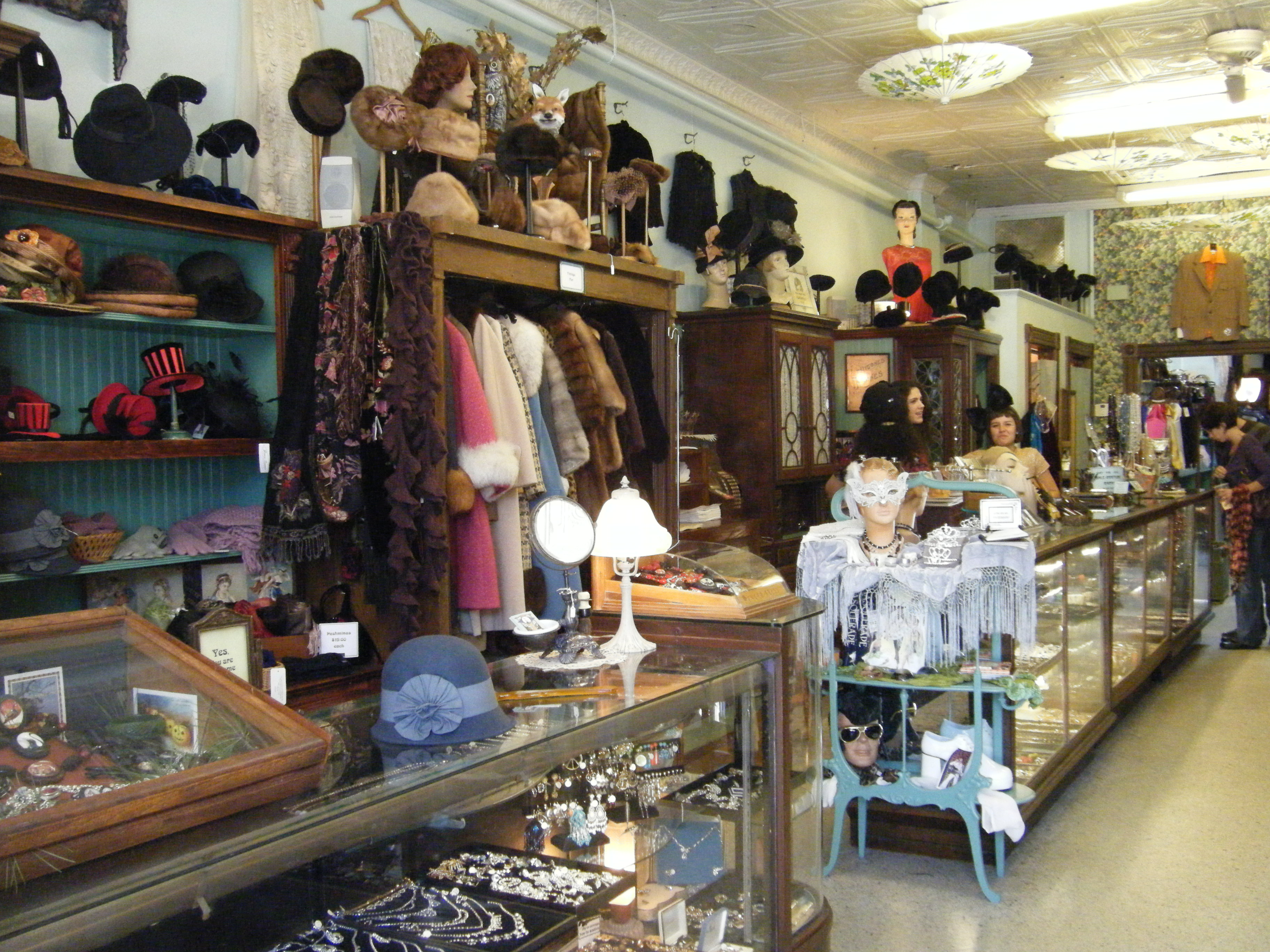
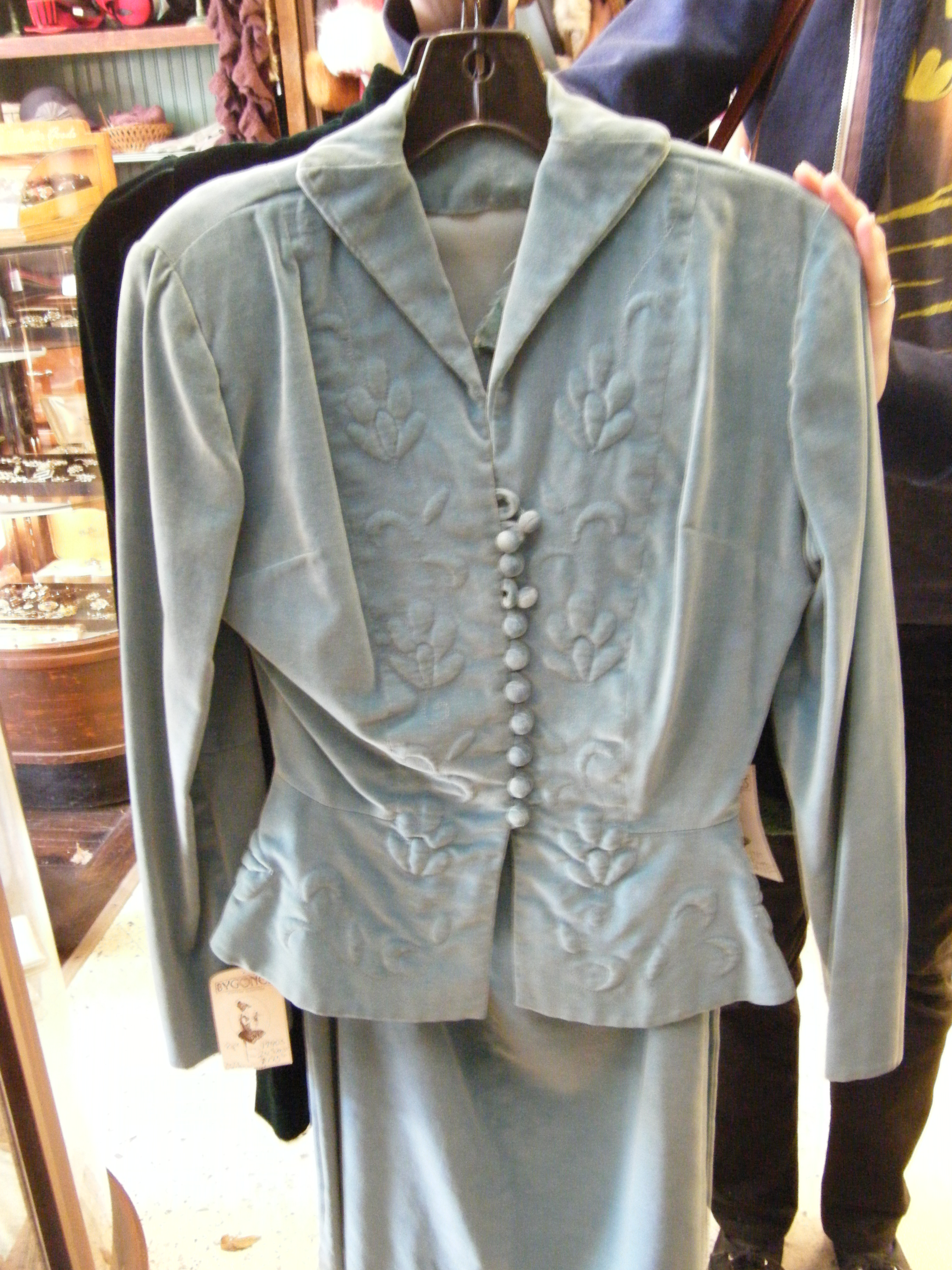
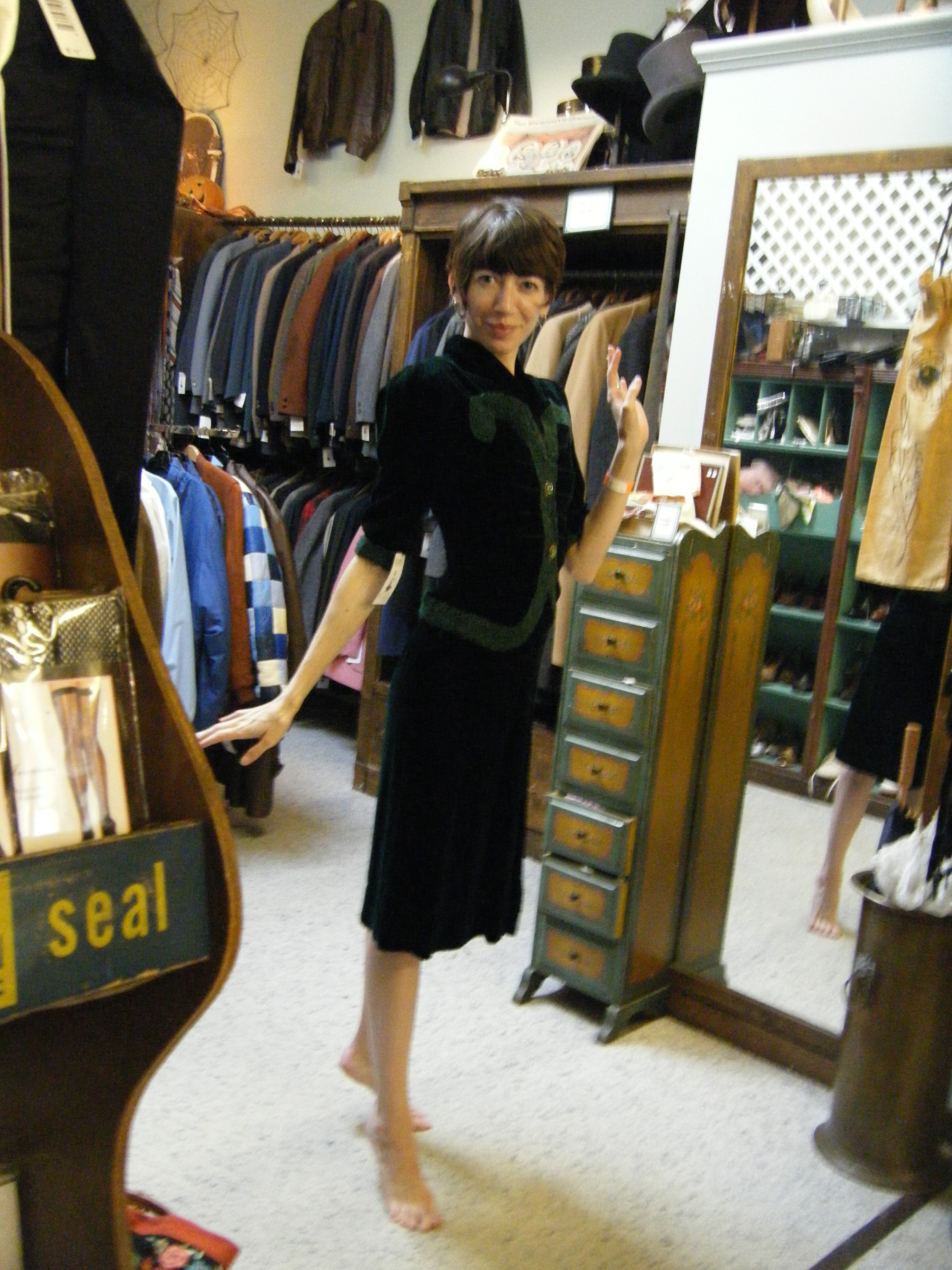
Next stop was Bygones, which is famous for its window display and top of rack displays. This season’s display did not disappoint, with an Egyptian revival-themed window-dressing and an inside display of furs and faux animals that just begged for some taxidermy or, as Bill said, the barrel of a shotgun peeking out from between the furs. Josephine had great luck here, asking for tiny sized clothing and they definitely delivered. Favorite pieces included two 1940’s suits, one in light aqua velvet with quilting detail on the jacket and another in green silk velvet with amazing trim detail on the jacket.
Check out the goods from the photographs below!
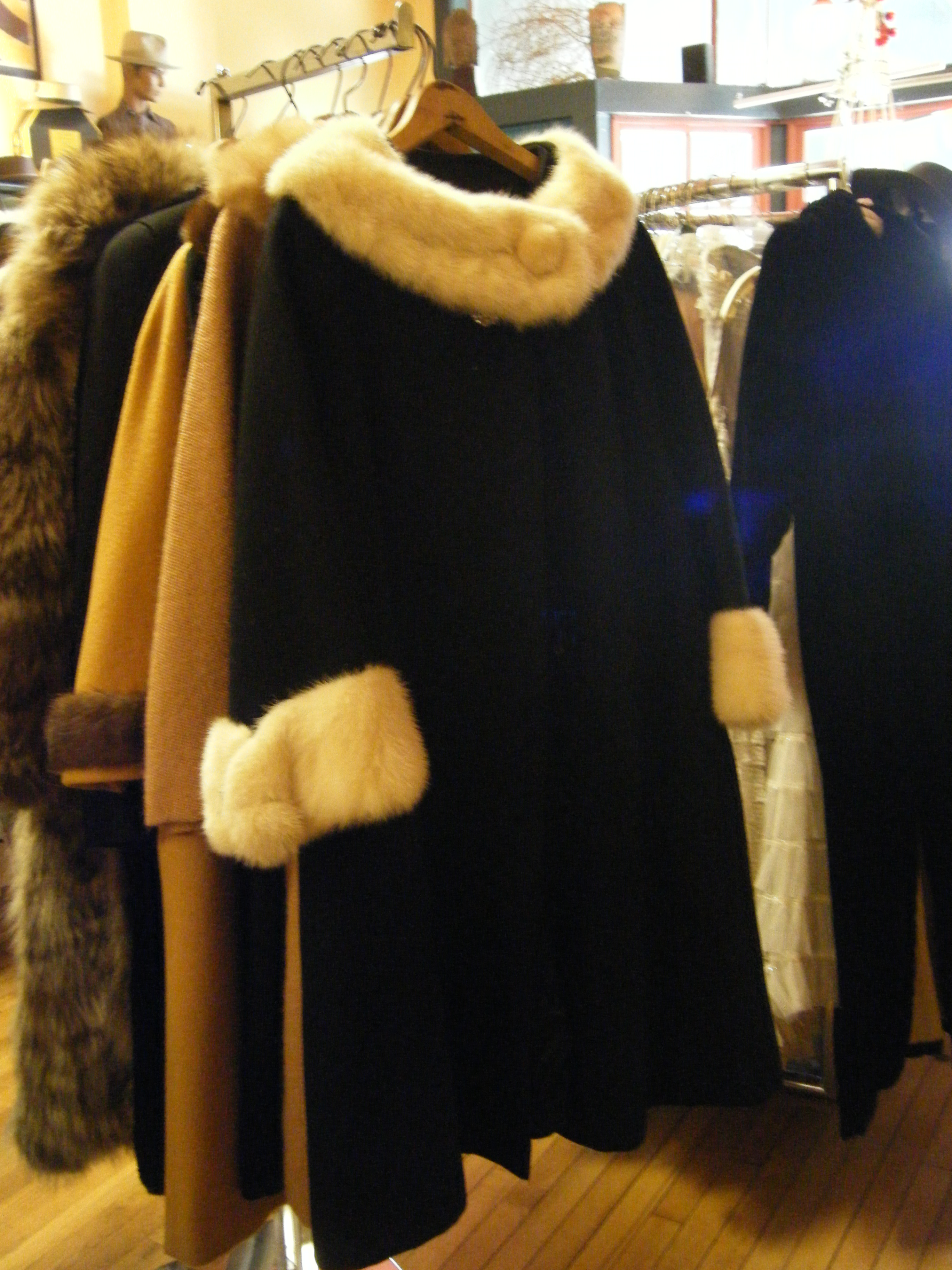
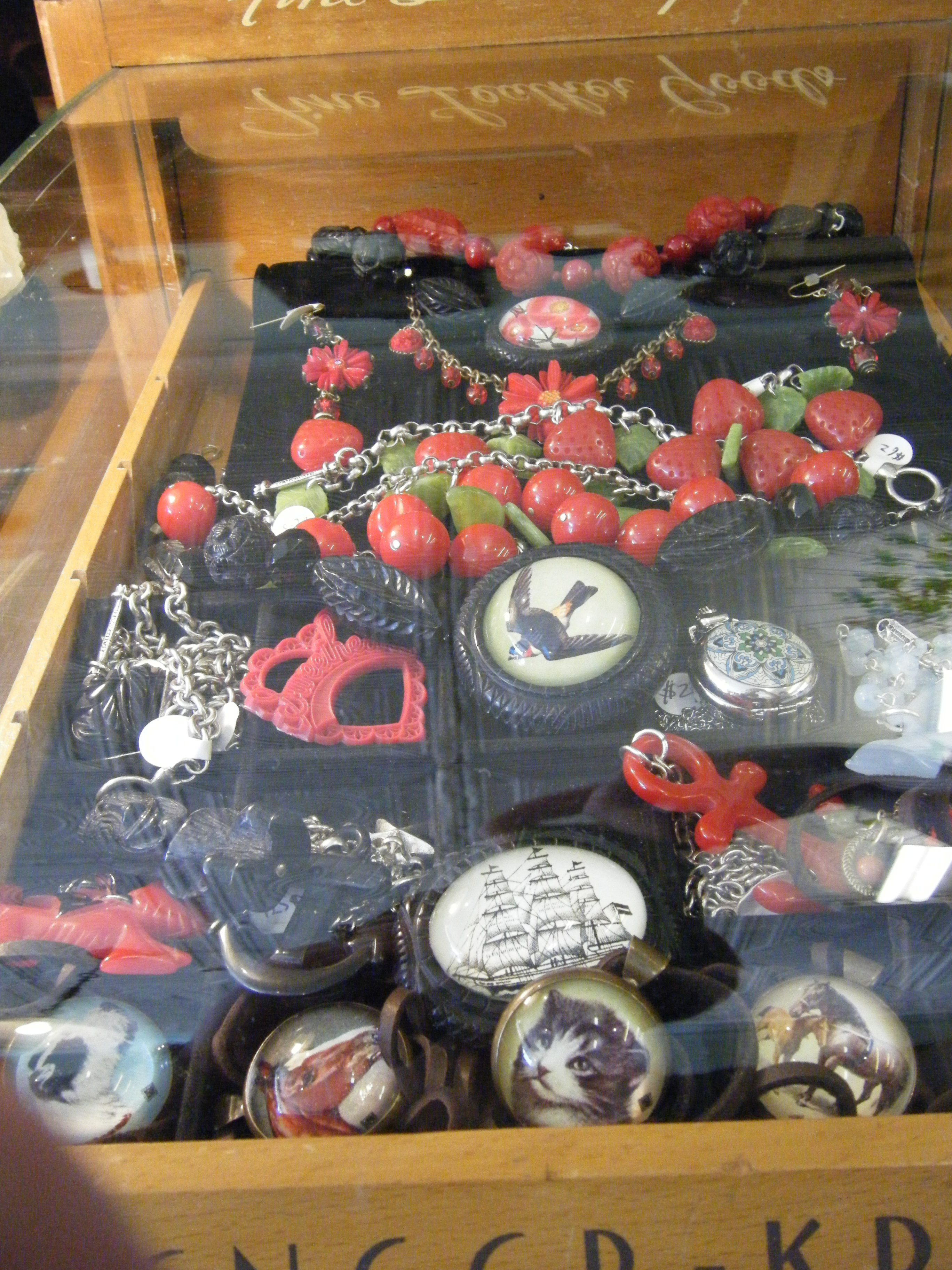
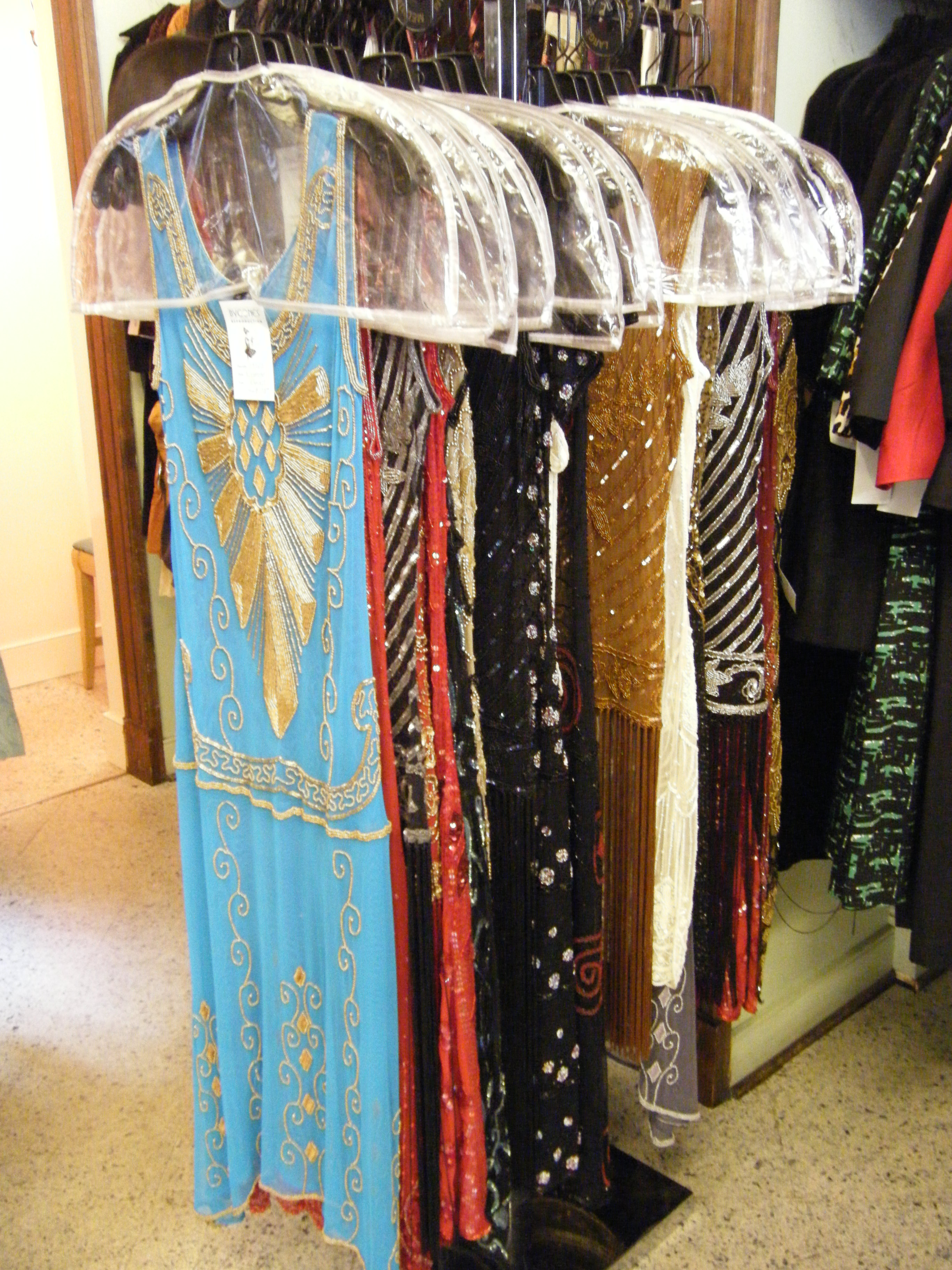
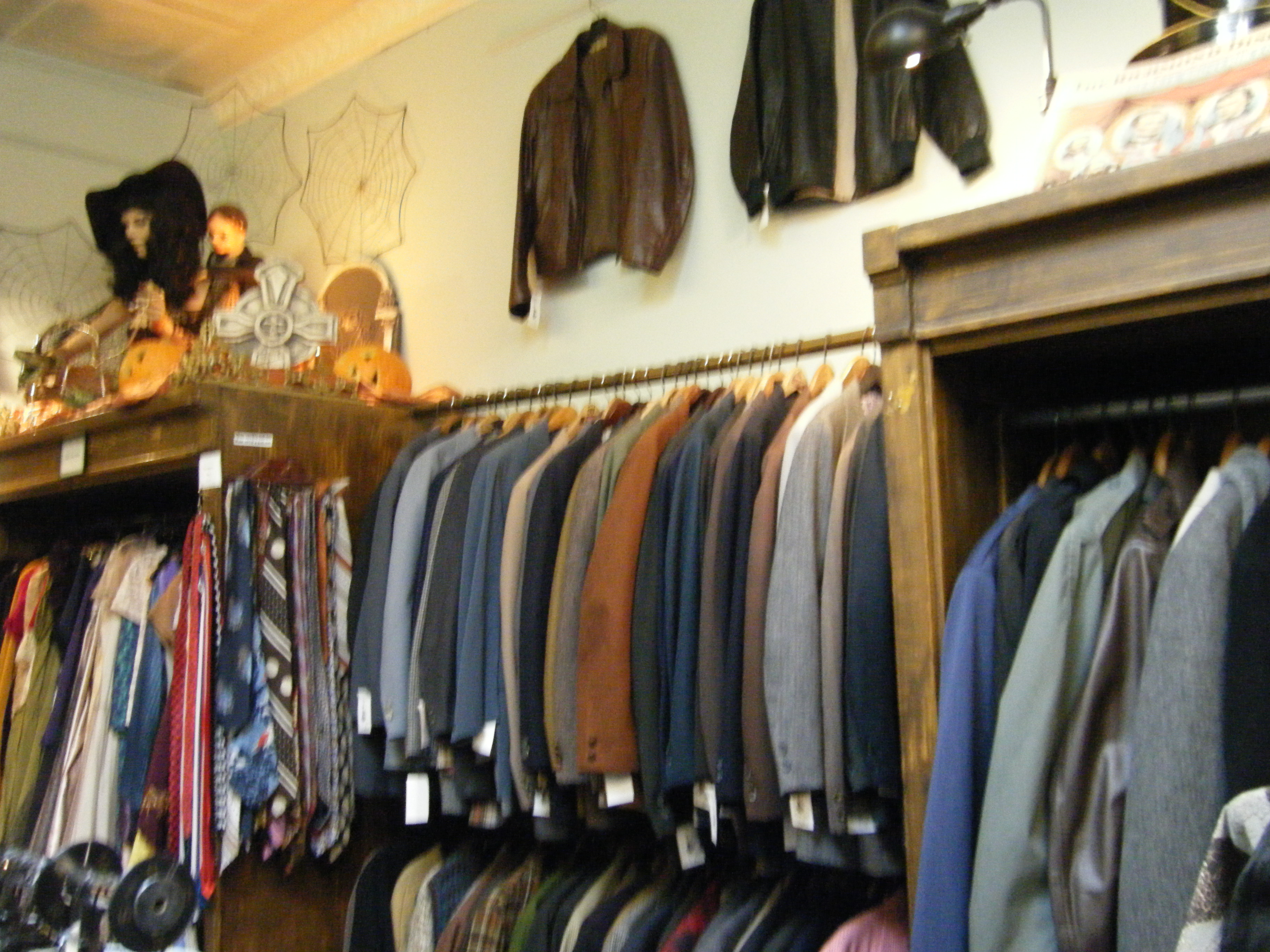
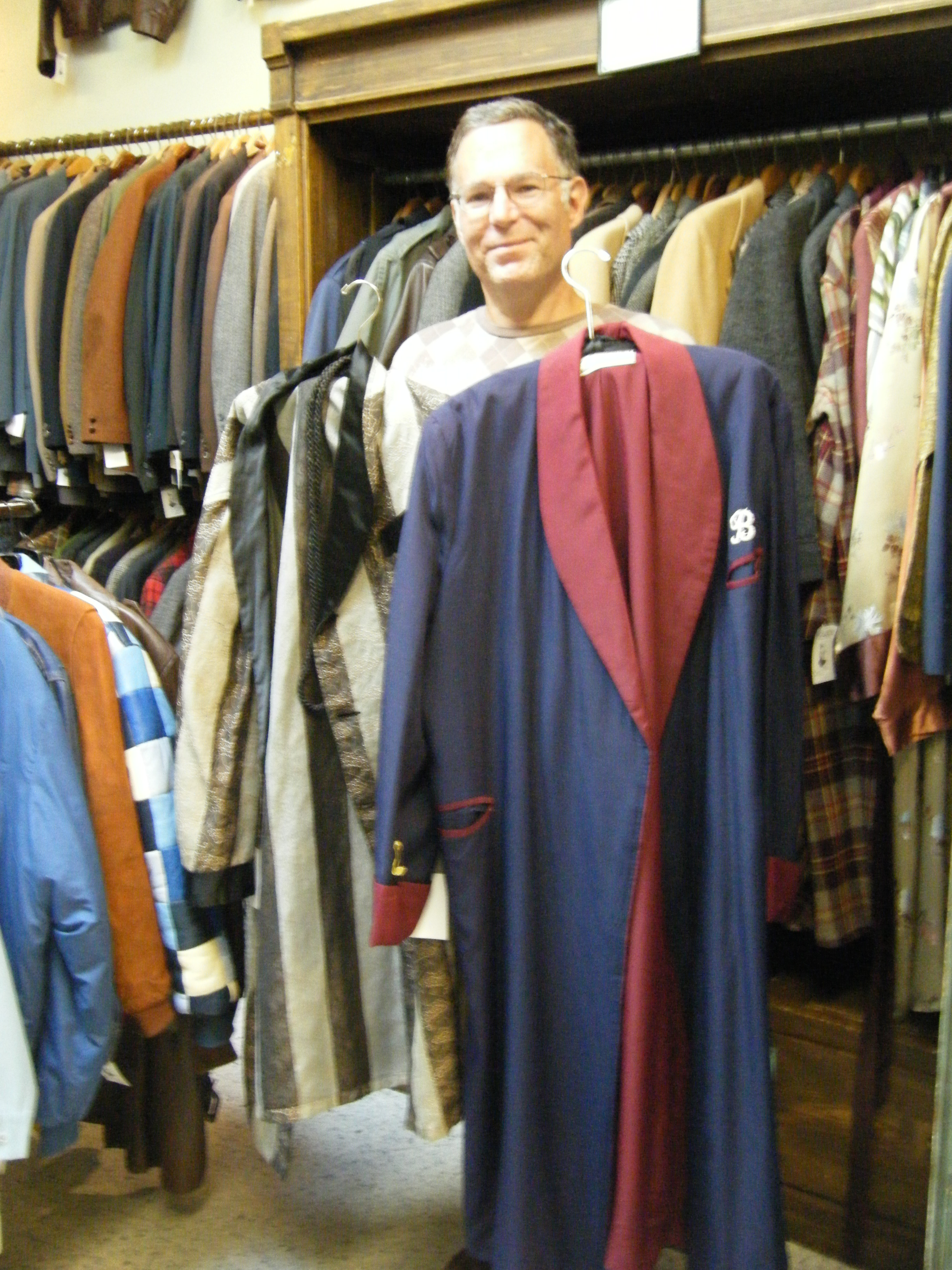
A lovely coat from HalcyonThe dress of 100 buttons at HalcyonHalcyon's bakelite offeringsBill, the tie snatcherA 1940's dress with shoulder pads fit for a linebacker...still a gorgeous dress!The winner! Step into Bygones...The fur display at Bygones, complete with Mr. FoxBakelite at Bygones, including a set of strawberries, with necklace and earringsThe Bygones display casesThe pale aqua suit with quilted detail at BygonesA lovely 1940's dress at Bygones - the photo doesn't do the color justiceBygones carries reproductions, like the rack of Leluxe dresses shown hereThe menswear section at BygonesWhich smoking jacket?Josephine in a glorious green velvet suit at Bygones
My search results have been futile, even with the help of my wonderful friends via Facebook, for this fantastic jumpsuit from H&M, which appears to have come out sometime just prior to August, 2011. The jumper, pictured here and modeled by the stylish author shown as SP in this article, is identified as part of a trend towards 1970’s clothing, but the cut and design of this jumper, with the floaty sleeves, cinched waist, and, wide legs is more 70’s does 1930’s beach pajamas. Beach pajamas at H&M in an adorable print? Yes, please!
Can anyone help me find this jumpsuit in my size? The H&M here only had a size 6 left and I’d probably need a size 10, or could alter a size 12. Your assistance would be much appreciated! If you find it in your size, I’d love to see someone else wearing it as well. 🙂
I’m excited to announce that the Yehoodi staff has invited me to contribute featured content to the Yehoodi website. This is my first article for Yehoodi, which I am also publishing here on Lindy Shopper for your use and enjoyment.
Following the Why I Wear Vintage post, Evan Philips requested an entry on how to take care of your vintage clothing and I am happy to oblige. Taking care of any wardrobe requires some maintenance if you want to keep it looking nice. Vintage clothing sometimes requires a little more effort to keep it looking fresh, but if you are careful in your choices for maintaining your vintage garments, you can enjoy them longer and with less worry.
For this article, I consulted with the all-knowing Movie Diva, Laura Boyes, who has experience working with the costume collection at the North Carolina Museum of History. I’ll share my observations from experience, but Laura will be providing the pro tips!
CLEANING
So you bought an article of vintage clothing, wore it to a dance, sweated in it for three hours, and now it’s a little ripe. You’d like to know how to clean it, but there’s no convenient garment tag telling you if it’s dry clean only, hand wash, or wash cold/tumble dry low. Think about what you have in your closet that is in the same fabric – what instructions for care are on that garment? Now, consider that this garment is vintage and, as a precautionary measure, what method of cleaning would be a bit more delicate than that, just in case?
Identifying the fabric is very important. Unless a garment is made of cotton, I will be sending it to the dry cleaners, and even the cotton garments sometimes get sent there if I’m particularly squeamish about hand washing the garment or putting it into my washing machine on the hand wash setting. If I am washing a garment myself, I always hang it up or lay it flat to dry, rather than putting it in the dryer. Laura recommends washing your vintage clothing in a gentle detergent, such as Orvus WA Paste, “a synthetic anionic detergent with a neutral pH which will remove most common dirt and stains.” You may be able to find this at farm supply stores, as it is used to shampoo show horses.
Finding a dry cleaner you trust is worth its weight in gold. You want to find someone with years of experience – don’t cheap out on this just because the $1.99 cleaner is near your house. Do some research, make calls to find out how long they have been in business, if they have worked with vintage and antique clothing, and be willing to sign your life away for them to clean it because most of them won’t want the liability of having to deal with you if the garment deteriorates. Usually if a place has been in business for a long time, they will have a good reputation and will also have older clientele who may have some of these older fabrics and older items that need some extra care when cleaned. I feel truly lucky to have found an amazing dry cleaner in Chapel Hill, NC, Plaza Dry Cleaners. Not only are they the oldest dry cleaners in town, one of their cleaners has taken classes in clothing preservation at the National Archives in Washington, D.C. I’ve been using their services for 6 years now and they have yet to ruin one of my vintage items; in most cases, the garments come out looking even better, with fewer stains and a fresher look to the fabric.
When you take a garment into the dry cleaners, you will need to make a few declarations about the garment so that they know that you are educated about the garment, so they have the information they need to make an informed decision about cleaning the garment, and so they are on notice that this is a special care item. If you know the decade, tell them how old the garment is, note in advance the flaws you are aware of (spots, holes, etc.), indicate whether or not you want them to try to get the spot out, and tell them what you believe to be the correct fabric. If you don’t know what kind of fabric you have, someone there will be able to identify it.
They may not want to clean the item for fear that the process will do something to the fabric or that something on the garment will be harmed in the process. I will say that this situation is pretty rare and limited to uncommon garments, like a 1920’s velvet dress with a jeweled piece or a 1930’s rain coat. In this situation I usually ask if there is some other way I could clean the garment myself or ask if hand-washing would damage the garment. If I really want the item cleaned and do not care if the garment could be harmed in the process, they will usually have me sign a waiver stating that I have been informed of the potential consequences and waive their liability.
Unless you are wearing vintage every day, the cost for your vintage dry cleaning shouldn’t be prohibitive. I might have two items per month that I take out for cleaning.
In those extremely rare cases where the garment can’t be cleaned, don’t wear those garments dancing or in places where you will sweat a lot. Hang them up after you wear them and let them air out for a few days before storing them again.
MENDING
Almost everything can be fixed. Many times, if you look closely at a vintage garment, you can find places where it has already been fixed or altered by the previous owner. Earlier generations mended holes in garments, rather than discarding them, because resources and clothing were more limited. I find that vintage garments tend to take a mending much easier than newer garments because of the way the garments were constructed.
Order of operations number one is to find a tailor who has either worked with vintage clothing in the past, works with fine fabrics, and/or has been sewing for longer than you’ve been alive. I once made the mistake of handing over a silk 1940’s suit in a strawberry print for my mom to reinforce the seams on the sleeves and, having never worked with silks, made the mistake of putting the suit under the needle of her Singer sewing machine on the regular setting. She might as well have put it under the knife, because the silk shredded into a million pieces. I should have told her to hand sew the sleeves, but this is a lesson in assumptions – don’t assume that every tailor will know how to fix your garment. Ask lots of questions and err on the side of caution.
I found my vintage tailor through a locally owned fabric store that sells fine fabrics and other fabrics for clothing. The had a list of people they recommend for people who want custom made items, with a description of each person’s areas of expertise. After talking with the ladies in the store about what I was looking for, they were able to make recommendations as to which tailor(s) would be best for the job.
You may have noticed that article of clothing purchased new that you wear frequently for a period of several years may begin to fall into disrepair, or even fall into disrepair after one season if not well made – remember this when you are cursing that newly discovered hole in your 1940’s pants or dress. The tendency for modern clothing is to get rid of it – throw it away or donate it to a thrift shop, because there will always be something to buy new. The approach to wearing vintage clothing is entirely different and is rooted in that era’s sensibilities. There may be more vintage clothing, but the supply is not replenishing, so repairing a vintage garment becomes an act of preservation.
To preserve your vintage clothing, you sometimes have to think outside of the box, or ask your tailor to be creative. If a button falls off, there’s no little plastic baggie with an extra button for you to sew on and finding a matching button is impossible. So, you find new button and use this opportunity to make the garment even better – something as simple as buttons can change the entire look of a garment, and you can update the garment with new buttons or find vintage buttons on Etsy, eBay, or a few other online resources. I had a 1940’s dress with terrible buttons on it and just switching out the buttons took the dress from matronly to swing-worthy with just a few stitches.
What if there’s a giant hole? Your tailor may be able to harvest some fabric from a hem or inside part of the garment to create a seamless patch, or come up with another way to cover the hole.
What if the seam split? Get your tailor to sew it up and perhaps reinforce it.
You get the idea. 🙂
STORING
Enemy target: eradicated
Moth balls smell like old people. Vintage clothing was once worn by old people and stored by old people. Why is vintage clothing still around? I’m not going to credit moth balls with saving all vintage clothing from moths, but I am going to credit it with maintaining a good portion of my wardrobe and the portion of my wardrobe inherited from others who used moth balls to keep their clothing free from holes. I initially shunned moth balls because of my mother’s over-use of the moth ball when I was growing up – she would toss a whole box into a closet and stuff them in drawers, until every time you tried to wear something that hadn’t been just laundered, you’d come out of the house smelling like a great-aunt. When I went to college I stayed far away from moth balls until I pulled my favorite red wool dress out of the closet to wear at Christmas and discovered two large moth holes in the shoulder; a deeper dig into my wardrobe and I discovered even more casualties. In tears on the floor of my bedroom, I vowed that the moths would never claim another victim from my closet.
Moderation is key. I don’t need moth balls to protect everything, so I have a moth ball section in my closet. I use a hanging moth ball basket I got at the grocery store, which initially came with moth cakes, but I can also fill with moth balls. The moth cakes/balls dissipate over time, so you do have to refill them from time to time. The hanging basket allows me to group my most vulnerable clothing (wools and other natural fibers) in one section of my closet and hang the basket in the middle of that group. It has limited the extreme moth ball smell to a smaller group of garments, which I then air out a few days before I plan to wear them.
Let’s talk about hangers – next to moths, wire hangers are your clothing’s worst enemy. Wire hangers are too sparse to hold clothing without almost penetrating it and, over time, the wires begin to rust and that rust is corrosive to clothing. I’ve seen countless casualties created by wire hangers, where the rust stains have eaten holes in the garment and you can see exactly how that garment was hung on the wire hanger. Please invest in plastic, wooden, or fabric covered hangers for your clothing. Plastic and wooden hangers are good for everyday clothing. If you have a more delicate item, such as mesh, chiffon, or other sheer fabric, pick up a few padded, fabric covered hangers.
If an items is particularly fragile or the weight of the garment is too much for the straps or shoulder of the garment, consider storing the garment folded in a drawer, with ample space and nothing stored on top of it (i.e. don’t cram it into an already full drawer). According to Laura, it’s also a good idea to have some acid free tissue paper on hand to line drawers, separate layers, stuff hats, or pad hangers, as needed.
If you have clothing that is from the 1920’s or older, Laura states that these garments should be stored flat. “If you buy one of these boxes (and keep it under your bed, or on a closet shelf) and layer in between with acid free tissue, it will preserve your dresses from the stress of hanging. You would probably want to store items this way that you wear only occasionally.”
The rest is common sense: Don’t leave things where your pets have access to them; men, hang up your ties, don’t leave them on the floor; don’t store things where they might get soiled; etc.
If you have any further questions about this topic, please feel free to ask! We want to keep these articles of vintage clothing alive and wearable as long as possible.
It’s been a while since I checked on Heyday!, my favorite UK retailer of heavenly high waisted trousers, but I see that they have been busy. They have expanded their line of women’s and men’s clothing and have some pretty impressive and hard-to-find pieces at not unreasonable prices. Men can pick up some more casual style jackets, like the gab jacket or the Hollywood jacket, or some elegant 1940’s trousers. Women who are looking for separates will find several styles of adorable reproduction blouses, 1940’s style suits, dresses that are great for dances and work, as well as those famous trousers that make everyone’s bum look like a million bucks.
Here are my favorites from the website:
How sharp are these! Get your Gene Kelly on in the Anzac trousers, available in 9 colorsYou just can't go wrong with these swing trousers - available in 14 colorsFleur wrap dress, available in 6 printsHollywood jacket, an alternative to the traditional blazerOlivia blouse - stinkin' adorable, in 11 colorsWant this suit!





















 Lindy Shopper